German investment in China reportedly reaches 4-year high in Jan-Nov 2025; expert says US’ mounting protectionism pushes shift
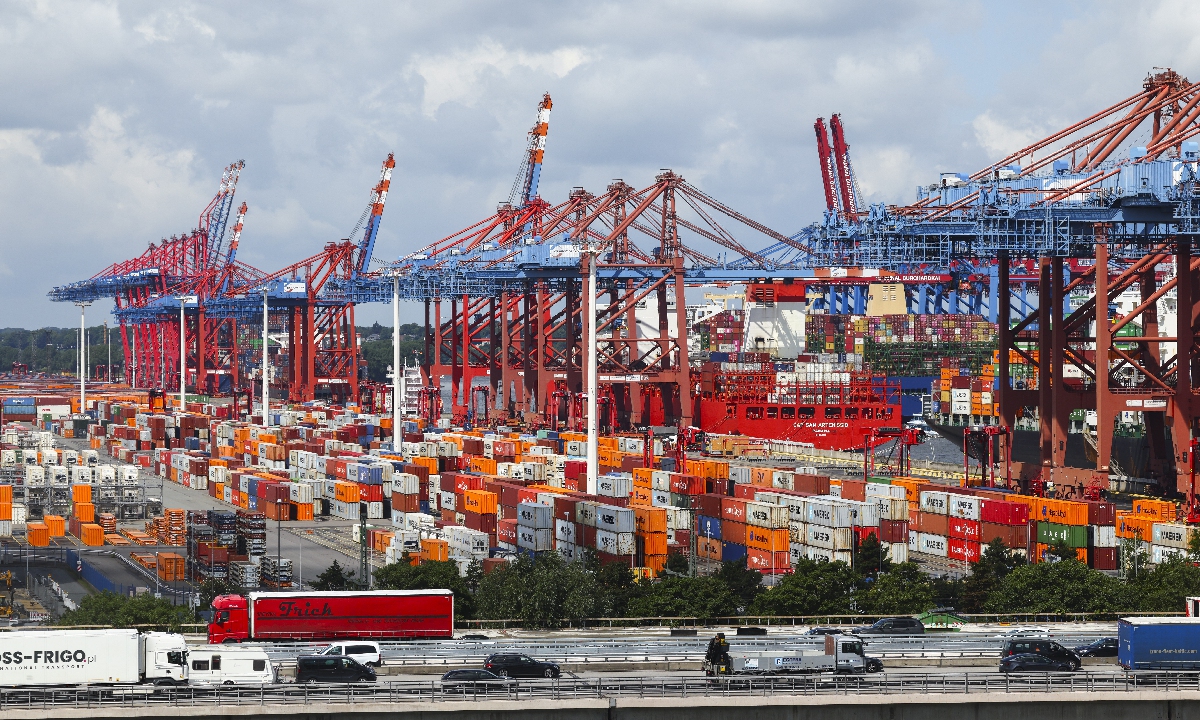
A view of port of Hamburg, Germany, on July 29, 2025 File photo: VCG
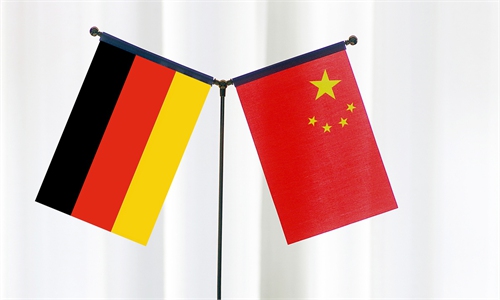
German companies' investment in China reached a four-year high from January to November 2025, according to data compiled by Reuters, as Chinese experts said rising US protectionism and mounting geopolitical pressures have eroded German and European investors' confidence in the US market, prompting part of the capital to shift toward China.
Data from IW German Economic Institute (IW Institute) showed that Germany's investments in China climbed to over 7 billion euros ($8.32 billion) between January and November last year, up 55.5 percent from the 4.5 billion euros in 2024 and 2023, Reuters reported on Tuesday, noting that US' aggressive trade policies including levying tariffs on EU imports to the US pushed the bloc's firms to shift their focus to China.
It came amid Finnish Prime Minister Petteri Orpo's visit to China from Sunday to Wednesday, the upcoming UK Prime Minister Keir Starmer's visit from Wednesday to Saturday, and Canada's push to expand trade deals with China.
Under pressure from the US, Germany and Europe are pursuing more diversified economic strategies to mitigate risks, Jian Junbo, director of the Center for China-Europe Relations at Fudan University's Institute of International Studies, told the Global Times on Tuesday, noting that the increased investment in China reflected not a single shift in focus but a broader push by European companies to diversify risk.
In the first three quarters of 2025, China reclaimed its position as Germany's largest trading partner with total value recording at 185.9 billion euros, up 0.6 percent year-on-year, Xinhua News Agency reported on November 19, 2025, citing data from German Federal Statistical Office (Destatis). China had been Germany's largest trading partner from 2016 to 2023 before being briefly overtaken by the US in 2024, according to the organization.
The shift was also driven by concerns "about geopolitical conflicts" that were prompting companies to bulk up their China business so it could operate more independently in case of any major trade disruptions, Juergen Matthes, head of international economic policy at the IW institute, was cited in the Reuters' report.
The report noted German companies ranging from BASF and Volkswagen to Infineon and Mercedes-Benz remain heavily dependent on the Chinese market.
"Despite widespread talk of so-called 'de-risking' and supply-chain shifts, major German companies' reliance on and commitment to the Chinese market has not weakened and is even strengthening in some areas, underscoring a clear and ongoing trend," said Jian.
China and Germany are deeply intertwined economically, as current bilateral industrial cooperation ties cannot be replaced in the short term. Rebuilding supply chains without China would be nearly impossible in terms of both time and cost, given its irreplaceable advantages in labor, energy, and industrial ecosystems, Jian further noted.
Data from General Administration of China showed that in 2025, foreign trade between China and Germany hit $19.89 billion, highest among EU countries, up 4.6 percent year-on-year.
This strong trade performance coincides with major German corporate investments on Chinese soil, highlighting deepening economic ties.
On November 5, 2025, BASF's integrated facility in Zhanjiang, South China's Guangdong Province, launched production of its first core products, marking a key milestone in the company's largest single investment to date, the German company's website showed. On August 27, 2025, Bosch's smart driving innovation project was inaugurated in Suzhou, East China's Jiangsu Province, with plans to invest around 10 billion yuan ($1.43 billion) over the next five years, according to the Suzhou Industrial Park.
"The future of China-Germany relationship development lies in deep cooperation, transforming bilateral economic exchanges into a 'global public good,'" said Jian.
"By boosting capacity and fostering constructive collaboration, both sides can contribute to global economic stability and prosperity. Abandoning zero-sum thinking and pursuing long-term predictability and stability is the fundamental path forward," he noted.
RELATED ARTICLES