Exclusive: WHO considers risk of Nipah virus spread from India low, yet source of infection not fully understood
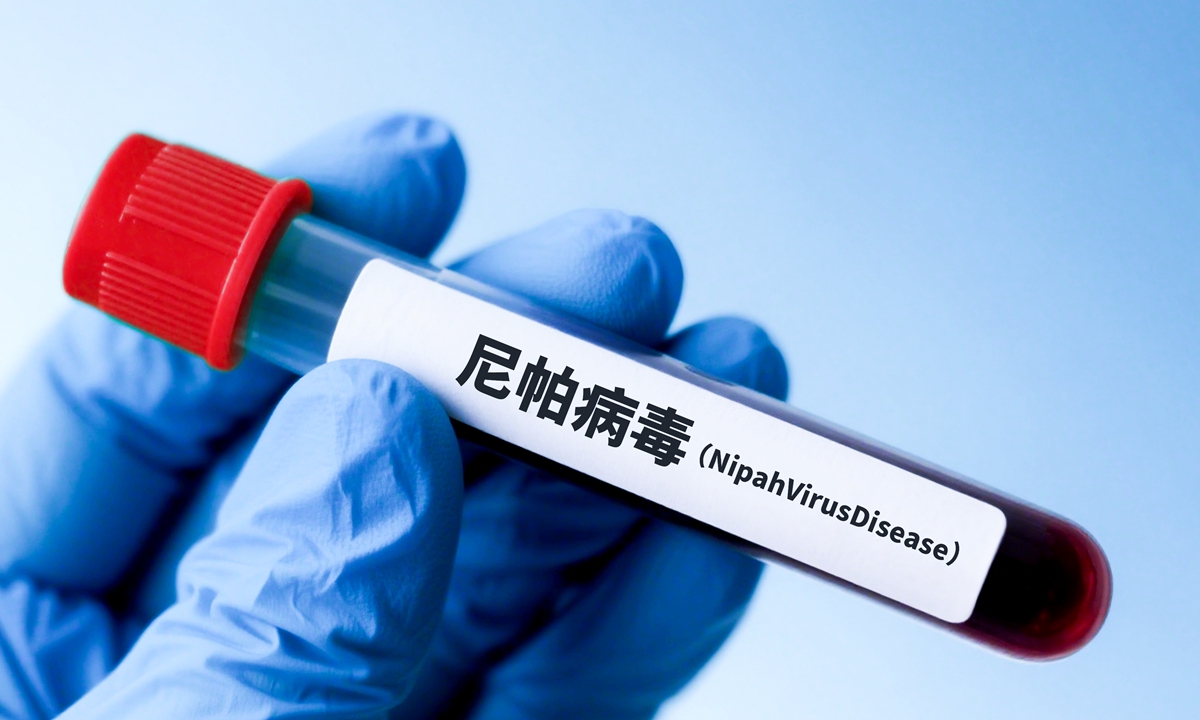
File photo of the Nipah virus disease. Photo: VCG
The World Health Organization (WHO) considers the risk of further spread of Nipah infection from the Indian cases is low, adding that there is no evidence yet of increased human-human transmission, the WHO exclusively responded to the Global Times' email inquiry on Tuesday, following the recent Nipah virus outbreak in India's West Bengal state, which has caused five infections and nearly 100 quarantined.
A WHO official told the Global Times that India has the capacity to contain such outbreaks, as demonstrated during the past outbreaks. Meanwhile, recommended public health responses are jointly being rolled out by the national and state health teams.
However, the WHO official said the source of infection is not yet fully understood.
"It is possible that further exposure to Nipah virus could occur, given known reservoir of Nipah virus in bat population in some part of India and Bangladesh, including West Bengal. Community's awareness of risk factors such as consumption of date palm sap needs to be strengthened," the official said.
According to the organization, this is the seventh documented Nipah outbreak in India and the third in West Bengal since 2001.
In West Bengal, previous outbreaks occurred in Siliguri district in 2001 and Nadia district in 2007, adjacent to Bangladesh, where near-annual Nipah outbreaks are reported. The other outbreaks were reported in southern state of Kerala, according to WHO.
The Chinese National Disease Control and Prevention Administration on Tuesday said no cases of Nipah virus disease have been detected in China, noting that the current Nipah outbreak in India is mainly occurring in West Bengal, which does not share a land border with China.
"Based on a comprehensive assessment, the impact of this Nipah virus outbreak in India on China is relatively small," the administration said, while adding that there is still a certain risk of importation from abroad, and prevention measures need to be strengthened.
After the outbreak of Nipah virus disease in India, China's disease control authorities have promptly taken action, closely monitored overseas epidemic developments, and conducted timely risk assessments, according to the administration.
The authorities further carried out training for medical and disease control professionals, strengthened surveillance and testing, and particularly enhanced response and handling capabilities in border areas to guard against potential risks, the administration said.
A number of Asian airports including China's Hong Kong Special Administrative Region and Taiwan region, as well as Thailand and Nepal have tightened health surveillance and passenger screening following the recent Nipah virus outbreak in India, per media reports.
RELATED ARTICLES