China-UK relations should be viewed from a global perspective beyond a bilateral lens: Global Times editorial
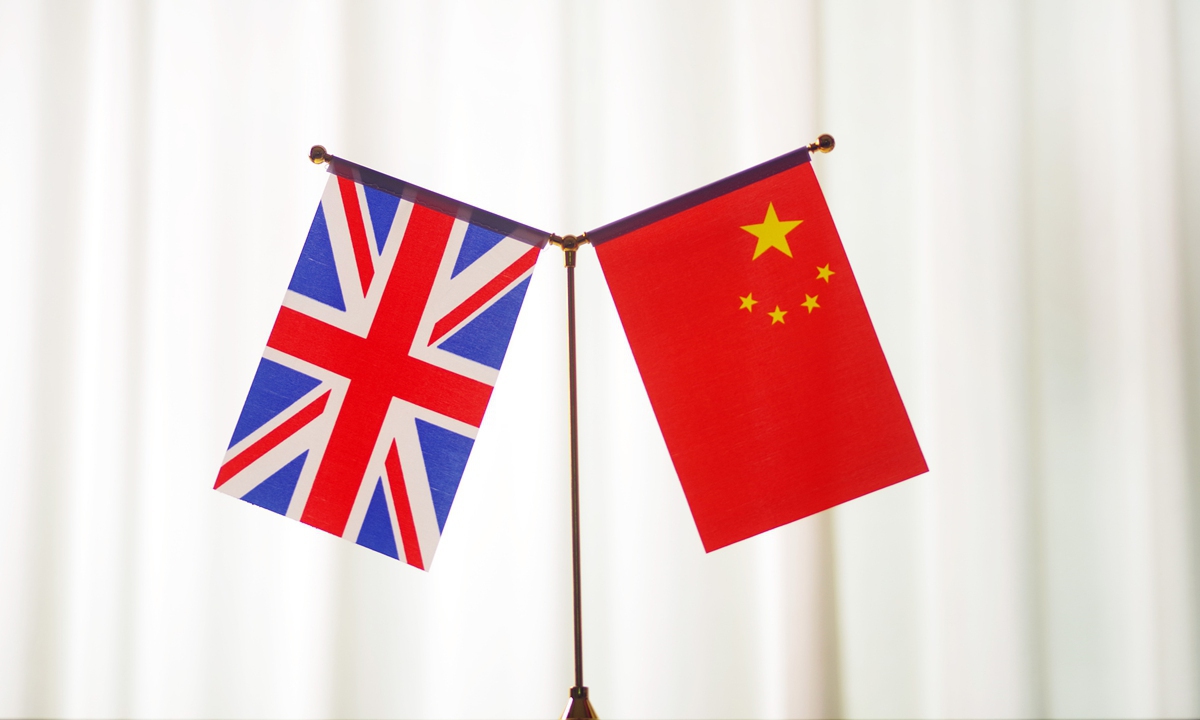
China UK Photo: VCG
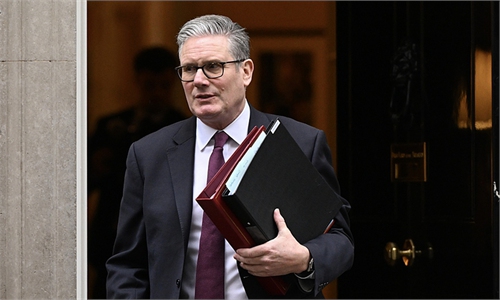
British Prime Minister Keir Starmer will pay an official visit to China from Wednesday to Saturday, marking the first visit by a UK prime minister to China in eight years. He will be accompanied by a large business delegation comprising representatives from more than 50 major British companies and institutions. Ahead of the trip, Starmer said that the UK would not be forced to "choose between" China and the US, a stance widely seen as reflecting a more rational British diplomatic approach amid a shifting international landscape. This clearly shows that even within the West, "small circles" and bloc-based confrontations are increasingly losing traction.
As an ally with a "special relationship" with the US, the UK side's remarks have taken some by surprise, but they are, in fact, entirely logical.
Two broader contexts are at play. First, China-UK relations have endured a prolonged downturn lasting several years. The "hot and cold" China policy of 10 Downing Street has been a major factor, yet it has clearly failed to deliver the benefits Britain had imagined. Some UK government sources suggest that ignoring China will only make the country "poorer and less secure." Second, in the face of an "unpredictable" US, Western countries are increasingly seeking greater "predictability" in their external relations. Against this backdrop, Starmer's remarks can be seen as keeping pace with a range of latest statements by Western leaders - or, put differently, as a sign that Britain has finally come to its senses.
It has been eight years since the last visit to China by a UK prime minister. Even during the "Ice Age," overall China-UK trade and economic exchanges continued to show a clear upward trend. Data shows that China is the UK's fourth-largest trading partner in 2025, with trade totaling approximately $137 billion. China, with a massive consumer base of over 1.4 billion people, is an important market that British companies are eager to expand into. This constitutes an internal driving force for the development of China-UK relations. From a longer-term perspective, at a time when the international order is facing severe challenges, China and the UK, as permanent members of the UN Security Council and major global economies, share common interests and important responsibilities on major issues such as upholding the postwar international order and the multilateral trading system. Eight years on, the "common denominator" between China and the UK has become even more evident.
Improvement in China-UK relations benefits not only both sides, but also creates more opportunities for advancing a multipolar world. China-UK relations should be viewed from a global perspective beyond a bilateral lens. Admittedly, China and the UK do not see eye to eye on every issue, but both sides can seek solutions through rational dialogue based on mutual respect and pragmatic cooperation. Particular vigilance is needed against some voices that exaggerate specific differences and turn them into ideological confrontations. We especially hope that London can move past such negative disruptions.
The Western world is undergoing a "brainstorm." Starmer's stance of "not choosing sides" reflects, to some extent, a Western rethinking of outdated concepts of security, civilization, and international relations. An increasing number of perceptive figures in the West have come to realize that blindly following a single hegemon and severing global connections ultimately undermines their own countries' development and prosperity. This Cold War mentality has severely eroded the foundation of global strategic stability and cooperation.
Over the past two months, French President Emmanuel Macron, Canadian Prime Minister Mark Carney, and Finnish Prime Minister Petteri Orpo have successively visited China, and German Chancellor Friedrich Merz has also expressed a desire for a trip. The trend of major Western leaders visiting China demonstrates that the path of "ignoring China" and "alienating China" is not viable.
The UK's proactive release of positive signals to improve relations with China is a rational choice based on national interests and a recalibration of the UK's diplomatic posture after Brexit. Prior to the official visit, Starmer had already sent five ministerial officials to China, demonstrating the importance the UK attaches to this high-level exchange. The UK is fully capable of and entitled to maintain constructive and positive relationships with various countries, reflecting a mature and responsible attitude toward its national interests. China has never been a security threat or been an obstacle to the UK's development. Hopefully, this visit will not only facilitate new breakthroughs in cooperation across specific areas but also could set a pragmatic, rational, and win-win tone for the long-term development of China-UK relations.
As Chinese President Xi Jinping pointed out when meeting Finnish Prime Minister Petteri Orpo on Tuesday, in a world confronted by multiple risks and challenges, the international community should join hands for response, adding that major countries should act as a good example to promote equality, observe the rule of law, pursue cooperation, and uphold integrity. The same applies to China-UK relations.
As long as China and the UK adhere to the principles of mutual respect, equality, and mutually beneficial cooperation, acknowledge their differences, manage their disparities, and deepen their collaboration, they will certainly be able to promote the healthy and stable development of bilateral relations. This will not only bring more tangible benefits to the people of both countries but also contribute significantly to building a better world. At the same time, we hope that the British delegation will take back to the UK and Western society genuine experiences from their visit to China. We believe that what they will perceive is an open, inclusive, and vibrant China, which truly reflects the reality of China.
RELATED ARTICLES