Illustration: Liu Xiangya/GT
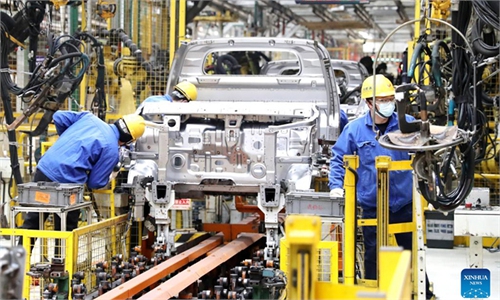
Investments by German companies in China increased by about 7 billion euros ($8.32 billion) in 2025, up significantly from the 4.5 billion euros recorded in 2024 and 2023, according to a report released by the IW German Economic Institute on Tuesday.The trend behind these figures persists. Since the beginning of 2026, further examples of German companies ramping up their investments in the Chinese market have emerged. In early January, German chemical giant BASF commissioned a steam cracker with an annual ethylene output capacity of 1 million tons at its newly built production complex, known as the Verbund site, in Zhanjiang, South China's Guangdong Province.
Last week, Covestro, a German manufacturer of polymers and high-performance plastics, announced the commencement of production at its new thermoplastic polyurethanes manufacturing site in Zhuhai.
In December 2025, the German Chamber of Commerce in China said in its 2025/2026 business confidence survey that 93 percent of respondents intended to remain engaged in the Chinese market, and 56 percent aimed to expand cooperation with their Chinese peers through strategic partnerships or joint ventures.
Together, the rising investment data, the launch of key projects, and strengthened corporate confidence outline a clear trajectory of German businesses ramping up their investments in China. This trend underscores the profound resilience of economic ties between China and Germany, as well as between China and Europe. As two pivotal forces in the global manufacturing landscape, China and Germany have built a solid cooperative foundation based on highly complementary industrial structures. China's ongoing efforts to advance high-level opening-up and continuously improve its business environment have further expanded the space for this collaboration.
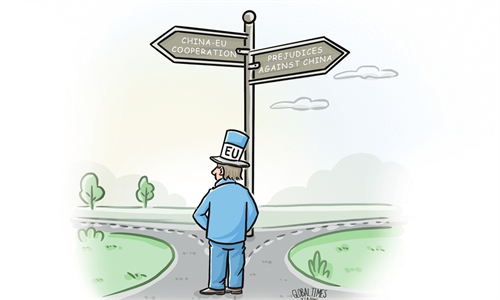
To be sure, there are diverse voices regarding economic ties with China within Europe these days, with some expressing concerns about the competitive pressure brought by Chinese manufacturing. It is true that Europe's manufacturing sector is grappling with serious challenges, such as soaring energy costs and tariff pressures. Yet economic realities ultimately prevail. The sustained flow of German investment into China reflects a respect for market principles and a deep recognition of the complementary value between the European and Chinese economies.
In-depth collaboration between Chinese and German businesses in manufacturing, the green transition, and digital technologies has set a pragmatic pathway forward, demonstrating that the breadth and depth of cooperation far outweigh areas of competition.
The industrial structures of China and Germany are highly complementary. Germany has deep expertise in high-end manufacturing and technological research and development (R&D), while China possesses a huge market, a complete industrial chain and efficient manufacturing capabilities. This complementarity has forged a mutually beneficial and win-win pattern for bilateral cooperation.
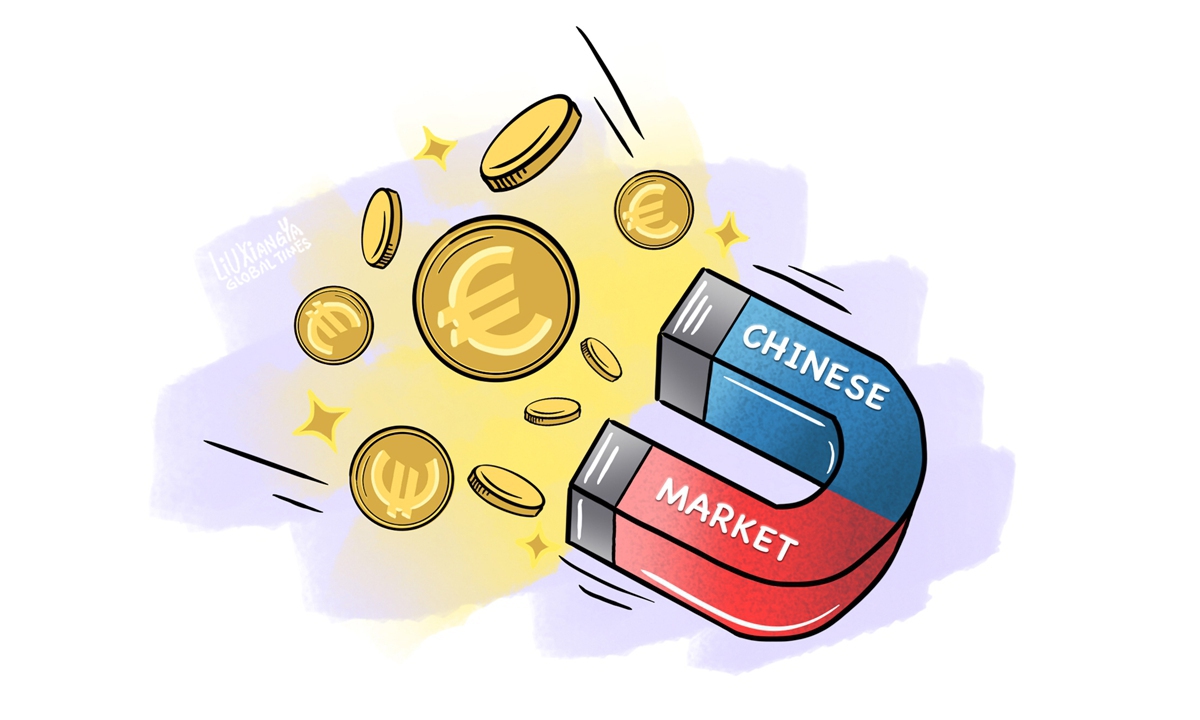
Beyond production, the appeal of the Chinese market remains a key factor attracting German companies. As one of the world's largest and fastest-growing consumer markets, with an enormous customer base and continuously upgrading demand, China offers fertile ground for German companies. From high-end vehicles and precision instruments to high-quality chemical products and advanced materials, German goods are highly favored in the Chinese market, which not only reflects the strength of German businesses, but also serves as a powerful testament to the huge potential of the Chinese market.
Moreover, China has evolved into a critical arena for nurturing emerging and future industries. In fields such as digitalization, smart technologies, and green development, China's emphasis on innovation and industrial upgrading has fostered a vibrant ecosystem. Increasingly, German firms are integrating into China's industrial upgrading and transformation wave by establishing joint ventures and localizing R&D.
For instance, Bosch plans to invest about 10 billion yuan over the next five years to develop and manufacture advanced intelligent driver assistance systems and smart cabin hardware and software products in Suzhou, East China's Jiangsu Province, the Suzhou Industrial Park announced on its website in August 2025.
In September 2025, BMW Brilliance opened its High Voltage Battery Center II in Shenyang, Northeast China's Liaoning Province. These initiatives illustrate how German businesses are strategically aligning with China's industrial modernization, which allows them to leverage China's innovation resources and talent pool to enhance their own competitiveness.
Last but not least, China's continuous drive toward high-standard opening-up has provided support for such long-term strategic layouts. Measures ranging from shortening the negative list for market access and strengthening intellectual property protection to promoting institutional openness are aimed at creating a more market-oriented, law-based, and internationalized business environment. At a time when protectionism is rising and supply chains face fragmentation risks, China's steadfastness in opening up and optimizing the investment landscape offers multinational companies invaluable certainty. This predictable future is precisely the source of confidence that enables these firms to commit to substantial, long-term investments.
RELATED ARTICLES