Bessent threatens Canada ahead of USMCA review; ‘America First’ mindset lays bare US role as order disruptor, experts say
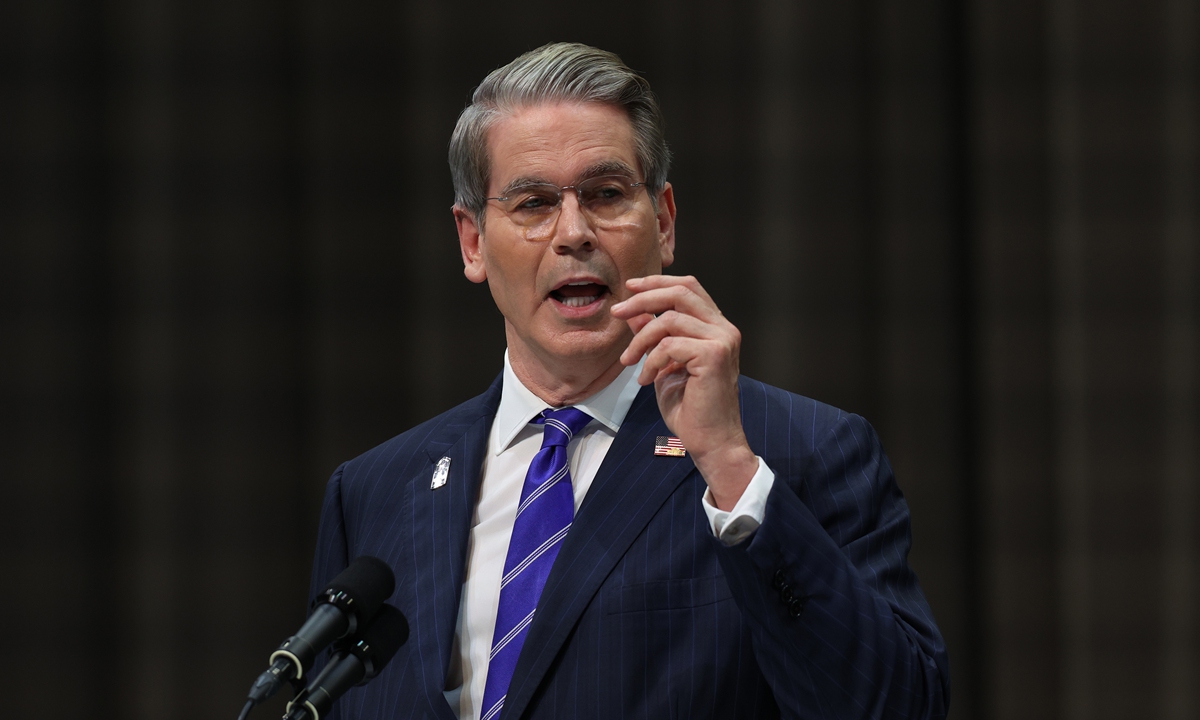
US treasury secretary Scott Bessent, Photo: VCG
The US administration is once again ramping up its rhetorical pressure on Canada, with US Treasury Secretary Scott Bessent issuing a fresh warning to Prime Minister Mark Carney over looming trade negotiations. A Chinese expert said the increasingly explicit threats lay bare Washington's entrenched "America First" mindset and its deep-seated anxiety over close allies seeking greater diplomatic and trade diversification.
Bessent on Wednesday said that Carney's recent public comments critical of US trade policy could backfire ahead of the formal review of the US-Mexico-Canada Agreement (USMCA), the Associated Press reported on Thursday. The deal has so far shielded Canada from the most severe impacts of US tariff measures.
Carney's high-profile speech at the World Economic Forum (WEF) in Davos last week, in which he criticized economic coercion by major powers against smaller countries, was quickly followed by clashes with President Donald Trump and Bessent over trade. Both have warned that the US could impose tariffs of up to 100 percent on Canadian imports over trade arrangements Ottawa is pursuing with China.
Speaking in a CNBC interview, Bessent claimed that Canadian politicians face a clear choice between advancing their own political careers and serving the Canadian people, remarks he made when asked about the rift between Trump and Carney following the prime minister's Davos speech.
He threatened that taking such a stance would put Canada in "not a great place" when negotiating with an economy that is "multiples larger" and also its biggest trading partner, according to a CBC report.
The US official also claimed that Carney faced risks in moving from a technocratic background into a political role, referring to his experience as a former central banker, saying he had seen such transitions "never really work out well."
The US threat comes as the USMCA heads toward a comprehensive review later this year, entering a critical phase, with analysts warning of growing uncertainty over its future amid repeated signals from Washington that trade rules could be subordinated to political calculations.
Washington's repeated threats show that it remains willing to apply maximum pressure to put "America First," even when dealing with close allies, said Chen Fengying, a research fellow at the China Institutes of Contemporary International Relations.
"Because of its geographic proximity, Canada is increasingly on the receiving end of that pressure, which helps explain why the Carney government is looking to broaden its economic and diplomatic options," she told the Global Times on Thursday.
Trump and Carney spoke on Monday, after which Bessent told Fox News that the prime minister "was very aggressively walking back some of the unfortunate remarks he made at Davos." However, Carney denied the claim a day later, telling reporters in Ottawa, "I meant what I said in Davos."
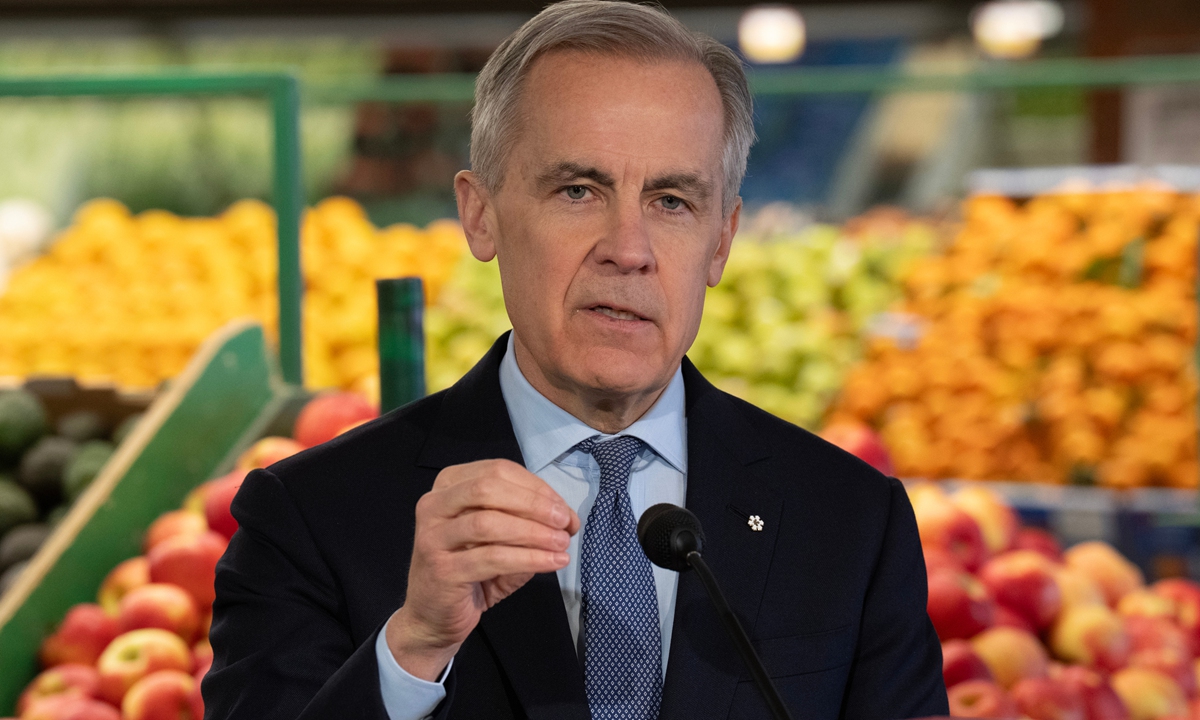
Canadian Prime Minister Mark Carney speaks at an event at a grocery store in Ottawa on January 26, 2026. Photo: VCG
Chen noted that Washington is now trying to recast North America through a security-first lens, treating allied sovereignty as a security issue and using that logic to tighten constraints on Canada's diplomatic and trade choices — a shift that marks the US move away from being a builder of the international order toward acting as a disruptor.
In its latest strategic recalibration, the Pentagon released a National Defense Strategy late Friday that chastised US allies to take greater responsibility for their own security and reasserted the Trump administration's focus on maintaining dominance in the Western Hemisphere, the Associated Press reported.
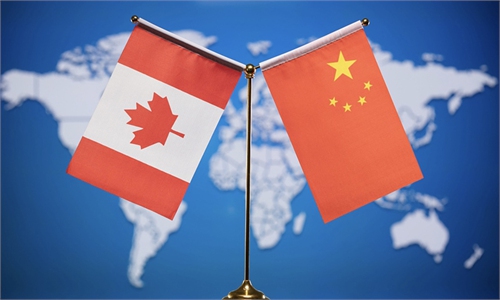
Amid mounting US pressure on both security and trade, Canada's move to diversify its diplomacy and trade by strengthening ties with China reflects a pragmatic effort to safeguard its national interests, Chen said, adding that the shift has increasingly unsettled Washington, where concerns persist that closer China-Canada cooperation could weaken the US industrial and technological containment strategy against China.
After imposing tariffs on a range of Canadian exports to the US in 2025, the White House has recently threatened major changes to the USMCA as the deal comes up for review later this year. According to CBC, those threats have gone as far as Trump openly suggesting that the US may not need the agreement at all.
At WEF last week, the Canadian prime minister warned that the rules-based international order was under strain and outlined how Canada was adapting by building greater strategic autonomy, while criticizing what he described as a growing trend in which "great powers have begun using economic integration as weapons, tariffs as leverage, and financial infrastructure as coercion."
Canada, the US and Mexico face a July 1 deadline to decide whether to extend the agreement, renegotiate its terms or let it expire, the CBC report said. Carney has previously said that Canada respects its commitments and obligations under the USMCA, according to Reuters.
Liu Dan, a research fellow at the Center for Regional and Country Studies at Guangdong University of Foreign Studies, said that Canada, as a middle power, is seeking greater strategic autonomy and a leadership role in a more multipolar order — moves that have in practice accelerated the restructuring of North American supply chains and the decentralization of global trade.
"In this context, China's commitment to multilateralism and free trade has made it a key partner in Canada's diversification strategy and a necessary counterbalance to safeguard its economic space," she added.
RELATED ARTICLES