Welcome more friends from around the world to celebrate the Spring Festival in China: Global Times editorial
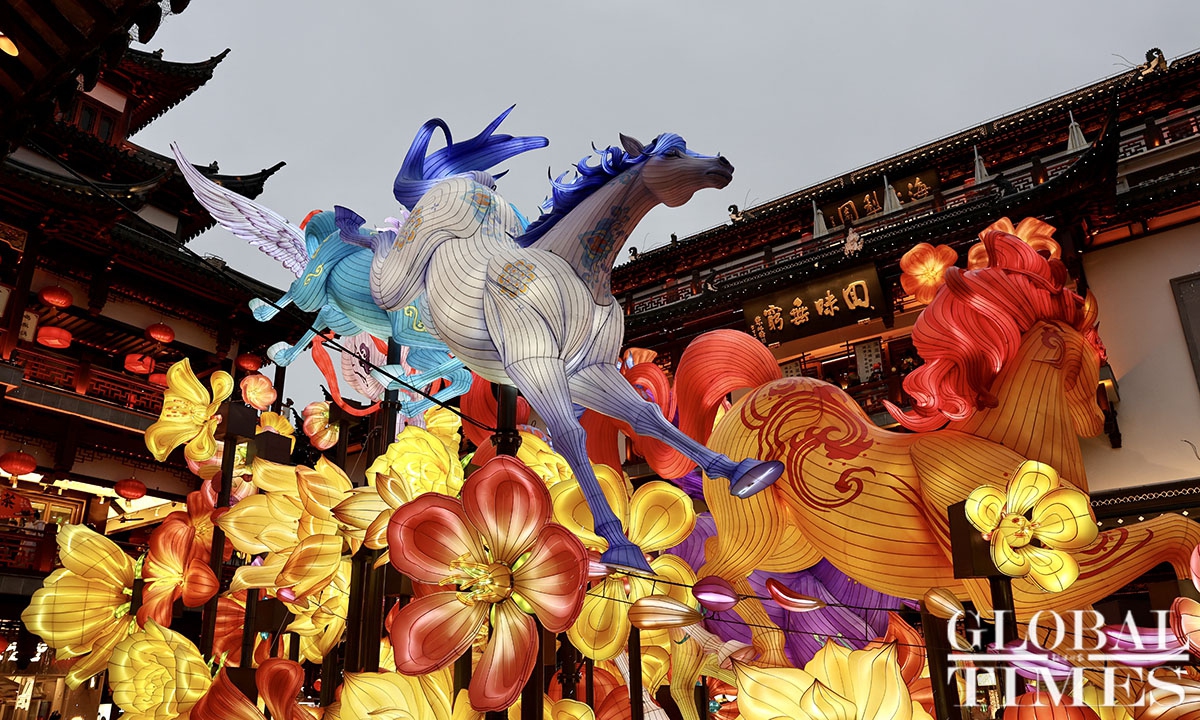
Shanghai's Yuyuan Garden Lantern Festival. Photo: Chen Xia/GT
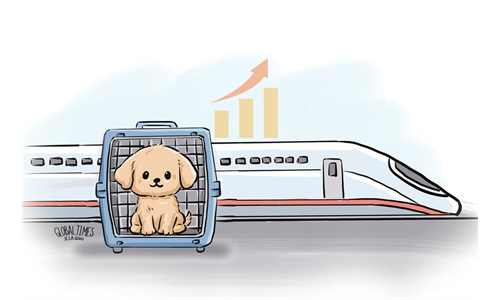
Monday marks the first day of the 2026 Spring Festival travel rush. Travelers heading home may notice that this year, their fellow passengers include more foreign faces than in previous years. Data from travel platforms suggest that inbound tourism during this year's Spring Festival holiday is set for explosive growth: Over the past two weeks, flight bookings by foreign visitors for the holiday have surged by more than 400 percent year on year. Bookings for inbound Russian tourists jumped 471 percent, while those from Argentina increased ninefold. Bookings by travelers from European countries including the Netherlands, Spain, the UK and others all recorded growth of more than 200 percent. A boom in "celebrating the Spring Festival in China" is taking shape, adding a distinctive touch to the opening of the 2026 Bingwu (Year of the Horse) and offering the world a vivid new window through which to understand China.
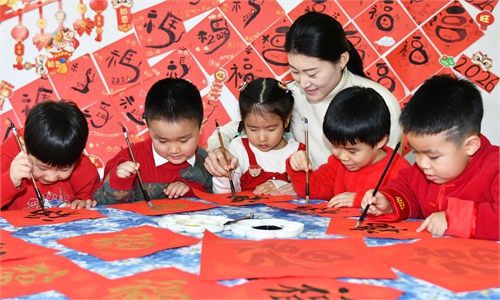
The Spring Festival is a "super IP" of Chinese culture. Since the Chinese Spring Festival was inscribed onto the Representative List of the Intangible Cultural Heritage of Humanity by the United Nations Educational, Scientific and Cultural Organization (UNESCO), its international visibility has risen further. Carrying common emotions of reunion, blessings, and the idea of "out with the old, in with the new," the festival is also marked by highly recognizable rituals - setting off firecrackers, dragon and lion dances, eating dumplings, pasting paper cuttings on windows, and more. This uniquely Chinese sense of the New Year transcends language and borders, striking a chord across cultures. It is foreseeable that events such as the Yuyuan Garden Lantern Festival in Shanghai, traditional temple fairs in Beijing, hotpot night markets in Chengdu, and Harbin's ice-and-snow spectacles will become must-visit "Chinese New Year" destinations for foreign visitors. They are not coming merely for the spectacle; they will also take part immersively, experiencing firsthand the warmth and joy of a tradition passed down over thousands of years amid the vibrant atmosphere of everyday life.
The popularity of "celebrating the Spring Festival in China" comes as no surprise. In recent months, videos showcasing everyday life in China have gone viral across major global social media platforms. "Becoming Chinese" has trended widely online, while "China Travel" continues to attract a growing following. Thanks to the global reach of the internet in the digital age, a more authentic image of China is being shared, almost "by word of mouth," through foreign vloggers who have visited the country - rapidly breaking through the information cocoon woven by traditional Western media outlets and overturning outdated, distorted, and even demonized stereotypes about China. At the same time, the rise of a new generation of Chinese IPs across technology, industry, culture and consumption - from DeepSeek to BYD, Labubu and Mixue Ice Cream & Tea - has sparked unprecedented curiosity about China among many foreigners. They are eager to understand a country whose culture, history and way of life differ markedly from their own, and the Spring Festival is definitely an ideal window through which to experience China.
The global trend of "celebrating the Spring Festival in China" is also a powerful policy dividend of China's growing visa-free "circle of friends." In 2025, China increased the count of China's unilateral visa-free countries to 48 and mutual visa exemption countries to 29, making that "spontaneous trip to China" an increasingly feasible option for many international travelers.
Further supporting this are streamlined customs and tax refund procedures, along with accessible services covering mobile payments, ticket and hotel bookings, ride-hailing, multilingual support, and digital tourism guides - all of which significantly reduce the cost and complexity of visiting China. Beyond opening its doors, China has also invested in the "hardware" necessary to warmly welcome visitors during the Spring Festival, giving them a deep taste of "Cool China." With its abundant immersive cultural and tourism offerings, China is unlikely to disappoint them.
As a country nearly the size of Europe, China offers exceptionally diverse tourism resources. As the "world's factory" with a comprehensive manufacturing ecosystem, it also provides shoppers with pleasant surprises in factory outlets and markets. International friends choosing to spend the Spring Festival here will inject vibrant energy into China's tourism sector. From hospitality and dining to transport and cultural markets, their consumption will boost multiple industries and supply chains, creating a substantial economic multiplier effect. Scholars note that growing inbound consumption is an important lever for advancing high-standard openness, facilitating dual circulation, and building a new development paradigm. This is more than a shared cultural experience - it is also a form of economic cooperation involving two-way efforts.
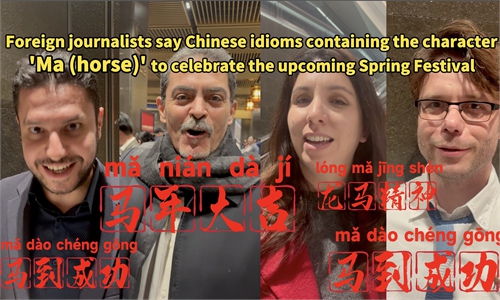
The "celebrating the Spring Festival in China" trend is more about a meaningful dialogue between civilizations. When international friends learn to make dumplings or greet others with "Happy Year of the Horse" in Chinese, the essence of Chinese culture - family reunion and festive joy - is gently and naturally shared. Notably, this wave of experiential travel is swiftly expanding from major cities that foreigners are familiar with like Shanghai and Beijing to lesser-known yet culturally rich "hidden gem" cities such as Lanzhou, Hohhot, and more. This shift reflects a deeper and more diverse exploration of Chinese culture by foreign visitors.
We welcome more friends from around the world to celebrate the Spring Festival in China! Openness is not only about economic exchange - it is also about cultural integration and closeness of hearts. In the joyful and harmonious atmosphere of the Spring Festival, people from different cultural backgrounds are more likely to find common emotional ground and experience the principles of "coexistence in harmony" and "mutual reinforcement" embedded in Chinese culture. The warmth and vibrancy of the Chinese Spring Festival await sharing with the world.
RELATED ARTICLES