Uruguay’s president brings more than just beef and soccer: Global Times editorial
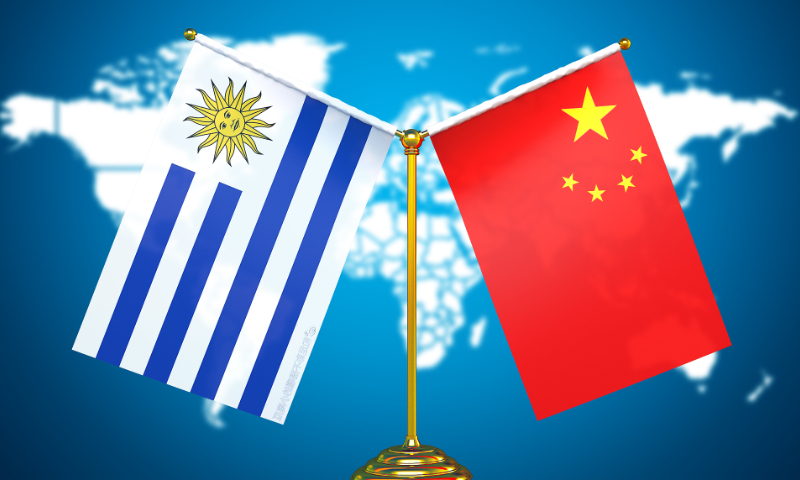
China Uruguay Photo: VCG
The friendship between China and Latin American countries, spanning oceans and continents, continues to deepen. Chinese President Xi Jinping held talks with Uruguayan President Yamandú Orsi, who is on a state visit to China, at the Great Hall of the People in Beijing on Tuesday morning. This day coincides with the 38th anniversary of the establishment of diplomatic relations between the two countries. President Xi reviewed the way of "engaging with each other in the spirit of mutual respect and mutual benefit" over the past 38 years, and outlined a blueprint for developing bilateral relations in new situation. President Orsi led a Uruguayan delegation to China - the "largest in history" - for a seven-day itinerary, imbuing this visit with extraordinary significance. This demonstrates that China-Latin America cooperation, based on equality, pragmatism and mutual benefit, shows strong resilience and vitality amid changing international dynamics.Many Chinese people first learned about Uruguay through soccer. The presence of the president of the Uruguayan Football Association is one of the highlights of Orsi's visit; the Uruguayan side plans to finalize relevant cooperation with the Chinese side during this trip, making early preparations for the 2030 World Cup. Although separated by the ocean, the two countries have long been closely linked through the veins of economy and development. For over a decade, China has remained Uruguay's major trading partner and export market. Today, for every four dollars of Uruguay's export income, one dollar comes from China; for every three new passenger cars sold, one is a Chinese new-energy vehicle. This visit is also viewed by the Uruguayan meat industry as a "key opportunity" to expand in the Chinese market. Last year, Uruguay's beef exports to China increased by 16 percent year-on-year, and last month, the Chinese hospital ship Silk Road Ark made its first port call in Uruguay. Our connection with this distant country has exceeded many people's imaginations.
The president of Uruguay brings more than just beef and soccer; he also brings the universal desire of Latin American countries to deepen ties with China. In addition, his visit serves as a "vote of confidence" from Latin American countries toward China. The Chinese side has always valued China-Latin American relations and supports Latin American and Caribbean countries in safeguarding their sovereignty, security and development interests. In contrast to a certain country that consistently views Latin America as its "backyard" with condescending arrogance and interventionism, China's cooperation with Latin America has always been sincere, equal, mutually beneficial and free of any attached political conditions.
Orsi stated that Uruguay commends the vision of building a community with a shared future for humanity proposed by the Chinese side and that growing relations with China is now "Uruguay's state policy." He also expects that the 15th Five-Year Plan will bring greater opportunities to the world. It is this resonance in development philosophy and the expansion of cooperation space that has established a deep link between the two countries.
In recent years, every step closer between China and Latin American countries has attracted attention, and Uruguay is just the latest example. The Maya Train, constructed by a Chinese enterprise, runs through southeastern Mexico, helping millions along the route escape poverty; Argentines, benefiting from visa-free policies, are flooding into China to celebrate the Spring Festival with unprecedented enthusiasm; from Brazil's São Paulo and Ecuador's Quito to Chile's Santiago, Chinese electric buses run through the streets of major Latin American cities; the shipping tale of "From Chancay to Shanghai" not only makes premium cherries affordable for more Chinese consumers, but also brings a massive, stable market to Chilean cherry growers. These are all vivid portrayals of win-win cooperation between China and Latin America.
Uruguay has been at the forefront of economic marketization, trade liberalization and business globalization. The new round of negotiations initiated by the General Agreement on Tariffs and Trade in 1986, aimed at comprehensively reforming the global multilateral trading system, commenced in Punta del Este, Uruguay, and is therefore known as the Uruguay Round. China and Uruguay share numerous common understandings in jointly advancing an equitable and orderly multipolar world and inclusive economic globalization. In 2026, Uruguay will successively assume the rotating chairmanship of the Group of 77 and China, the Community of Latin American and Caribbean States and the Southern Common Market. The potential for China-Latin America cooperation will be further unleashed across various platforms for Global South collaboration.
Some Western media outlets tend to interpret China-Latin America cooperation through a Cold War mentality, exaggerating the "competition" between China and the US in Latin America. In fact, this represents a zero-sum narrative based on the logic of regional hegemony. China's cooperation with Latin America always adheres to market rules and international norms, aiming for mutual benefit and win-win outcomes, with the goal of common development. China-Latin America cooperation is not targeted at any third party and should not be constrained by any third party. Latin America is not a so-called geopolitical arena, and Latin American countries should not fall into the quagmire of "taking sides."
Standing at a new historical starting point, the friendship between China and Latin America, which transcends oceans and continents, demonstrates the enduring vitality of international relations based on mutual respect, fairness, justice, and win-win cooperation. China will continue to embrace an open attitude and pragmatic actions, working with Latin American and Caribbean countries to seize the opportunities of the times, share the dividends of development, and promote the deepening and solidification of a China-LAC community with a shared future.
RELATED ARTICLES