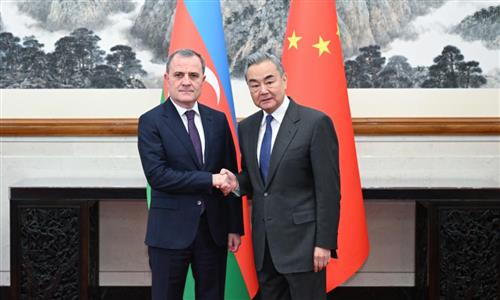
Deepening comprehensive strategic partnership with China is an important direction of Azerbaijani foreign policy: Azerbaijani FM
Editor's Note:
China-Azerbaijan relations have seen fruitful achievements in the year of 2025. Azerbaijani Foreign Minister Jeyhun Bayramov (Bayramov) visited China on January 28-29, having in-depth exchanges with the Chinese side and carrying forward the relationship with substantial progress. In an exclusive interview, Bayramov shared with Global Times (GT) reporters Dong Feng and Zhang Han the major expectations of his visit as well as his views on bilateral relations.
Bayramov: Azerbaijan's comprehensive strategic partnership with China is a long-term, multidimensional, and mutually beneficial framework of cooperation. The deepening of this relationship is one of the important directions of Azerbaijan's foreign policy.
From our perspective, this comprehensive strategic partnership has several key pillars, most importantly, the relations between our leaders, mutual political trust, and high-level dialogue on bilateral and multilateral issues.
Azerbaijan views China as one of its important economic partners. Azerbaijan attaches strategic importance to aligning its transport infrastructure and transit potential with China-backed connectivity initiatives, strengthening the Middle Corridor as a reliable route between East and West.
Cooperation in renewable energy, green technologies, and sustainable development is seen as a promising and forward-looking dimension of the comprehensive strategic partnership.
We also place great importance on enhancing cooperation in education, culture, tourism, and humanitarian exchanges to strengthen mutual understanding between the two peoples.
Azerbaijan views this visit as an important step in consolidating its comprehensive strategic partnership with China, in line with its balanced, pragmatic, and forward-looking foreign policy, as articulated by President Ilham Aliyev and consistent with Azerbaijan's national interests and priorities.
GT: China and Azerbaijan firmly support each other in safeguarding their core interests and ensuring their respective sovereignty, security, and territorial integrity. How does Azerbaijan view the recent egregious remarks and actions of some countries regarding the Taiwan question and the challenges they pose to regional stability?
Bayramov: Azerbaijan's position on the Taiwan question is clear, consistent, and firmly rooted in the principles of international law.
Azerbaijan does not recognize the independence of Taiwan. We were one of the first countries to condemn the so-called elections held in Taiwan in January 2024. Azerbaijan unequivocally supports the "One China" principle.
Any actions that destabilize the regional situation are counterproductive and pose a serious challenge to peace, security, and stability. Azerbaijan believes that provocations, unilateral steps, or attempts to alter the status quo through external interference only heighten the risk of confrontation and undermine trust in international relations.
In this context, Azerbaijan's support for China on the Taiwan question is a reflection of its broader commitment to international law, sovereign equality of states, as well as the mutual trust underpinning the comprehensive strategic partnership between Azerbaijan and China.
GT: How does Azerbaijan view regional multilateral mechanisms? How can cooperation between China and Azerbaijan at the multilateral level help address common regional challenges, including maintaining regional stability, combating the "three evil forces" and promoting regional economic development?
Bayramov: Azerbaijan views regional multilateral mechanisms as essential platforms for dialogue, trust-building, and practical cooperation, particularly in an era of heightened geopolitical tensions and fragmentation of the international system. Participation in such frameworks reflects Azerbaijan's commitment to multilateralism, inclusivity, and respect for international law, as well as its balanced and pragmatic foreign policy.
Azerbaijan mostly relies on its experience as a bridge-builder in global diplomacy, our leadership in multilateral platforms, and our firm commitment to peace, stability, and sustainable development. Azerbaijan has a great experience in chairing multilateral platforms, the Non-Aligned Movement from 2019 to 2024, the COP29 Presidency, and currently the Conference on Interaction and Confidence Building Measures in Asia (CICA) (2024-26).
We attach particular importance to CICA as one of the unique forums that promotes dialogue among countries with diverse political and security perspectives, helping reduce mistrust and prevent escalation through consensus-based engagement. Our Chairmanship of CICA is grounded in the theme of "Stronger CICA, Connectivity, Digitalization, and Sustainable Growth in Asia." Along with multiple international events, this year our country is planning to host the CICA Summit in Baku.
As for Azerbaijan's relations with the Shanghai Cooperation Organisation (SCO), since July 2015, Azerbaijan has the status of a Dialogue Partner in the SCO. Azerbaijani President Ilham Aliyev participated in the SCO Summit as an honorary guest, the recent one held in Tianjin in 2025. This is an indicator of high respect and trust for Azerbaijan. Azerbaijan is connected with the majority of SCO member states by close, friendly, fraternal, and strategic partnership relations.
The existing areas of cooperation between Azerbaijan and the SCO were reflected in the memorandum signed between the parties in 2016, such as combating terrorism, extremism, and separatism, regional security and stability, dialogue between civilizations, promotion of multiculturalism and tolerance, as well as cooperation in the fields of economy, transport and telecommunications, trade and investment.
Cooperation with China within these multilateral frameworks significantly enhances the ability to address shared regional challenges. Azerbaijan and China can jointly promote dialogue-based approaches. Azerbaijan's experience in regional diplomacy and China's global influence can be mutually reinforcing in confidence-building efforts.
GT: Amid the danger of a global return to the "law of the jungle," how does Azerbaijan view China's proposed concept of common, comprehensive, cooperative and sustainable security? In the current global geopolitical context, how does Azerbaijan view the Global Governance Initiative (GGI) proposed by China?
Bayramov: Within the deepening transformation in international relations, Azerbaijan supports approaches that reinforce international law, multilateralism, and cooperative security, rather than power politics and unilateralism.
Azerbaijan has actively supported the Global Development Initiative, Global Security Initiative, and Global Civilization Initiative put forward by Chinese President Xi Jinping for the promotion of international peace, security, and development. We also welcomed the Global Governance Initiative declared by President Xi in 2025, as a valuable and timely endeavor to improve international relations based on sovereign equality of States and respect for the UN Charter and international law.
These initiatives align with Azerbaijan's long-standing support for multilateralism and its advocacy for a rules-based international order that is not selectively applied.
In this context, Azerbaijan promotes lasting stability in the South Caucasus, including through confidence-building, normalization, and development-oriented cooperation.
Azerbaijan is ready to engage constructively with China and other partners to advance shared objectives of peace, stability, and sustainable development.
GT: In the joint statement on establishing a comprehensive strategic partnership signed in 2025, both sides agreed to strengthen the alignment between the Belt and Road Initiative and Azerbaijan's "Reviving the Silk Road" national development strategy. What is the status of bilateral cooperation within this framework? How does Azerbaijan plan and position the "Middle Corridor" and the "Zangezur Corridor"?
Bayramov: Azerbaijan's modern infrastructure, such as its railway network, ports on the Caspian Sea, and free economic zones, already plays a growing role in broader regional connectivity. Azerbaijan is considered a reliable and stable transit partner that contributes to the resilience and diversification of supply chains.
Azerbaijan positions the Middle Corridor (Trans-Caspian International Transport Route) as a strategic, competitive, and complementary route connecting China with Europe via Central Asia, the Caspian Sea, the South Caucasus, and onward to Türkiye and Europe.
The East-West Economic corridor has opened up new economic and transport prospects within the framework of the Belt and Road Initiative (BRI). Particular attention is being given to the digitalization of customs and transit operations.
In 2025, through the investments of Azerbaijan, the expansion of the Baku-Tbilisi-Kars railway, as part of the Middle Corridor, was completed. Its throughput capacity has been brought to 5 million tons per year. Azerbaijan intends to increase the throughput capacity of the Alat International Sea Port from 15 to 25 million tons per year.
The Middle Corridor is a reliable and safe route connecting China and Central Asia with Europe through Azerbaijan. Since 2022, the volume of cargo traffic along the Middle Corridor has increased by almost 90 percent. The transit time for goods has been significantly reduced along this corridor. A recent example of a block train, which arrived in Baku, Azerbaijan, from the Chinese city of Xi'an in less than 12 days, clearly demonstrates the Middle Corridor's efficiency.
The recent agreements on connecting the main part of Azerbaijan with its Nakhchivan Autonomous Republic will contribute to the expansion of transit opportunities for international transportation. I am confident that in the near future, this Corridor will become another important segment of the Middle Corridor, strengthening peace, multilateral partnership, and bringing benefits to all the close and distant neighbors of Azerbaijan to the east, west, north, and south of our borders.
Overall, Azerbaijan views the alignment of the BRI with its national development strategies as a long-term strategic partnership with tangible economic outcomes. By positioning both the Middle Corridor and the Zangezur Corridor as complementary elements of Eurasian connectivity, Azerbaijan aims to reinforce its role as a key logistics hub linking Asia and Europe, while contributing to regional stability, economic growth, and mutually beneficial cooperation with China.
China-Azerbaijan relations have seen fruitful achievements in the year of 2025. Azerbaijani Foreign Minister Jeyhun Bayramov (Bayramov) visited China on January 28-29, having in-depth exchanges with the Chinese side and carrying forward the relationship with substantial progress. In an exclusive interview, Bayramov shared with Global Times (GT) reporters Dong Feng and Zhang Han the major expectations of his visit as well as his views on bilateral relations.
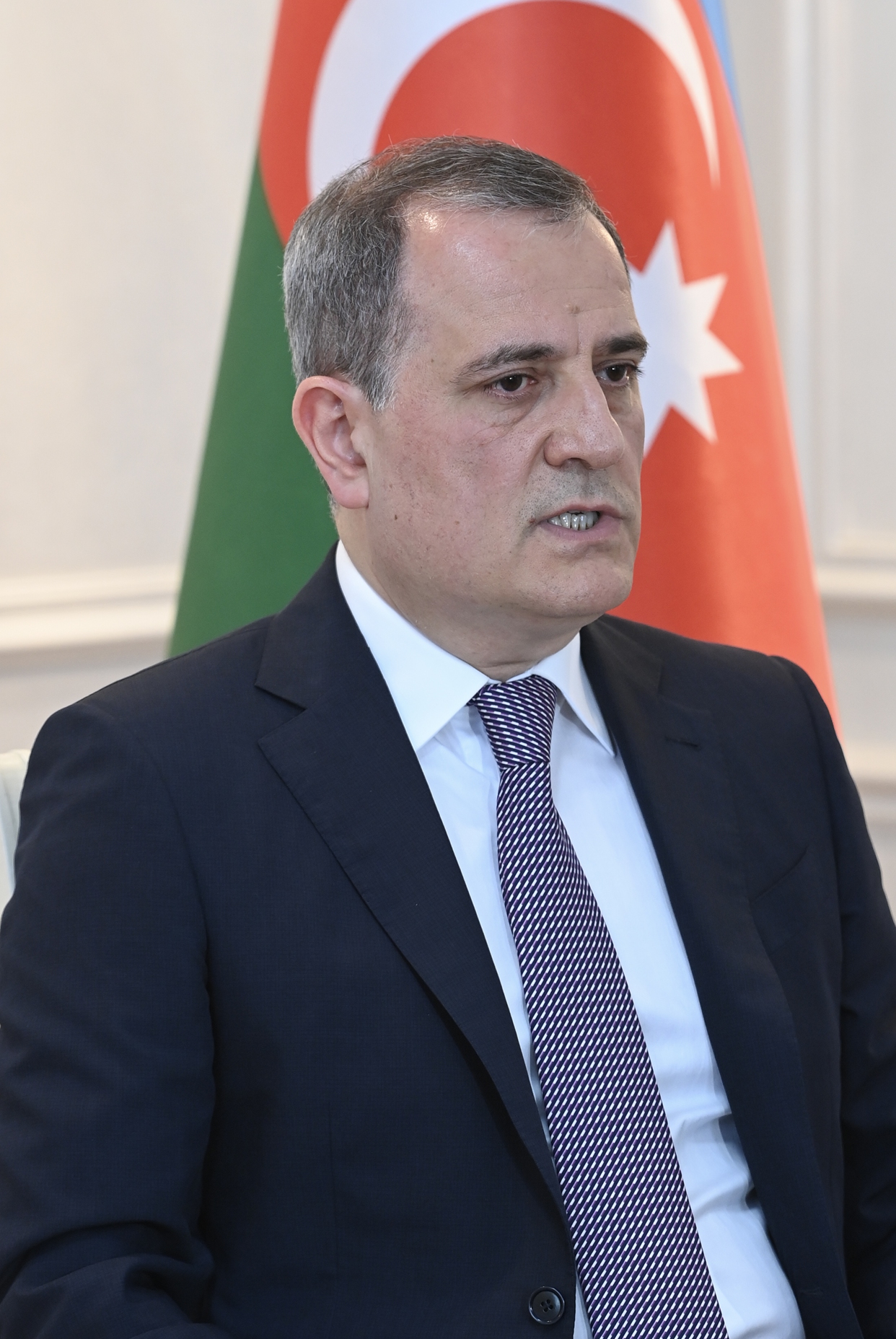
Azerbaijani Foreign Minister Jeyhun Bayramov Photo: Courtesy of the Embassy of the Republic of Azerbaijan in China
GT: How does Azerbaijan define the core content of this comprehensive strategic partnership? Based on this, what are your expectations for this visit?Bayramov: Azerbaijan's comprehensive strategic partnership with China is a long-term, multidimensional, and mutually beneficial framework of cooperation. The deepening of this relationship is one of the important directions of Azerbaijan's foreign policy.
From our perspective, this comprehensive strategic partnership has several key pillars, most importantly, the relations between our leaders, mutual political trust, and high-level dialogue on bilateral and multilateral issues.
Azerbaijan views China as one of its important economic partners. Azerbaijan attaches strategic importance to aligning its transport infrastructure and transit potential with China-backed connectivity initiatives, strengthening the Middle Corridor as a reliable route between East and West.
Cooperation in renewable energy, green technologies, and sustainable development is seen as a promising and forward-looking dimension of the comprehensive strategic partnership.
We also place great importance on enhancing cooperation in education, culture, tourism, and humanitarian exchanges to strengthen mutual understanding between the two peoples.
Azerbaijan views this visit as an important step in consolidating its comprehensive strategic partnership with China, in line with its balanced, pragmatic, and forward-looking foreign policy, as articulated by President Ilham Aliyev and consistent with Azerbaijan's national interests and priorities.
GT: China and Azerbaijan firmly support each other in safeguarding their core interests and ensuring their respective sovereignty, security, and territorial integrity. How does Azerbaijan view the recent egregious remarks and actions of some countries regarding the Taiwan question and the challenges they pose to regional stability?
Bayramov: Azerbaijan's position on the Taiwan question is clear, consistent, and firmly rooted in the principles of international law.
Azerbaijan does not recognize the independence of Taiwan. We were one of the first countries to condemn the so-called elections held in Taiwan in January 2024. Azerbaijan unequivocally supports the "One China" principle.
Any actions that destabilize the regional situation are counterproductive and pose a serious challenge to peace, security, and stability. Azerbaijan believes that provocations, unilateral steps, or attempts to alter the status quo through external interference only heighten the risk of confrontation and undermine trust in international relations.
In this context, Azerbaijan's support for China on the Taiwan question is a reflection of its broader commitment to international law, sovereign equality of states, as well as the mutual trust underpinning the comprehensive strategic partnership between Azerbaijan and China.
GT: How does Azerbaijan view regional multilateral mechanisms? How can cooperation between China and Azerbaijan at the multilateral level help address common regional challenges, including maintaining regional stability, combating the "three evil forces" and promoting regional economic development?
Bayramov: Azerbaijan views regional multilateral mechanisms as essential platforms for dialogue, trust-building, and practical cooperation, particularly in an era of heightened geopolitical tensions and fragmentation of the international system. Participation in such frameworks reflects Azerbaijan's commitment to multilateralism, inclusivity, and respect for international law, as well as its balanced and pragmatic foreign policy.
Azerbaijan mostly relies on its experience as a bridge-builder in global diplomacy, our leadership in multilateral platforms, and our firm commitment to peace, stability, and sustainable development. Azerbaijan has a great experience in chairing multilateral platforms, the Non-Aligned Movement from 2019 to 2024, the COP29 Presidency, and currently the Conference on Interaction and Confidence Building Measures in Asia (CICA) (2024-26).
We attach particular importance to CICA as one of the unique forums that promotes dialogue among countries with diverse political and security perspectives, helping reduce mistrust and prevent escalation through consensus-based engagement. Our Chairmanship of CICA is grounded in the theme of "Stronger CICA, Connectivity, Digitalization, and Sustainable Growth in Asia." Along with multiple international events, this year our country is planning to host the CICA Summit in Baku.
As for Azerbaijan's relations with the Shanghai Cooperation Organisation (SCO), since July 2015, Azerbaijan has the status of a Dialogue Partner in the SCO. Azerbaijani President Ilham Aliyev participated in the SCO Summit as an honorary guest, the recent one held in Tianjin in 2025. This is an indicator of high respect and trust for Azerbaijan. Azerbaijan is connected with the majority of SCO member states by close, friendly, fraternal, and strategic partnership relations.
The existing areas of cooperation between Azerbaijan and the SCO were reflected in the memorandum signed between the parties in 2016, such as combating terrorism, extremism, and separatism, regional security and stability, dialogue between civilizations, promotion of multiculturalism and tolerance, as well as cooperation in the fields of economy, transport and telecommunications, trade and investment.
Cooperation with China within these multilateral frameworks significantly enhances the ability to address shared regional challenges. Azerbaijan and China can jointly promote dialogue-based approaches. Azerbaijan's experience in regional diplomacy and China's global influence can be mutually reinforcing in confidence-building efforts.
GT: Amid the danger of a global return to the "law of the jungle," how does Azerbaijan view China's proposed concept of common, comprehensive, cooperative and sustainable security? In the current global geopolitical context, how does Azerbaijan view the Global Governance Initiative (GGI) proposed by China?
Bayramov: Within the deepening transformation in international relations, Azerbaijan supports approaches that reinforce international law, multilateralism, and cooperative security, rather than power politics and unilateralism.
Azerbaijan has actively supported the Global Development Initiative, Global Security Initiative, and Global Civilization Initiative put forward by Chinese President Xi Jinping for the promotion of international peace, security, and development. We also welcomed the Global Governance Initiative declared by President Xi in 2025, as a valuable and timely endeavor to improve international relations based on sovereign equality of States and respect for the UN Charter and international law.
These initiatives align with Azerbaijan's long-standing support for multilateralism and its advocacy for a rules-based international order that is not selectively applied.
In this context, Azerbaijan promotes lasting stability in the South Caucasus, including through confidence-building, normalization, and development-oriented cooperation.
Azerbaijan is ready to engage constructively with China and other partners to advance shared objectives of peace, stability, and sustainable development.
GT: In the joint statement on establishing a comprehensive strategic partnership signed in 2025, both sides agreed to strengthen the alignment between the Belt and Road Initiative and Azerbaijan's "Reviving the Silk Road" national development strategy. What is the status of bilateral cooperation within this framework? How does Azerbaijan plan and position the "Middle Corridor" and the "Zangezur Corridor"?
Bayramov: Azerbaijan's modern infrastructure, such as its railway network, ports on the Caspian Sea, and free economic zones, already plays a growing role in broader regional connectivity. Azerbaijan is considered a reliable and stable transit partner that contributes to the resilience and diversification of supply chains.
Azerbaijan positions the Middle Corridor (Trans-Caspian International Transport Route) as a strategic, competitive, and complementary route connecting China with Europe via Central Asia, the Caspian Sea, the South Caucasus, and onward to Türkiye and Europe.
The East-West Economic corridor has opened up new economic and transport prospects within the framework of the Belt and Road Initiative (BRI). Particular attention is being given to the digitalization of customs and transit operations.
In 2025, through the investments of Azerbaijan, the expansion of the Baku-Tbilisi-Kars railway, as part of the Middle Corridor, was completed. Its throughput capacity has been brought to 5 million tons per year. Azerbaijan intends to increase the throughput capacity of the Alat International Sea Port from 15 to 25 million tons per year.
The Middle Corridor is a reliable and safe route connecting China and Central Asia with Europe through Azerbaijan. Since 2022, the volume of cargo traffic along the Middle Corridor has increased by almost 90 percent. The transit time for goods has been significantly reduced along this corridor. A recent example of a block train, which arrived in Baku, Azerbaijan, from the Chinese city of Xi'an in less than 12 days, clearly demonstrates the Middle Corridor's efficiency.
The recent agreements on connecting the main part of Azerbaijan with its Nakhchivan Autonomous Republic will contribute to the expansion of transit opportunities for international transportation. I am confident that in the near future, this Corridor will become another important segment of the Middle Corridor, strengthening peace, multilateral partnership, and bringing benefits to all the close and distant neighbors of Azerbaijan to the east, west, north, and south of our borders.
Overall, Azerbaijan views the alignment of the BRI with its national development strategies as a long-term strategic partnership with tangible economic outcomes. By positioning both the Middle Corridor and the Zangezur Corridor as complementary elements of Eurasian connectivity, Azerbaijan aims to reinforce its role as a key logistics hub linking Asia and Europe, while contributing to regional stability, economic growth, and mutually beneficial cooperation with China.
RELATED ARTICLES