ARTS / CULTURE & LEISURE
Bold flavors from white fuzz: Viral mildewed tofu challenges taste buds and raises questions
Bold flavors from white fuzz
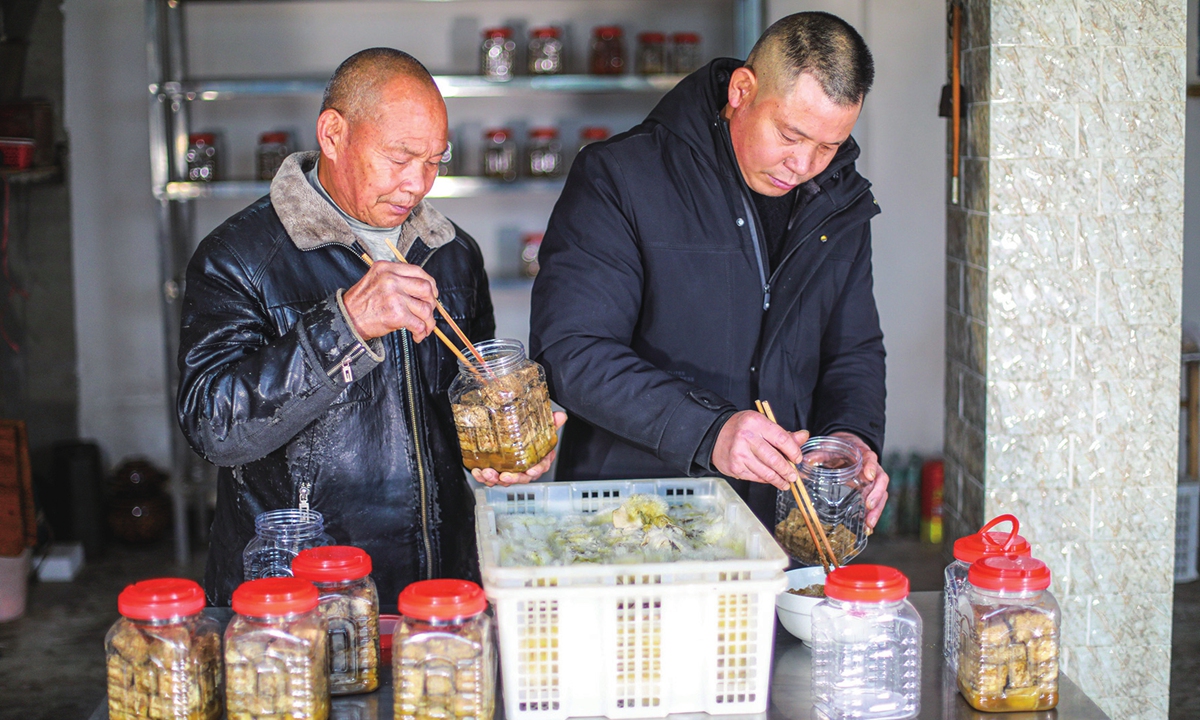
Villagers bottle the fermented tofu with spices in Qianxi, Southwest China's Guizhou Province, on December 29, 2025. Photos: VCG
Vendors display tofu cubes covered in dense white mold, placing them into stainless steel bowls. They then mix in ingredients such as Chinese baijiu liquor, salt, chili powder, and Sichuan peppercorn. The videos show vendors selling mildewed tofu (mei doufu), a traditional Chinese condiment eaten for centuries.The trend has quickly spread beyond the streets. On China's social media platforms, videos about the dish have gone viral. Meanwhile, food bloggers and home cooks have begun fermenting fresh tofu at home. Some proudly displayed finished products, while others shared images showing patches of red, green, or dark mold, raising food safety concerns among viewers.
Food and nutrition experts told the Global Times that professionally made mildewed tofu, a traditional example of turning decay into flavor, does offer certain nutritional benefits. But they cautioned that making it at home requires precise control of temperature, humidity, and microbial cultures. Improper handling can pose serious health risks, including food poisoning.
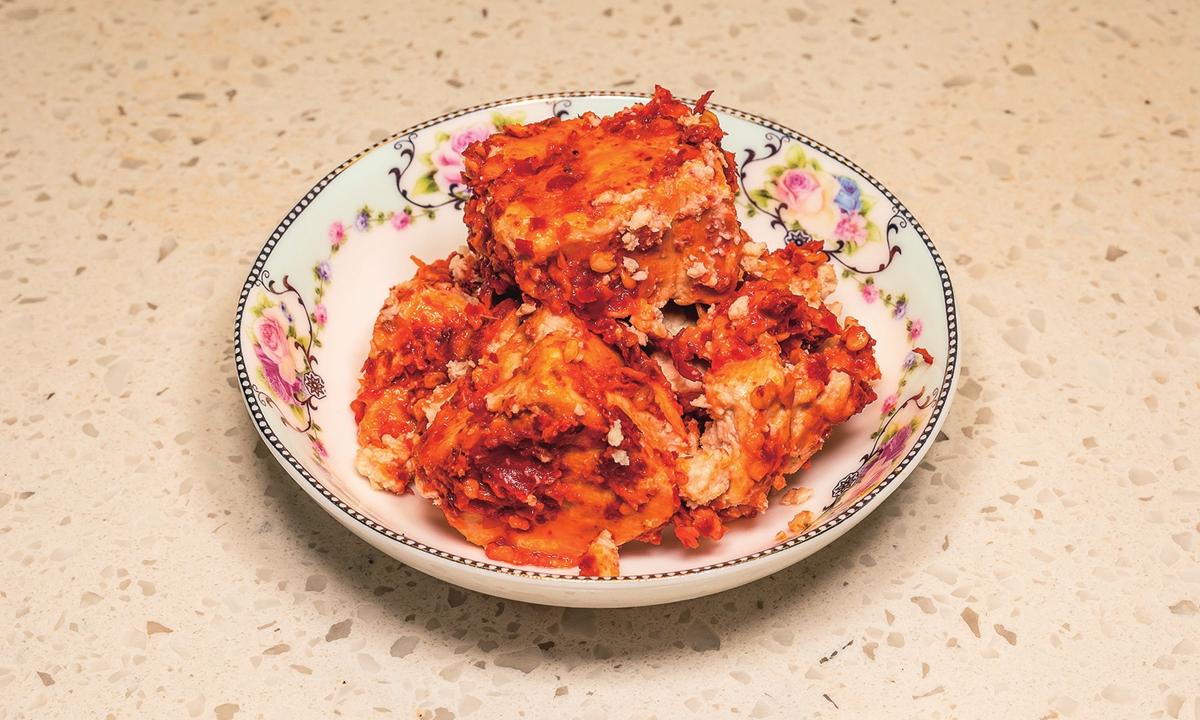
A plate of moldy tofu
Flavor from fermentationMildewed tofu, another name for furu or fermented bean curd, is a traditional Chinese soybean product. Made from tofu, it is cultured with microbes and then cured, developing a distinctive flavor that is especially popular in southern China. The "mold" refers to fermentation using beneficial fungi, such as the Mucor species, achieved through controlled inoculation or natural fermentation.
When produced correctly, mildewed tofu is a prime example of the sophistication of traditional fermentation rather than recklessness.
Preparation methods and flavors vary widely by region. For example, in Huangshan, East China's Anhui Province, locals pan-fry mold-covered tofu in oil until golden on both sides before eating it. In Hefeng county in Central China's Hubei Province, tofu is left to ferment naturally for one to two weeks. Then, over the following weeks, the tofu continues to mature, developing deeper and more complex flavors.
"Properly made mildewed tofu is a controlled fermented food," Zhu Yi, an associate professor of food safety and nutrition at the China Agricultural University in Beijing, told the Global Times. "It reflects the wisdom of using microorganisms to transform food."
During production, tofu cubes are inoculated with beneficial fungi such as Mucor. As the fungi grow, they produce enzymes that break down soy protein into amino acids and peptides, increasing digestibility and creating the tofu's distinctive aroma and creamy texture.
"That's why moldy tofu smells strong but tastes savory and mellow," Zhu said.
Under ideal conditions, the surface mold appears dense, fine and uniform, typically white or pale yellow. This stage is critical, as it determines both flavor and safety.
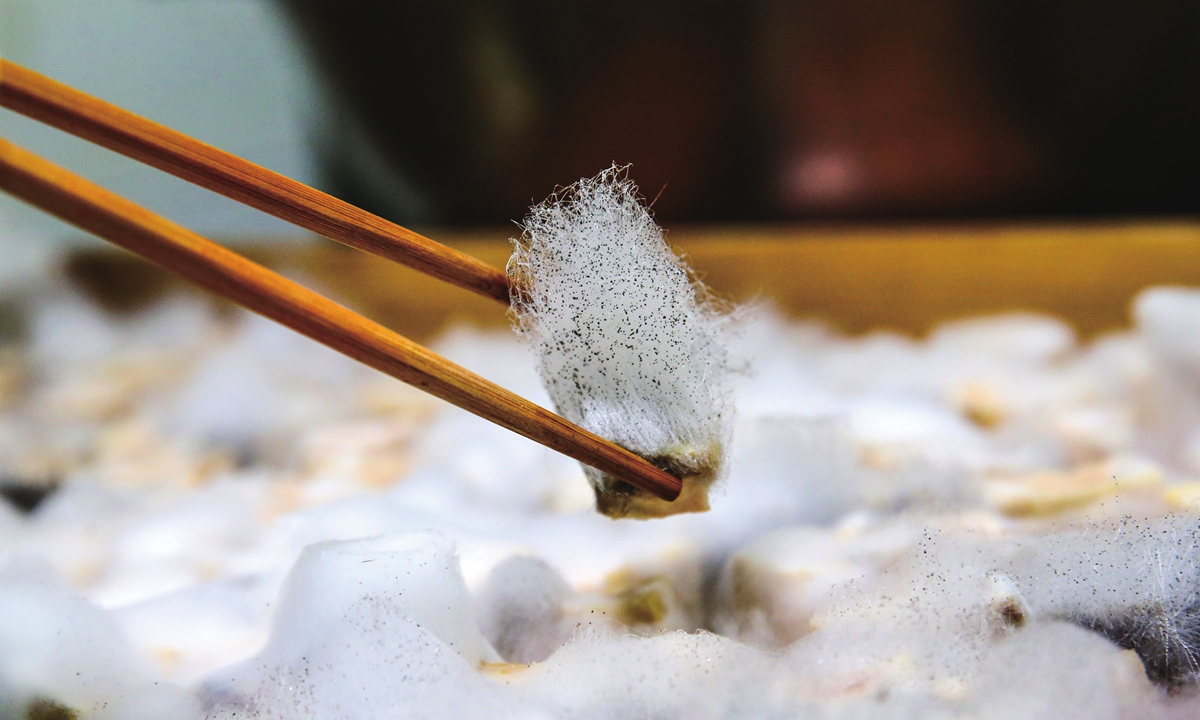
A cook checks the tofu for mold and other signs of fermentation.
Potential risksThe problem, Zhu said, is that viral videos and do-it-yourself tutorials often gloss over the strict conditions required for safe fermentation.
"In open environments, harmful molds can easily contaminate the tofu," Zhu said.
"If you see black, green or dark-colored patches, that is usually a sign of toxic fungi rather than beneficial ones."
One of the most dangerous contaminants is Aspergillus flavus, known as yellow mold, which can produce aflatoxin, a potent carcinogen linked to liver cancer. Other harmful microbes can also grow if sanitation is poor, potentially causing serious illness.
"If the tofu isn't thoroughly cleaned and steamed beforehand, or if the salt level is insufficient, harmful microbes can easily take over," Zhu said.
Ruan Guangfeng, deputy director of the China Food Information Center, discourages home fermentation of mildewed tofu. "I do not recommend making moldy tofu at home," Ruan said. "Even if people try to follow sterile procedures, it's extremely difficult to prevent contamination in a normal household environment."
Ruan told the Global Times that commercial producers use purified starter cultures, controlled humidity and temperature, and sanitized equipment to ensure that only specific beneficial fungi grow.
He advised prioritizing commercial starter cultures rather than relying on natural fermentation. It is also recommended wearing gloves or washing hands thoroughly and sterilizing all equipment in advance to reduce the risk of contamination.
"Relying on natural airborne inoculation is risky," he said. "That's how toxic molds and pathogenic bacteria enter the process."
Consuming contaminated fermented tofu can cause symptoms ranging from vomiting and diarrhea to severe food poisoning. In extreme cases, toxin exposure can be life-threatening.
Zhu echoed the warning, saying factory-produced fermented tofu is far safer due to controlled fermentation and quality testing.
"For health reasons, it's better to buy products from reputable manufacturers rather than making them yourself," she said.
"In earlier times, there was limited testing and almost no systematic tracking of foodborne illness," Zhu said. "People often didn't associate mild or delayed symptoms with fermented foods."
With advances in microbiology, toxicology and epidemiology, risks that once went unnoticed are now well documented. "Highlighting these dangers is not denying tradition," Zhu said. "It's applying modern science to protect health."
Mildewed tofu appeals to an innate human taste for fermented umami and is widely enjoyed as a strongly flavored accompaniment to meals. However, Zhu advised consuming it in moderation. Even commercially produced moldy tofu should be consumed sparingly because of its high salt content.
A single 10-gram cube can contain about 1 gram of salt, roughly half of the recommended salt intake for an entire meal. When cooking with fermented tofu or its brine, additional salt or soy sauce should be reduced or avoided altogether. People with hypertension or kidney disease should be especially cautious, experts advise.
Once opened, fermented tofu should be refrigerated and eaten promptly. If new or unfamiliar mold appears on the product, the entire container should be discarded, as toxins may already be present even if only part is visibly affected, said Zhu.
RELATED ARTICLES