China opposes setting 'exclusive blocs' that undermine global trade order: FM on US-led 'critical minerals bloc'
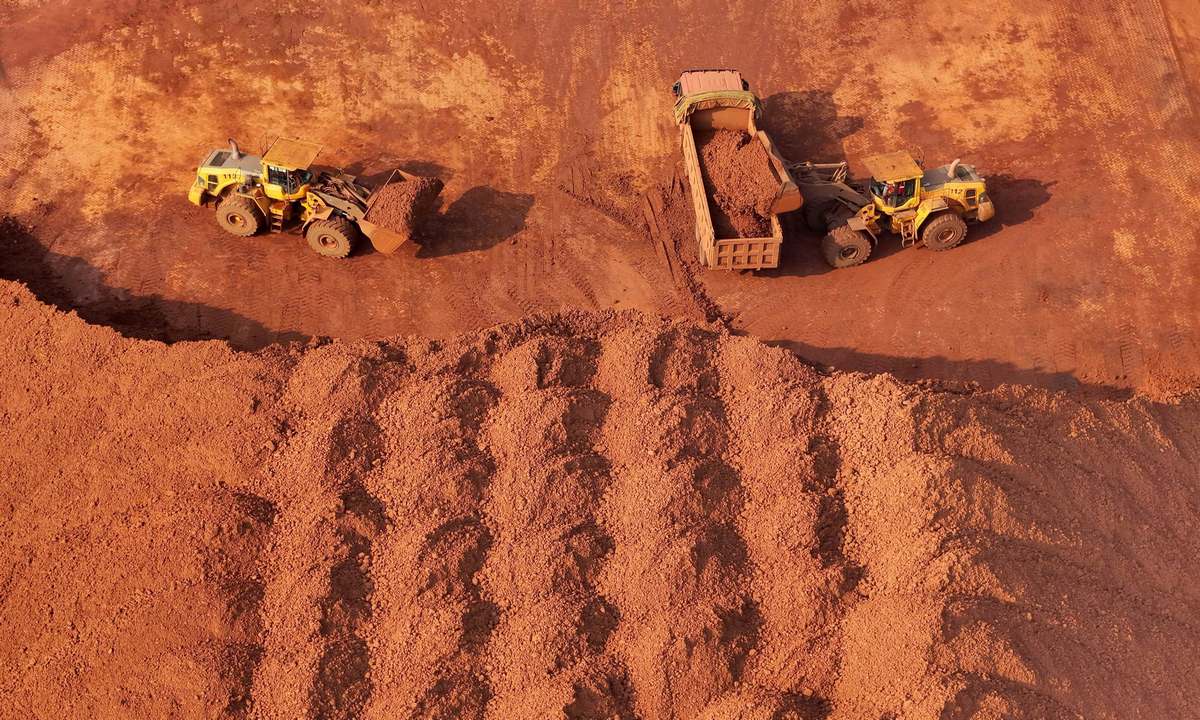
Rare earth resources Photo: VCG
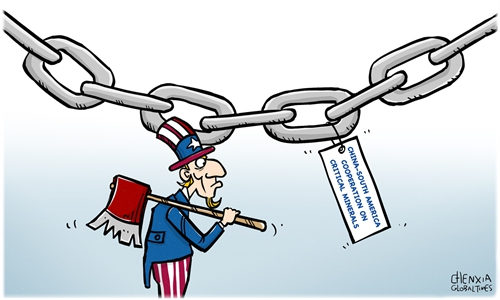
Following reports that the US is creating a new critical mineral trading bloc and coordinating pricing floors, a Chinese Foreign Ministry spokesperson said on Thursday that China opposes any country setting up exclusive blocs to disrupt international economic and trade order.
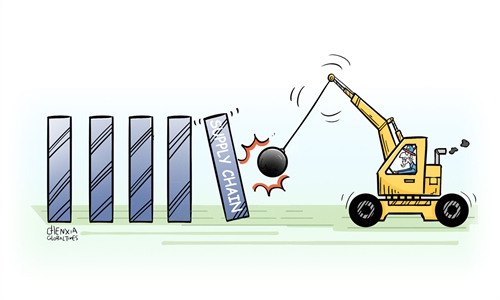
Chinese experts said the US' "small-circle" approach carries strong exclusivity and protectionist overtones, warning it will only disrupt global supply chains and is unlikely to challenge China's long-established advantages across rare earths and other critical mineral supply chains in the short term.
On Wednesday local time, the US trade representative (USTR) claimed that Washington has enacted the US-Mexico Action Plan on Critical Minerals, and the US, the European Commission, and Japan intend to develop Action Plans for critical minerals supply chain resilience, according to press releases from the USTR.
In addition to the action plans announced by the USTR, on Wednesday local time, the US State Department also hosted the first so-called Critical Minerals Ministerial event - which was attended by countries and organizations including the UK, the EU, Japan, South Korea, Mexico, and Australia.
Following the event, Washington claimed that it had signed bilateral critical minerals agreements with 11 countries, building on 10 similar pacts inked over the past five months. Negotiations were also completed with an additional 17 nations, CNBC reported.
At a regular press briefing on Thursday, asked for comments on the launch of the alliance, which will be chaired by South Korea through June, Chinese Foreign Ministry spokesperson Lin Jian said that an open, inclusive international trade environment beneficial to all serves the common interests of all countries. All parties have the responsibility to play a constructive role in keeping the global industrial and supply chains on critical mineral stable and secure.
In a press release posted on the USTR's website on Wednesday local time, US Trade Representative Jamieson Greer announced the enactment of the US-Mexico Action Plan on Critical Minerals, claiming that under the action plan, the US and Mexico will work to develop coordinated trade policies and mechanisms that mitigate critical mineral supply chain vulnerabilities.
In a separate press release on Wednesday local time, Greer also claimed that the US, the European Commission, and Japan intend to develop Action Plans for critical minerals supply chain resilience. Under these Action Plans, the US, the European Commission, and Japan will develop coordinated trade policies and mechanisms, such as border-adjusted price floors, that can mitigate critical mineral supply chain vulnerabilities, the press release claimed.
Although the USTR's press releases did not specifically mention China, some US media outlets claimed that the moves are aimed at China. The Wall Street Journal claimed that "the US enlists Mexico, EU and Japan in its minerals race with China."
Undermining global supply chains
Jian Junbo, director of the Center for China-Europe Relations at Fudan University's Institute of International Studies, told the Global Times that the US' "small-circle" approach remains part of its broader geopolitical competition with China and reflects the growing securitization of economic and trade issues. More importantly, he noted, such practices run counter to market principles and free trade rules, as political intervention in supply chains undermines stability, intensifies price volatility and accelerates geo-economic fragmentation, further driving supply chain fragmentation.
Jian said that it is widely acknowledged that China is the world's largest supplier of critical minerals, and fully excluding China from global supply chains is simply unrealistic. Safeguarding supply chain stability requires abandoning unilateralism, Cold War mentality and the impulse to form closed, tariff-based blocs. Such protectionism and exclusivity are, in fact, the greatest threat to global critical supply chains, he said.
The Wall Street Journal report also claimed that the US' pacts "seek to establish a 'preferential trade zone' that would counter China's dominance in the sector."
The move reflects a clear effort to "de-risk" from China, with the US and Europe seeking to reduce reliance on Chinese mineral supplies and downstream products and build alternative supply chains, which could put pressure on existing China-West industrial cooperation.
However, Jian said the initiative won't advance quickly. In areas such as automotive chips, uncertainties over raw material supply and cost competitiveness mean it is unlikely to pose an immediate challenge.
Lin Boqiang, director of the China Center for Energy Economics Research at Xiamen University, told the Global Times on Thursday that attempts by the US, the EU and Japan to challenge China's advantages in rare earths and broader critical mineral supply chains have long been discussed, but have yet to see major breakthroughs. The core challenge lies not in resource availability, but in building a complete industrial ecosystem - one that China developed over decades and is difficult to replicate quickly, he said.
Meanwhile, experts also highlighted frictions between the US and its allies, including the EU, as Washington is increasingly prioritizing its own interests — even at the expense of its allies through tariffs. As a result, such groupings are showing visible strains and weakening cohesion, they noted.
Lin added that even if such alliances move forward, it will take a long time before they can meaningfully challenge China's position in critical mineral processing and downstream supply chains. Countries must balance geopolitical goals with commercial realities, and turning mined resources into economically viable supply systems requires sustained investment and time, he said.
In April last year, China announced export controls on seven categories of medium and heavy rare-earth-related items, citing the need to better safeguard national security and interests and fulfill non-proliferation and other international obligations.
Since then, Chinese authorities have repeatedly stressed the use of facilitation measures, including general licenses, to promote compliant trade in dual-use items and safeguard the stability of global supply and industrial chains.
On December 18, 2025, China's Ministry of Commerce spokesperson He Yadong said that some Chinese exporters had preliminarily met the basic requirements for applying for general licenses, adding that a number of applications submitted by Chinese exporters had already been approved.
RELATED ARTICLES