Recent visits by multiple foreign leaders to China open up broad space for economic, trade cooperation: MOFCOM
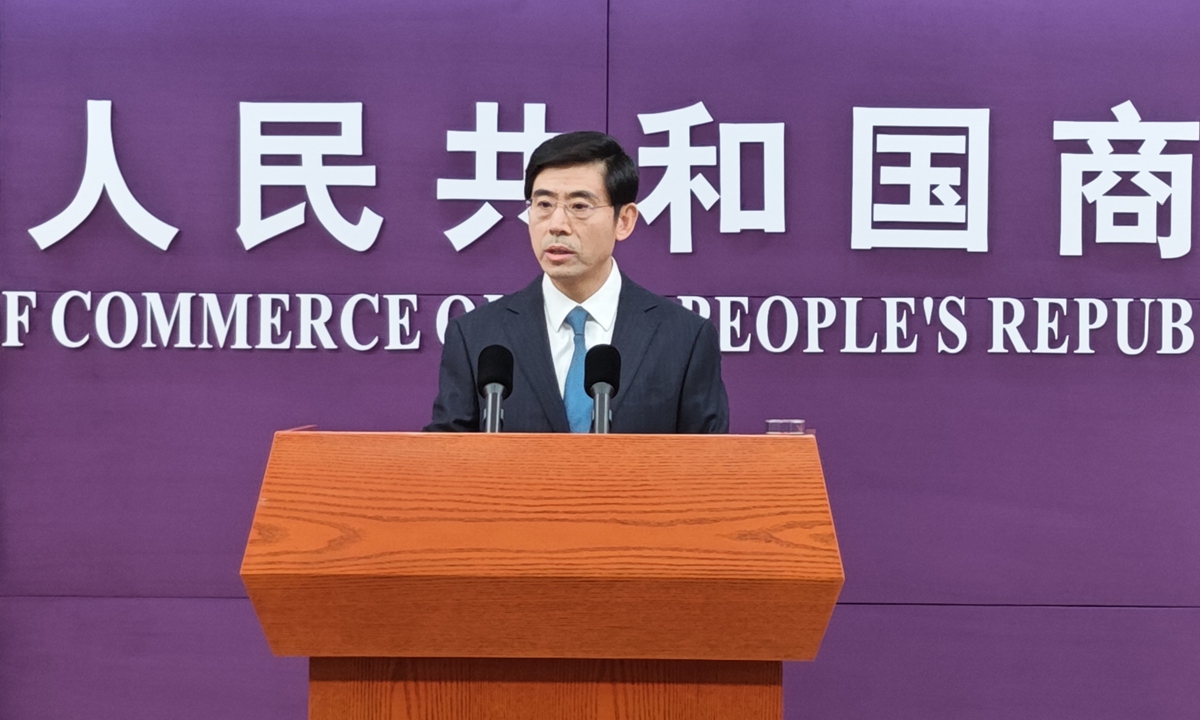
He Yadong, a spokesperson of China's Ministry of Commerce Photo: Yin Yeping/GT
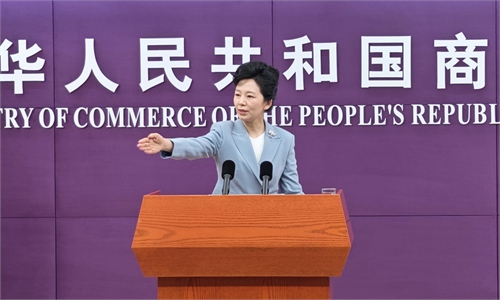
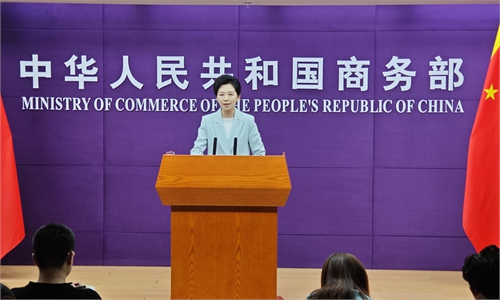
China aims to turn its vast market into a major global opportunity, enabling foreign-invested enterprises to actively participate in the country's modernization drive, He Yadong, a spokesperson of China's Ministry of Commerce (MOFCOM), said at a regular press conference on Thursday.
He made the remarks in response to a question from foreign media about multiple foreign leaders having visited China in early 2026 and how much investment these visits have helped generate.
Since the beginning of this year, foreign leaders including South Korean President Lee Jae Myung, Canadian Prime Minister Mark Carney, Finnish Prime Minister Petteri Orpo, and British Prime Minister Keir Starmer have led delegations to China, said the spokesperson. These visits have further deepened mutual understanding and trust, opened up broad space for bilateral economic and trade cooperation and strengthened the confidence of multinational companies to invest in China and deepen their presence here.
In 2025, South Korea's manufacturing investment in China grew by 14.1 percent year-on-year; Canada's investment in China's high-tech industries increased by 11.7 percent year-on-year; Finland's manufacturing investment in China rose by 21.7 percent year-on-year; and UK investment in China grew by 15.9 percent year-on-year, according to the spokesperson.
On a further note, He said that recent survey reports from the Canada China Business Council, the EU Chamber of Commerce in China, the British Chamber of Commerce in China and the American Chamber of Commerce in China showed that the majority of multinational companies still regard China as a major investment destination and continue to increase their investment.
Amid the current global trend of rising unilateralism and protectionism, China's continued openness provides more certainty for foreign companies looking to invest and cooperate in the country, and businesses are eager to seize these development opportunities, Hu Qimu, a deputy secretary-general of the Forum 50 for Digital-Real Economies Integration, told the Global Times on Thursday. Hu noted that the recent visits by foreign leaders, accompanied by large economic and trade delegations and the signing of various cooperation agreements, highlight the strong appeal of the Chinese market.
During his visit, Starmer was leading a delegation comprising senior executives from more than 50 major British firms and representatives of British institutions, representing Britain's leading sectors that span finance, medicine, manufacturing, culture and creativity, according to the MOFCOM, suggesting the huge size of the delegation.
All these visits indicate that engaging with China aligns with their development interests, creating mutually beneficial outcomes, Hu said.
According to the MOFCOM spokesperson, during the 15th Five-Year Plan period (2026-30), China will steadily advance toward high-quality development, continue to expand high-level opening-up, firmly uphold the multilateral trading system and strengthen equal and mutually beneficial economic and trade relations with all countries. These efforts will provide favorable expectations for the long-term development of foreign-invested enterprises in China.
Going forward, the MOFCOM spokesperson said that China will deepen reform of the systems and mechanisms for promoting foreign investment, continue to expand institutional opening-up, optimize the business environment and accelerate the creation of new advantages in attracting foreign investment.
China's attractiveness to foreign entities is rising. According to a recent report on the outlook for multinational companies in China that KPMG sent to the Global Times, 67 percent of the respondents are moderately confident in growth prospects for the next three to five years in China, while 94 percent said they will stick to investing in the Chinese market.
China's market is attractive both in scale and cost, Hu said, noting "Beyond being a huge consumer market, it offers complete industrial and supply chains and strong R&D capabilities. This well-organized ecosystem helps businesses lower costs while effectively serving local as well as international demand."
RELATED ARTICLES