Chinese, Iranian diplomats meet before US-Iran nuclear talk; move reflects Teheran's willingness to seek intl support: Chinese expert
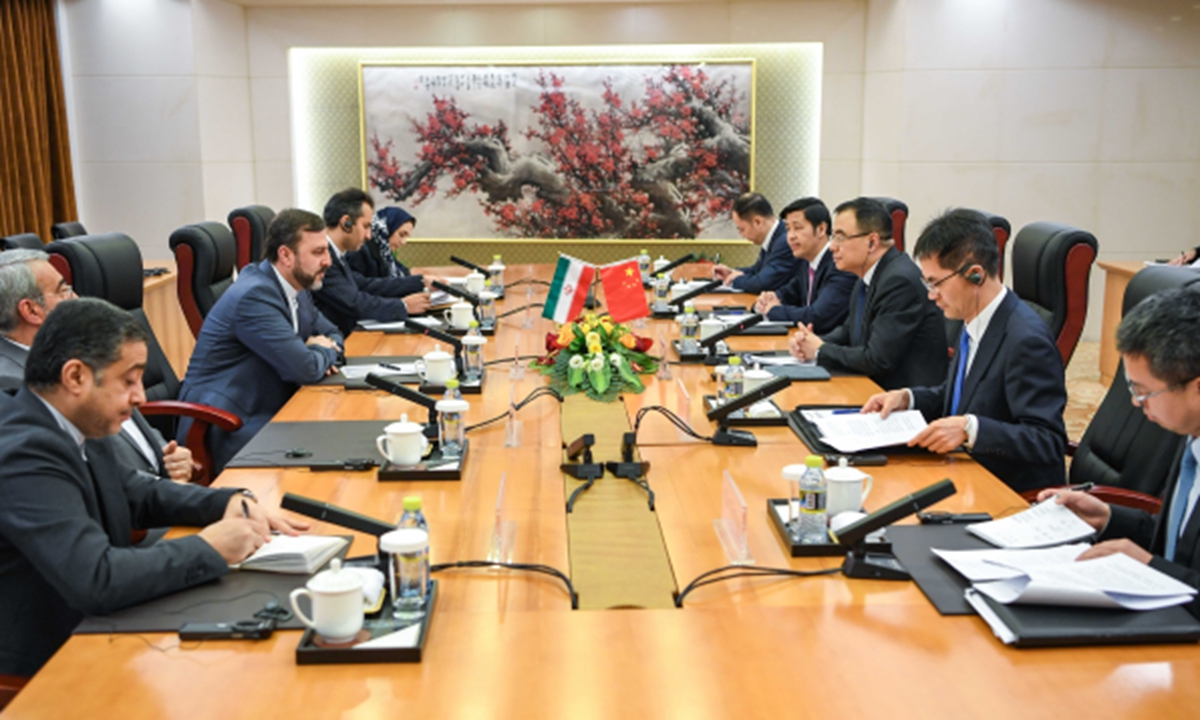
Chinese Assistant Foreign Minister Liu Bin meets with visiting Iran's Deputy Foreign Minister for Legal and International Affairs Kazem Gharibabadi in Beijing on February 5, 2026. Photo: Chinese Foreign Ministry
Just a day before nuclear talks between Iran and the US is set to take place in Oman, Chinese Assistant Foreign Minister Liu Bin met with visiting Iran's Deputy Foreign Minister for Legal and International Affairs Kazem Gharibabadi on Thursday, as the two sides focused their discussions on exchanging views regarding the current situation of the Iran nuclear issue. The Chinese side reiterated its advocacy for the peaceful resolution of the Iran nuclear issue, while stressing that China supports Iran's legitimate right to the peaceful use of nuclear energy.
According to a readout released by the Chinese Foreign Ministry on Thursday, Liu said China has consistently advocated for the peaceful resolution of the Iran nuclear issue through political and diplomatic means, and opposes threats of force and pressure through sanctions.
Liu noted that China supports Iran's legitimate right to the peaceful use of nuclear energy, and takes note of Iran's repeated reaffirmations that it has no intention of developing nuclear weapons. China will continue to work with the international community to promote the proper resolution of the Iran nuclear issue, the Chinese diplomat said.
Gharibabadi expressed appreciation for China's objective and impartial stance on the Iran nuclear issue and expressed willingness to maintain communication and coordination with China, per the readout.
According to Iranian state news agency IRNA, Gharibabadi said the talks "are expected to focus on issues of mutual interest and bilateral cooperation."
Qin Tian, a deputy director of the Institute of Middle East Studies of China Institutes of Contemporary International Relations, told the Global Times on Thursday that Gharibabadi's visit, which comes a day before the nuclear talks with the US, reflects Iran's willingness to actively seek international support to counter US pressure through diplomacy, as the country's overall strength still lag far behind that of the US, making it difficult to withstand the risks of large-scale war.
To that end, Iran is engaging with regional countries and major world powers to maintain a united strategic posture, Qin said.
This year marks the 10th anniversary of the establishment of the China-Iran comprehensive strategic partnership. At this juncture, the deputy foreign minister's visit is expected to consolidate and promote cooperation, including in areas such as trade and energy, Qin said.
Reuters reported on Wednesday that the US and Iran have agreed to hold talks in Oman on Friday, officials for both sides said, even as they remained at odds over Washington's insistence that negotiations include Tehran's missile arsenal and Iran's vow to discuss only its nuclear program.
The delicate diplomatic effort comes amid heightened tensions as the US builds up forces in the Middle East and regional players seek to avoid a military confrontation that many fear could escalate into a wider war, the report said.
China has repeatedly made its stance clear on the situation in Iran. Foreign Ministry spokesperson Mao Ning said on January 14 that China hopes the Iranian government and people will overcome the current difficulties and uphold stability in the country. "We oppose external interference in other countries' internal affairs, object to the use or threat of force in international relations, and hope parties will act in ways conducive to peace and stability in the Middle East," she said.
RELATED ARTICLES