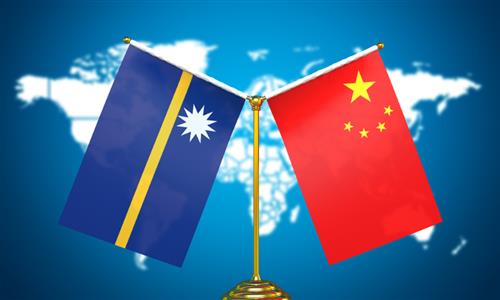
To repair relations with China, Lithuania's verbal 'admission of mistake' is not enough: Global Times editorial
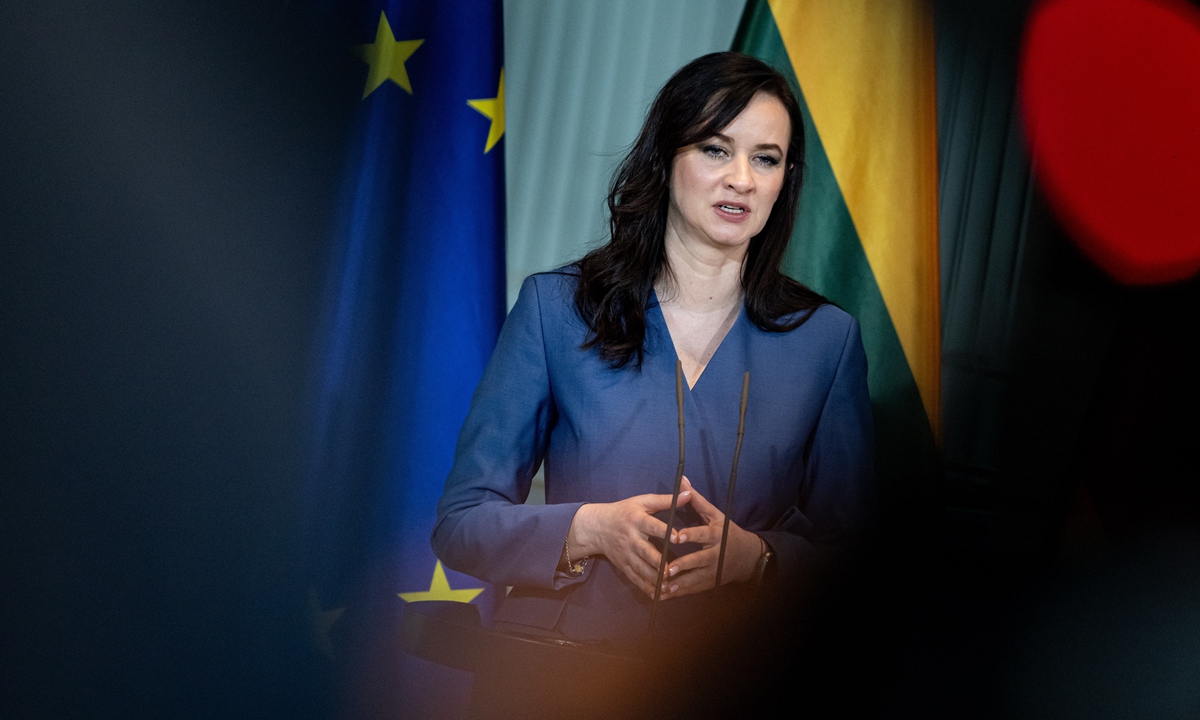
Lithuanian Prime Minister Inga Ruginiene speaks at a joint press conference with German Chancellor Merz on January 29, 2026. Photo: VCG
Lithuania's new Prime Minister, Inga Ruginiene, recently publicly admitted that Lithuania has made a big mistake in its policy toward China. Years ago, the Lithuanian government's decision to allow the Taiwan authorities to establish a so-called Taiwanese representative office in its capital, Vilnius, was "jumping in front of a train and lost." The country's President, Gitanas Nauseda, has also stated that he and Ruginiene hope to "visit China as soon as possible." It appears that Lithuania's ruling authorities want to repair relations with China. However, the severe damage previously inflicted on China-Lithuania relations cannot be repaired simply by a verbal admission of mistake.In November 2021, the Lithuanian government reneged on the political commitments it made in the communiqué on the establishment of diplomatic relations between China and Lithuania, digging its heels in endorsing "Taiwan independence." The Chinese side expressed strong dissatisfaction and lodged a solemn protest over this matter, announcing the downgrading of its diplomatic relations with Lithuania to the level of chargé d'affaires.
Over the past four years, economic and trade relations between China and Lithuania have experienced a "precipitous drop": Data showed that Lithuania's exports to China plummeted by more than 50 percent; pillar industries such as timber and dairy suffered heavy losses, with the century-old dairy company Rokiskio Suris also taking a hit; and the Baltic deep-water port of Klaipeda saw a sharp reduction in throughput due to the rerouting of China-Europe freight trains. It can be said that Vilnius has paid a heavy price for its strategic shortsightedness and political opportunistic actions.
For some time recently, the Lithuanian side has released bits and pieces of information regarding "improving relations with China," but its words and actions are often inconsistent. For instance, the Lithuanian President claimed in a recent public speech that his country sees "all the risks associated with overly close engagement" with China. Furthermore, on Sunday, the deputy chair of the Lithuanian Seimas' Committee on Foreign Affairs led a delegation of MPs from multiple countries to visit the island of Taiwan. Even in her statement, Ruginiene only regrets Lithuania "sticking its neck out" and grieved over the price her country has paid; yet she has failed to deeply reflect on the inherent mistakes, let alone apologize for the gross interference in China's internal affairs or take substantive remedial measures.
Ruginiene also said: "That was probably Lithuania's big mistake… We have the Taiwanese office, but the world did not appreciate it. No one appreciated it." Adhering to the one-China principle is an important political cornerstone for the comprehensive cooperation between China and Europe. Yet, some Lithuanian politicians treat trampling on the red line of the Taiwan question as "bargaining chips" to claim credit and seek rewards from anti-China forces in the West.
This not only deviates from the general consensus of China-Europe cooperation, but also violates the basic norms of the post-World War II international order. One wonders where the "reward-seeking" logic of these Lithuanian politicians comes from?
Within Europe, two distinct views have long existed regarding China policy. One advocates a return to rational and pragmatic approach, grounded in mutual respect for each other's interests and core concerns. The other can't let go of the fixation on viewing China as a "systemic rival" or a "security threat." Over the past two months, the French president, the Irish Taoiseach, the Finnish prime minister, and the British prime minister have successively visited China. The Spanish prime minister and the German chancellor may also visit China soon. This indicates that a growing number of European leaders advocate the development of pragmatic cooperation with China. Located in the Baltic Sea region, Lithuania cannot fail to notice the further warming of relations between China and Europe.
The one-China principle is the foundation of China's diplomatic relations with other countries, and the Taiwan question is at the very core of China's core interests. China maintains that all countries, regardless of size, strength, or wealth, are equal, and it never seeks to bully smaller nations. But China's resolve to safeguard national sovereignty and territorial integrity is unshakable. Recent statements by Lithuanian leaders on China policy indicate that China's firm position and decisive actions have compelled Lithuania to reflect on its approach. This has served as a warning to certain countries that fantasize about acting as pawns in attempts to "use Taiwan to contain China," and has dealt a heavy blow to the "Taiwan independence" secessionist forces that seek leverage by relying on external powers.
It is evident that Vilnius now has a more pressing desire than before to "stop the loss" in China relations. However, verbal statements alone are far from sufficient. Lithuania needs to take more sincere actions, genuinely correct its mistakes, and eliminate its negative impact in order to create conditions for the normalization of bilateral relations.
RELATED ARTICLES