LDP's election win not a 'blank check' for Takaichi admin, former PM Ishiba says in interview; remarks a warning against using electoral win to justify policy overhaul: expert
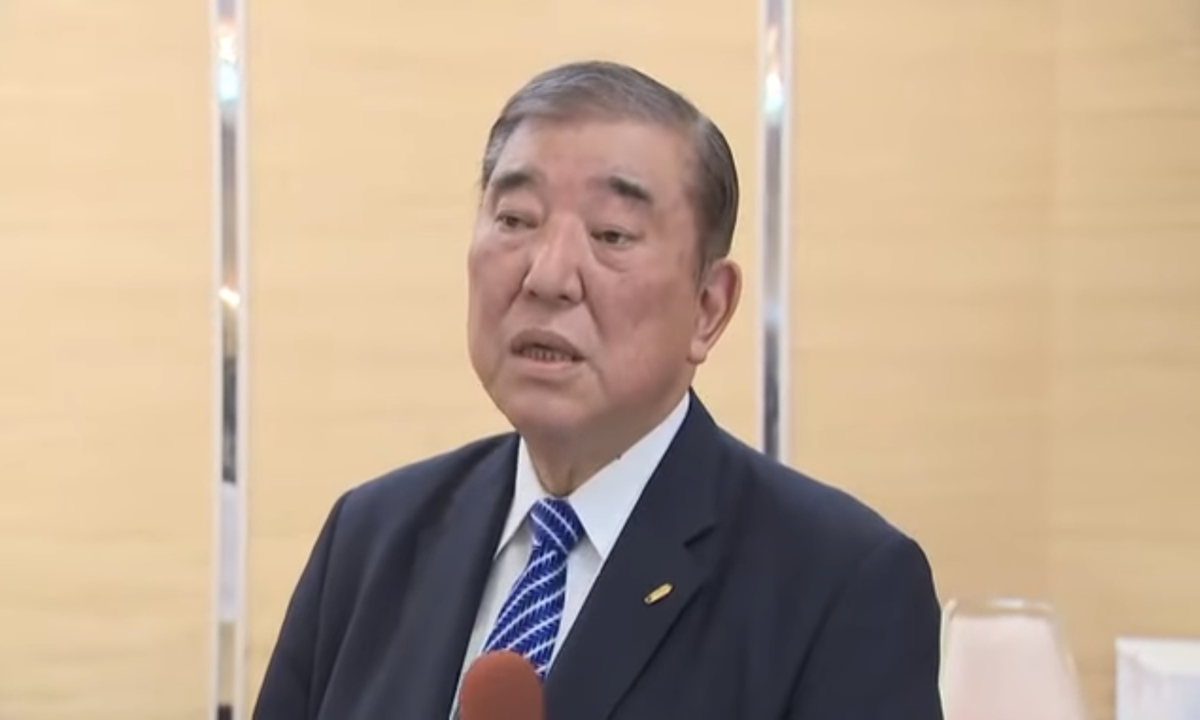
Former Japanese Prime Minister Shigeru Ishiba during an interview with Japanese Media outlet Fuji News on February 9, 2026. Photo: Screenshot from Fuji News' YouTube channel.
Former Japanese Prime Minister Shigeru Ishiba said that the ruling Liberal Democratic Party's (LDP) landslide victory in Japan's House of Representatives election does not amount to a "blank check" for the government to act without restraint, stressing that electoral success should not be interpreted as permission to "do whatever it wants," according to a report by Fuji News on Monday local time.Ishiba made the remarks in an interview with Fuji News when asked whether the election result should be seen as public confidence in the administration led by Japanese Prime Minister Sanae Takaichi. He said such confidence should be understood as expectations, adding that "confidence is not the same as a blank check."
Ishiba said that what ultimately matters is how the public evaluates the administration's actual performance, adding that securing a large number of seats does not mean the government is free to act without restraint. The former PM said that key policy issues, including proposed tax cuts as well as possible revisions to Japan's Three Non-Nuclear Principles and Three Principles on Arms Exports, were not sufficiently discussed before the snap election, adding that assessment of the administration should be based on results delivered going forward.
Commenting on proposals to cut the consumption tax, Ishiba drew a clear line, warning that tax reductions without alternative sources of revenue would undermine public finances, weaken the currency and drive up prices. "This is something even elementary school students can understand," he said, according to the Fuji News report.
Ishiba's comment should be seen as a stern reminding or warning to the Takaichi administration against using electoral victory as justification for fundamental policy shifts, as sensitive issues involving Japan's Three Non-Nuclear Principles were not clearly presented to voters during the election campaign. The message was that electoral victory and the securing of more seats should not be used to justify pushing through fundamental policy changes that had not undergone sufficient public discussion, Lü Chao, a professor at the Liaoning Academy of Social Sciences, told the Global Times on Monday.
Abandoning the Three Non-Nuclear Principles and moving toward nuclear weapons development would mark a fundamental break with Japan's postwar pacifist framework, carrying serious consequences for regional security, Lü said, adding that Ishiba's comments underscored concerns that such a shift would place Japan in a dangerous position, with Japanese voters ultimately bearing the cost of decisions that alter the country's postwar foundations.
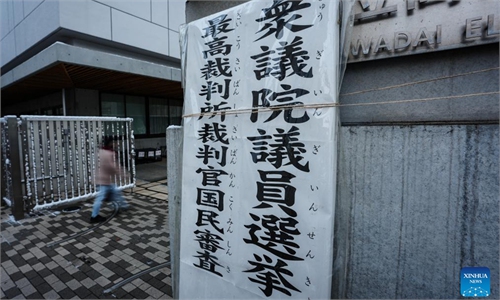
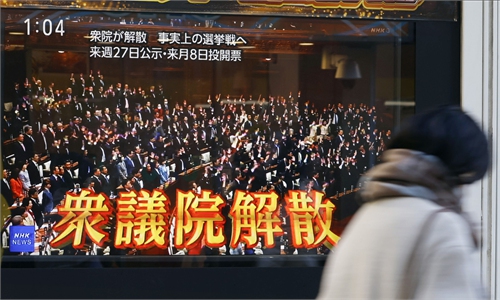
According to vote counts reported by multiple Japanese media outlets on Monday, in the House of Representatives election, the ruling coalition formed by the LDP and the Japan Innovation Party (JIP) secured the majority of seats. Vote counts showed that the LDP won 316 seats, while the Japan Innovation Party captured 36 seats.
On the opposition side, the Centrist Reform Alliance, formed by the Constitutional Democratic Party and Komeito party before the election, won 49 seats, followed by the Democratic Party for the People with 28 seats, and the conservative political party Sanseito with 15 seats.
RELATED ARTICLES