Illustration: Chen Xia/GT
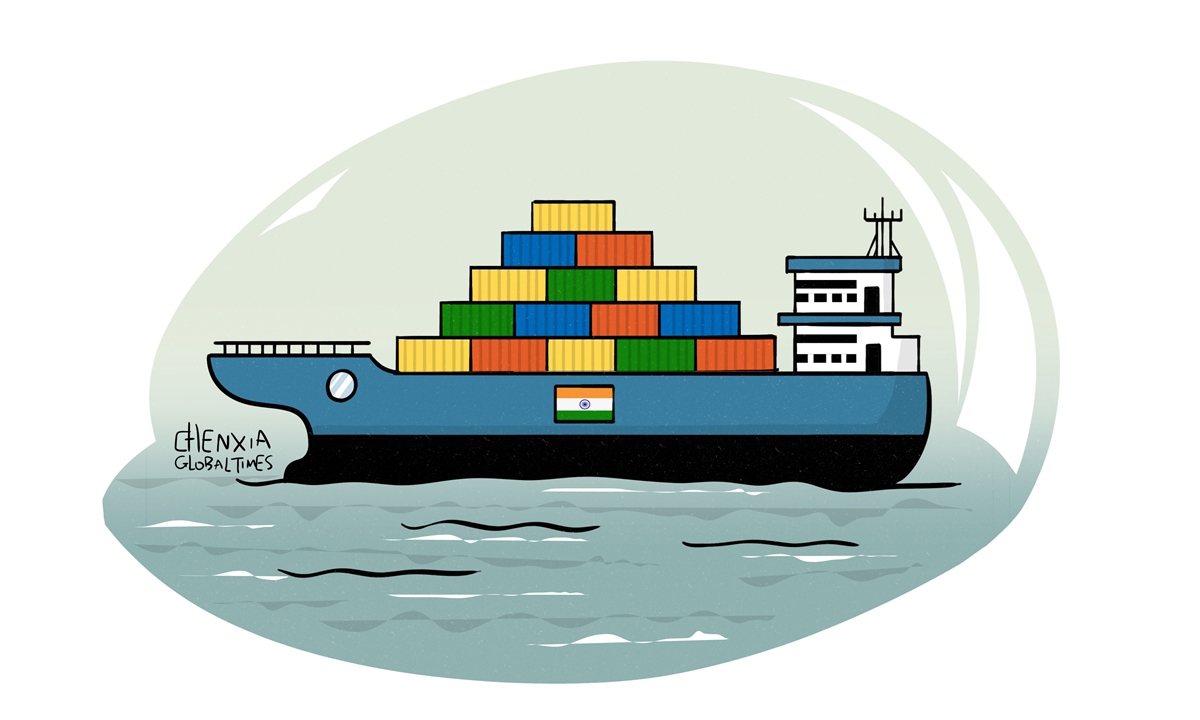
India's tea exports reportedly climbed to a record high in 2025, driven by an increase in shipments to international markets including China. According to Indian newspaper The Telegraph, exports to China more than doubled from 6.24 million kilograms in 2024 to 16.13 million kilograms in 2025. This rise underscores the increasing potential for Indian products to tap into the Chinese market, reflecting a broader trend of growing bilateral trade opportunities.India's exports to China have shown notable growth. According to data from the Chinese Embassy in India, exports to China totaled $19.7 billion in 2025, a 9.7 percent increase year-on-year. The final two months of the year saw particularly strong performances, with export growth rates of 90 percent and 67 percent. India has also taken note of this growth. Times News Network (TNN), citing official Indian sources, reported a 37 percent increase in exports to China from April to December 2025, amounting to $14.2 billion. This growth highlights one dimension of the broader opportunities that China's market offers.
China's economic performance in 2025 provided a solid foundation for these developments. Domestic consumption now accounts for 52 percent of GDP, underscoring its role as a central driver of growth. As the world's second-largest consumer market, China continues to offer substantial opportunities for global trade. For India, while the factors behind its export growth are multifaceted, one clear implication is that strengthening economic ties with China could foster more diversified growth in its export sectors, enabling India to tap into China's consumption dividends.
India and China are both at critical junctures in their economic development, with the pursuit of progress serving as a shared foundation. This mutual focus on development opens up a range of opportunities for both countries across multiple sectors of their economies.
First, there is notable potential for India to expand its exports to China. While tea represents a relatively small part, other sectors are poised to benefit from China's expanding consumer demand. As China's middle class grows and consumption patterns evolve, Indian exports - spanning agricultural goods and consumer products - could capture more of this vast market. This presents India with an opportunity to diversify its export base and reduce its reliance on any single market.
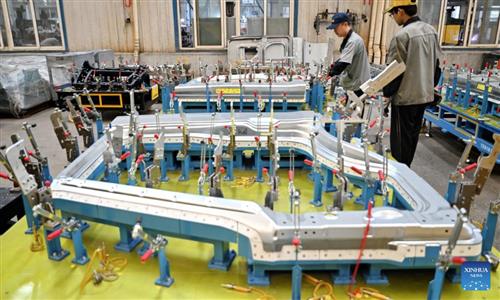
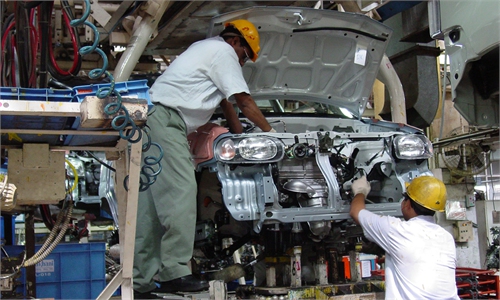
Second, India's imports from China also offer opportunities. According to TNN, Indian Union Minister of State for Ministry of Commerce & Industry Jitin Prasada said that active pharmaceutical ingredients, auto components, electronic parts and assemblies and mobile phone parts are imported and then used for making finished products. These remarks demonstrate that such imports serve as positive inputs for the production of finished goods, underscoring the role trade plays in supporting India's industrial development.
While critics often focus on the trade deficit and express concerns about imports, a more forward-looking view recognizes that these imports are a positive component of India's manufacturing growth. By utilizing these imports, India can strengthen its competitive position in global manufacturing.
Third, the potential for bilateral investment presents an additional opportunity. Both countries are focused on advancing their economic development, creating many areas that require investment. Foreign investment not only drives economic growth but also fosters technological innovation, delivering long-term benefits for both economies.
The economic growth of both India and China is steadily expanding the array of opportunities between them. Exchanges at various levels are becoming more frequent, and bilateral relations continue to improve. Capitalizing on this favorable environment and unlocking these opportunities to convert them into tangible economic cooperation and growth will require focused and concrete action from the Indian side.
Despite progress, trade and investment interactions between India and China still face challenges, rooted in a variety of complex factors. By addressing and refining these issues, India can further unlock the potential offered by China's economy.
India and China represent opportunities for each other's economic development. As long as this broader direction is followed, trade and investment between India and China are expected to see sustainable growth.
RELATED ARTICLES