Translators' Voices: Spring Festival embodies profound cultural connotations, universal appeal that transcend national boundaries

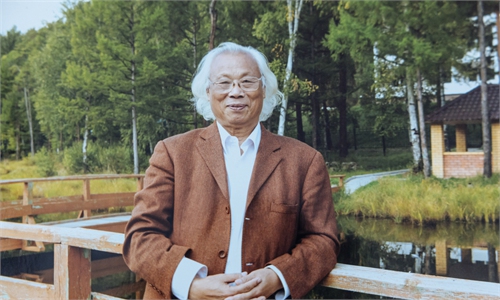
Rafael Lima Photo: Courtesy of Lima
Editor's Note:
The Spring Festival, the most important traditional holiday of the Chinese nation, embodies the Chinese people's cherished values of family reunion and bidding farewell to the old while welcoming the new. In December 2024, the successful inscription of the "Spring Festival" on the UNESCO intangible cultural heritage list highlights that it is not only a Chinese celebration but also a cultural treasure shared by all of humanity.
"The Spring Festival is a wonderful moment to bid farewell to the old and welcome the new, always bringing new hope to the people." This statement by Chinese President Xi Jinping captures the essence of Spring Festival culture. Xi has always attached great importance to traditional Chinese festivals and their cultural implications. On occasions such as the Spring Festival gathering, he has elaborated on the significance of Chinese culture, including the culture of the Spring Festival, and breathed new life into its meaning.
Since the 18th National Congress of the Communist Party of China (CPC), Xi, also general secretary of the Communist Party of China Central Committee and chairman of the Central Military Commission, has emphasized the historical influence and significance of fine traditional Chinese culture, endowing it with contemporary relevance and promoting its creative transformation and innovative development.
In the article "Expand Research into the History of Chinese Civilization and Build a Stronger Sense of History and Cultural Confidence," included in the fifth volume of the book series Xi Jinping: The Governance of China, Xi pointed out: "China's long, extensive and profound civilization is one of the distinctive qualities of the Chinese nation. It underpins contemporary Chinese culture and creates a spiritual bond among all people of Chinese descent across the globe. It provides valuable resources and inspiration for China's cultural innovation."
Xi has also emphasized the need to "encourage exchanges and mutual learning among civilizations, and promote the building of a community with a shared future for humanity."
Under the guidance of Xi Jinping Thought on Culture, the heritage of Chinese culture is shining with renewed brilliance as it is carried forward.
In the 21st installment of the special series "Decoding the Book Xi Jinping: The Governance of China," the Global Times (GT), along with the People's Daily Overseas Edition, focuses on the values embedded in the Spring Festival, the most important traditional festival of the Chinese nation. We continue to invite Chinese and foreign scholars, translators of Xi's works, practitioners with firsthand experience, and international readers to delve into how the historical evolution and cultural essence of the Spring Festival reflect the continuity, innovation, unity, inclusiveness, and peacefulness of Chinese civilization.
In the 21st article of the "Translators' Voices" column, GT interviewed Rafael Lima (Lima), translation editor of the Portuguese edition of the book series Xi Jinping: The Governance of China.
GT: "The Spring Festival is a wonderful moment to bid farewell to the old and welcome the new, always bringing new hope to the people." With this remark, Chinese President Xi Jinping captures the cultural essence of Spring Festival. Have you ever spent the Spring Festival in China? Based on your personal experience or observations, how do you understand the festival's cultural core of "saying goodbye to the old and ushering in the new"? What kind of cultural outlook and aspirations does it reflect among the Chinese people?
Lima: I lived in China for nearly 10 years, and during that time, I spent most Spring Festivals in the country.
President Xi's description of the Spring Festival as a moment to "say goodbye to the old and usher in the new" captures its essence with great precision. This idea unfolds on several levels at once.
At a very practical level, to embrace Spring Festival, families clean their homes, settle accounts, resolve misunderstandings, buy new clothes and decorate their homes. These actions may seem simple, but they reflect a shared desire for renewal and order. On a deeper, symbolic level, the Spring Festival is a moment of reflection. It is a time to leave behind grievances and hardships, to honor ancestors, and to seek harmony and good fortune for the year ahead.
What struck me most over the years is how central family reunion is in Chinese culture. No matter how far away people live and work, returning to their hometown during the Spring Festival is seen as essential. Reconnecting with family is not only emotional; it is understood to be the foundation for blessings and balance in the coming year.
There is also a clear philosophical dimension rooted in traditional Chinese views of nature and time. The Spring Festival marks the transition from winter to spring in the lunar calendar and reflects the understanding of time as cyclical. Endings and beginnings are inseparable. Letting go of the old is not a loss, but a preparation for the future ahead.
Seen in this light, President Xi's words resonate beyond the festival itself. They connect cultural tradition with China's broader vision of renewal, development and national rejuvenation. From what I observed during my time in China, this message of shared hope and unity is deeply felt across regions and ethnic groups, drawing strength from China's long civilizational continuity.
GT: As the most important traditional festival of the Chinese nation, the Spring Festival serves as both an enduring cultural bond and a tradition that continues to evolve with the times. Xi Jinping: The Governance of China series repeatedly emphasizes the need to "promote cultural sustainability through creative transformation and innovative development of the best of traditional Chinese culture." In your view, what kind of cultural vision and commitment does the concept of "creative transformation and innovative development" reflect? How does this concept, by activating fine traditional Chinese culture, provide a lasting spiritual foundation and value support for Chinese modernization?
Lima: From my perspective, "creative transformation and innovative development" reflect an understanding of culture as something living and dynamic. Traditional Chinese culture is not treated as something frozen in the past, but as a source that continues to generate meaning in the present.
What I found particularly striking in China is how cultural heritage is not simply preserved, but actively reinterpreted. This approach aligns closely with the path of socialism with Chinese characteristics and places strong emphasis on cultural confidence. Modernization, in this sense, is not separated from tradition, but supported by it.
Internally, this strengthens identity and continuity. Development is guided by values that people recognize as their own, rooted in history and daily life. Ethical traditions that emphasize harmony, family responsibility and social commitment continue to inform modern society and governance.
At the same time, traditional culture fosters innovation. China's philosophy, literature, art and historical experience offer inspiration for contemporary creativity. What emerges is innovation that feels culturally grounded rather than detached.
Externally, presenting traditional culture through modern forms has also strengthened China's cultural presence internationally. It allows China to participate in global conversations on modernization and human values with its own voice, while encouraging dialogue and mutual learning among civilizations.
From what I observed, this approach ensures that Chinese modernization is experienced not as a cultural rupture, but as cultural revitalization - modern, yet deeply rooted.
GT: "Chinese modernization seeks to build upon, rather than erase, China's ancient civilization," President Xi noted in Volume V of Xi Jinping: The Governance of China. The strength and prosperity of a country and its people are always underpinned by cultural flourishing. In your view, what lessons can other developing countries pursuing modernization - particularly those with a long history and rich cultural heritage - draw from China's approach to balancing traditional culture with modernization, as well as the cultural confidence and innovative paths it has demonstrated in this process?
Lima: China's experience offers important lessons for many countries navigating modernization. One central lesson is that modernization does not need to come at the expense of cultural identity. On the contrary, cultural heritage can be a source of strength and creativity.
All countries possess rich cultural traditions shaped by their own histories. China's path shows that tradition can be treated as a living resource, capable of adaptation and renewal.
In Brazil, these ideas have been actively discussed in academic exchanges related to China. At the University of Campinas, the Brazil-China Interdisciplinary Studies Center has played an important role in promoting dialogue on tradition and modernity. Professor Antonio Florentino Neto, who leads many of these discussions, has drawn thoughtful comparisons between China's cultural revitalization and Brazil's need to more deeply value its indigenous cosmologies within a broader civilizational dialogue.
I personally participated in exchanges where Chinese scholars visited indigenous communities in Brazil. These experiences made it very clear to me that modern tools or technologies do not necessarily weaken cultural identity, but rather reflect creative adaptation - something that closely mirrors China's own experience.
Indigenous worldviews in Brazil, particularly their emphasis on harmony with nature and collective life, create meaningful points of connection with traditional Chinese philosophy. These shared values offer a strong foundation for dialogue between civilizations.
From China's example, I believe the key lesson is that cultural confidence allows countries to modernize while remaining authentic.
GT: Volume V includes President Xi's speech at a meeting on cultural inheritance and development in 2023, in which "inclusiveness" was identified as one of the prominent characteristics of Chinese culture. The Spring Festival was designated a United Nations holiday in 2023 and was inscribed on UNESCO's Representative List of the Intangible Cultural Heritage of Humanity in 2024. In your view, which cultural values embodied in the Spring Festival hold universal significance that transcends national and civilizational boundaries? In today's turbulent world, what kind of development approach to international relations could be inspired by the spirit of inclusiveness, harmony and sharing reflected in the Spring Festival?
Lima: As an important carrier of Chinese culture, the Spring Festival embodies profound cultural connotations and values with universal appeal that transcend national boundaries. Rooted in concepts such as family reunion, social harmony and respect for tradition, it resonates naturally with people from different cultural backgrounds.
I currently work in Brazil at a company belonging to the State Grid Corporation of China. Every year, we celebrate the Spring Festival at work. Offices are decorated, gifts are exchanged and traditional dragon dances take place throughout the company. What always strikes me is how naturally these celebrations are embraced by both Chinese and Brazilian colleagues.
At the same time, the international influence of the Spring Festival has been steadily increasing. From the US to Brazil, from Asia to Europe, celebrations of the festival in many places attract strong interest from people of diverse cultural backgrounds. Attention and recognition from international organizations such as UNESCO further confirm its broad appeal as a shared cultural heritage of humanity.
The Chinese wisdom embedded in Spring Festival customs - such as valuing family, pursuing harmony and advocating inclusiveness - offers cultural insights for addressing common challenges facing the world today. It also provides a valuable cultural perspective for fostering more balanced and peaceful relations among nations.
GT: In Volume V of Xi Jinping: The Governance of China, President Xi pointed out that "over five millennia, Chinese civilization has always upheld peace, amity and harmony." How do you think the Spring Festival reflects the "harmony" culture of Chinese civilization? How has China, through its own actions and initiatives, promoted exchanges and mutual learning among civilizations?
Lima: The Spring Festival is an important carrier of the values of peace and harmony within Chinese civilization, profoundly reflecting a cultural ethos that esteems concord and seeks balance. In an increasingly tense and uncertain world, the cultural values embodied in the Spring Festival provide a mind-set for resolving differences through dialogue and promoting stability through harmony. China's path of peaceful development and its initiative to build a shared future for mankind resonate with the spiritual core of Spring Festival culture, encapsulated in the principles of "harmony is precious" and "renewal of all things," advocating a future built on mutual respect and cooperative effort.
Practical initiatives such as the Global Civilization Initiative further translate this philosophy into action, fostering understanding and common development among different civilizations through exchanges and mutual learning. The widespread celebration of the Spring Festival around the world not only reflects the influence of Chinese culture but also serves as a vivid example of dialogue and integration between civilizations, contributing universally applicable cultural wisdom toward harmonious coexistence in the international community.
Through the lens of the Spring Festival, Chinese civilization not only demonstrates its unique charm but also, with an open and sharing attitude, promotes dialogue and understanding among civilizations, injecting warm and positive cultural energy into the building of a shared future for mankind.
RELATED ARTICLES