China, Philippines agree to continue communication through diplomatic channels, says Chinese FM as Manila signals recalibrating ties
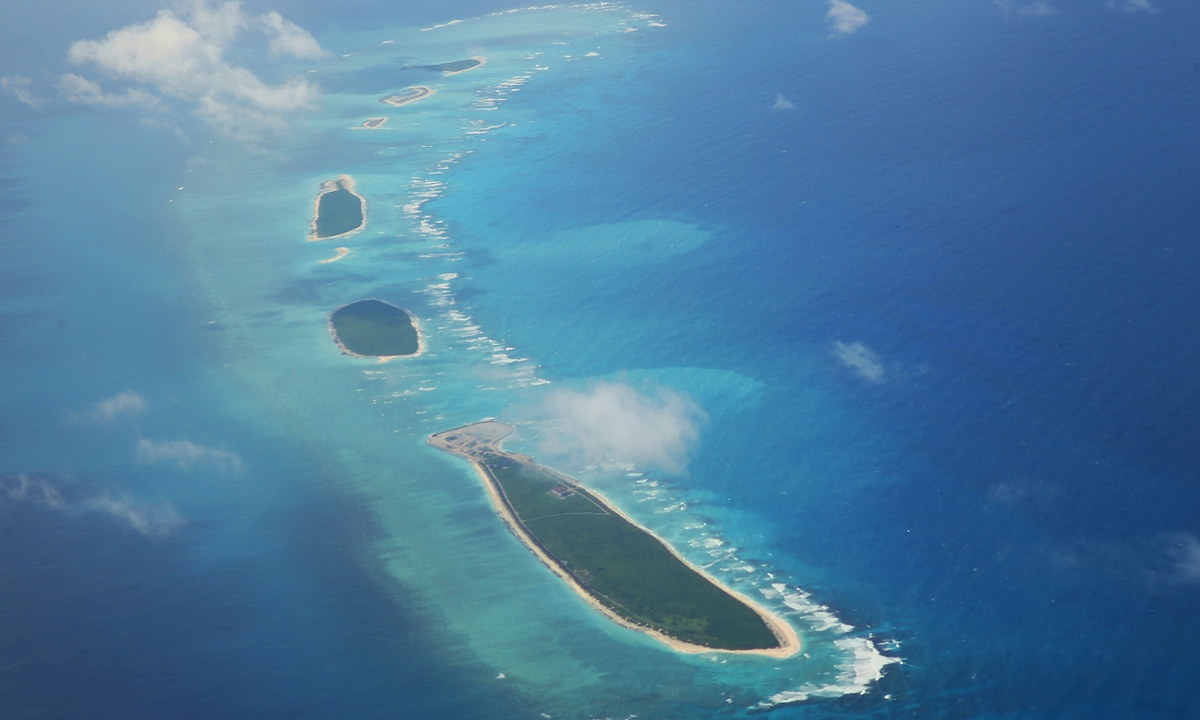
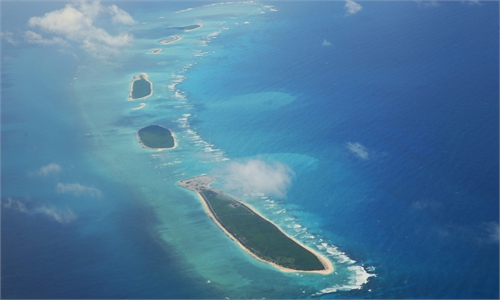
South China Sea Photo: VCG
"Both sides agreed to continue maintaining communication through diplomatic channels, properly handle maritime differences, and get the situation at sea under control," Chinese Foreign Ministry spokesperson Lin Jian said on Tuesday regarding the recent bilateral meeting in Cebu, Philippines, where officials from the foreign ministries of China and the Philippines had "a candid and in-depth exchange of views" on maritime issues and other issues of mutual interest.Lin made the remarks in response to whether an ASEAN-China senior officials' meeting on implementing the Declaration on the Conduct of Parties in the South China Sea have helped to ease all tensions in the South China Sea.
The remarks came as the Philippines' Ambassador to the US Jose Manuel Romualdez reportedly underscored the need to "cool" temperatures with China, noting that Manila's relationship with Beijing cannot be defined solely by maritime disputes, Reuters reported on Tuesday.
In an interview on the sidelines of the US-Philippines Society forum, Romualdez claimed that "We're fine-tuning our relationship with China, and I think it's important that we do that," Romualdez cited potential areas of cooperation such as climate change, alternative energy, trade and manufacturing, stressing the need for a practical and pragmatic approach to international relations, Manila Standard reported on Tuesday.
Romualdez also claimed that the Philippines can cooperate with China on climate action and investments, while still maintaining so-called "firm stance" on South China Sea issue, per Manila Standard.
With the Philippines chairing ASEAN in 2026, Romualdez also claimed that easing friction is vital to secure China's full engagement in efforts to finally "conclude a long‑delayed Code of Conduct in the South China Sea," Reuters reported.
Chen Xiangmiao, director of the World Navy Research Center at the National Institute for South China Sea Studies, noted that the series of signals from the Philippine side on the easing of maritime tensions can be interpreted from several angles - first, as ASEAN chair for this year, the Philippines is obliged to adopt a more constructive posture to prevent bilateral frictions derailing China-ASEAN ties - a scenario that other ASEAN members would not be willing to see. Second, Manila has already felt the negative impacts brought by its friction with China weighing on its economy and people-to-people exchanges, and continuing to do so will offer no benefit but significant harm.
Chen added that as the Philippine government faces serious social issues and slower-than-expected economic growth, it is shifting focus from politics and security toward economic development and livelihood - areas where practical cooperation with China is far more feasible, he told the Global Times on Tuesday.
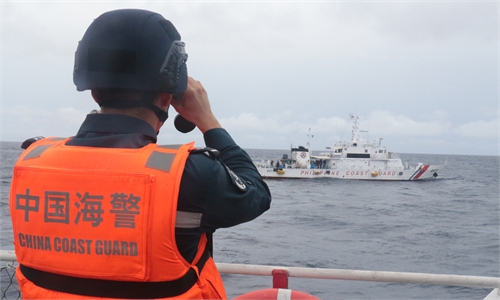
Despite its seemingly conciliatory gestures, the Philippines has not dropped its provocative actions in the South China Sea. The spokesperson for the Philippine Coast Guard (PCG) recently reportedly claimed that in order to advance the so-called New Hero-Fisherfolk initiative, the PCG has deployed vessels and aircraft to provide security for Philippine fishing boats operating near Huangyan Dao.
In response to the claims, Jiang Bin, a spokesperson for China's Ministry of National Defense, said on Tuesday that certain authorities of the Philippine side "trick and instigate innocent fishermen into committing provocative acts," using them as a tool to infringe upon China's legitimate rights, and even deliberately create friction to scapegoat and smear China.
"Such treacherous behaviors have fully betrayed their disregard for the livelihoods, well-being, or even the safety of fishermen," Jiang said, urging the Philippine side to stop its unscrupulous political manipulation and self-directed farce at sea.
Chen noted that if the Philippines truly intends to improve relations with China, it should immediately stop the provocative acts and stop hyping up maritime confrontations. What's more, it needs to demonstrate sincerity by carrying out practical cooperation with China instead of simply making speeches.
RELATED ARTICLES