ARTS / CULTURE & LEISURE
Enjoy our enchanting Spring Festival culture at the museum
Returning home
Editor's Note:
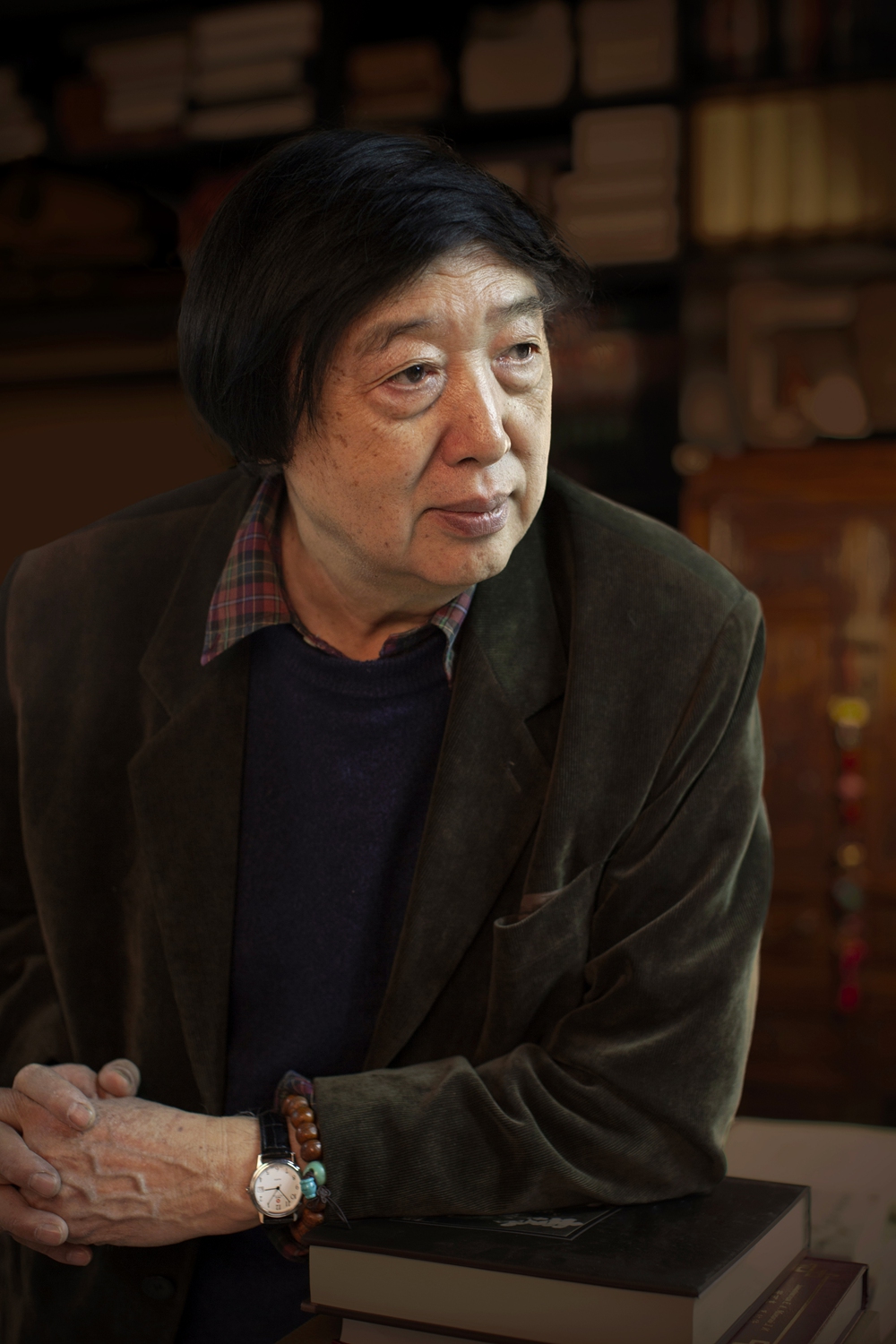
Feng Jicai, a renowned Chinese writer, artist and cultural scholar, delivered a speech during an event celebrating the Chinese New Year at the Feng Jicai Museum of Tianjin University on Tuesday. As this was the museum's first Spring Festival since its opening in November 2025, Feng reflected on the emotional core of "Nian culture," the contemporary significance of folk rituals, and the diverse pathways for passing on intangible cultural heritage. His words guide us through the warm and hopeful spirit of the Chinese New Year, a cherished home for the Chinese people's collective emotions. This article is adapted from his speech at the event.
What do we enjoy going to museums? Our museum houses a rich collection of cultural artifacts. For a foreign friend, it is an opportunity to appreciate the unique charm of different cultures, to experience the brilliance and diversity of human civilizations, and to understand how they coexist harmoniously, all of which are profoundly meaningful.
However, for us Chinese, perhaps we should delve deeper into understanding why our ancestors, who have lived and worked on this land for 5,000 years, created the festival of "Nian" (Chinese New Year).
The backbone of Chinese civilization over five millennia has been agrarian culture. Agricultural production emphasizes harmony with the cycles of nature and the changing seasons. As winter gives way to spring at the end of each year, Nian marks both the conclusion of the old and the beginning of the new. That is why we hold spring in such high regard as it symbolizes hope.
During Chinese New Year celebrations, our hearts are filled with the most heartfelt anticipation for favorable weather and bountiful harvests in the coming year. This anticipation embodies the most sincere and profound longing for a better life.
In that case, where do we place such deep emotions? In the grand festival of the Spring Festival. How do we express them? Through folk customs, or what we call "Nian culture." Take Tianjin as an example: a Yangliuqing New Year painting, with its vibrant colors, lively imagery, and auspicious themes, is a vivid embodiment of "Nian culture." It brilliantly and enchantingly showcases our people's genuine passion and enthusiasm for life.
Recently, I read an article suggesting that a sense of ritual seems to be fading in modern life. I believe it is not disappearing but rather that we sometimes forget that this sense of ritual is deeply embedded in our traditions. Nations have their own rituals, including raising the national flag, firing salutes and military parades, to demonstrate dignity and express sentiment. But where does the sense of ritual in everyday life reside? It is in folk customs. Tomb-sweeping during Qingming Festival, setting off firecrackers during the Spring Festival, posting Spring Festival couplets, and the family reunion dinner on Chinese New Year's Eve... These "customs" are, in fact, the most intimate and emotionally resonant rituals in Chinese life.
Today, I sincerely hope that everyone here can personally experience this uniquely warm sense of ritual in Chinese folk culture and understand the rich traditions and profound meanings behind our Spring Festival customs.
The first group consists of teachers and students who, for various reasons, cannot return home for the Spring Festival and will stay in Tianjin.
"Home" is the core symbol of the Chinese New Year. Mention the Chinese New Year, and "returning home" comes to mind. On Chinese New Year's Eve, the powerful and heartwarming magnetic field of family affection, formed by countless households across China, draws every wanderer back. This is what we often describe in our culture as "love for home and nation," which is inseparable from the culture of the Chinese New Year. We invite students staying on campus to experience the profound feeling of "home" within the unique cultural atmosphere of the Chinese New Year, even when far from their families. The Chinese New Year is the home of our culture and the home of our emotions.
The second group is our international student friends. In 2024, the Spring Festival was inscribed on UNESCO's Representative List of the Intangible Cultural Heritage of Humanity, making it a global festival and a shared cultural treasure of all humanity. Therefore, we invited international students to gather together and celebrate this millennia-old cultural heritage that belongs to all of us.
The third group consists of primary and secondary school students. The vitality of intangible cultural heritage lies in its transmission. As we celebrate the Chinese New Year, we should not forget the important task of passing on our cultural legacy.
The transmission of intangible cultural heritage generally takes three forms: individual, group, and festival transmission.
Festival transmission is universal as we are all inheritors. We not only celebrate ourselves but also involve our children, allowing them to create beautiful and profound cultural memories through participation. In this way, they will consciously and proudly carry forward our splendid culture in the future. Only then will our lives remain rooted, soulful, and radiant.
Imagine how dull and monotonous our lives would be without such a wealth of cultural heritage, the captivating songs, dances, music, art, skills, and folk customs.
Therefore, let us immerse ourselves in this rich "Nian culture" and share the joy of the Spring Festival together. I wish everyone a prosperous Spring Festival.
Feng Jicai, a renowned Chinese writer, artist and cultural scholar, delivered a speech during an event celebrating the Chinese New Year at the Feng Jicai Museum of Tianjin University on Tuesday. As this was the museum's first Spring Festival since its opening in November 2025, Feng reflected on the emotional core of "Nian culture," the contemporary significance of folk rituals, and the diverse pathways for passing on intangible cultural heritage. His words guide us through the warm and hopeful spirit of the Chinese New Year, a cherished home for the Chinese people's collective emotions. This article is adapted from his speech at the event.
Feng Jicai, a renowned Chinese writer, artist and cultural scholar
Today, we are joyfully hosting the first-ever "Celebrate the Spring Festival at the Museum" event here at the Feng Jicai Museum of Tianjin University. Seeing so many university teachers and students who have stayed on campus, international students from various countries, lively primary and secondary school pupils, and adorable kindergarten children gathered together fills my heart with great delight. This leads me to reflect on why we have organized such an event.What do we enjoy going to museums? Our museum houses a rich collection of cultural artifacts. For a foreign friend, it is an opportunity to appreciate the unique charm of different cultures, to experience the brilliance and diversity of human civilizations, and to understand how they coexist harmoniously, all of which are profoundly meaningful.
However, for us Chinese, perhaps we should delve deeper into understanding why our ancestors, who have lived and worked on this land for 5,000 years, created the festival of "Nian" (Chinese New Year).
The backbone of Chinese civilization over five millennia has been agrarian culture. Agricultural production emphasizes harmony with the cycles of nature and the changing seasons. As winter gives way to spring at the end of each year, Nian marks both the conclusion of the old and the beginning of the new. That is why we hold spring in such high regard as it symbolizes hope.
During Chinese New Year celebrations, our hearts are filled with the most heartfelt anticipation for favorable weather and bountiful harvests in the coming year. This anticipation embodies the most sincere and profound longing for a better life.
In that case, where do we place such deep emotions? In the grand festival of the Spring Festival. How do we express them? Through folk customs, or what we call "Nian culture." Take Tianjin as an example: a Yangliuqing New Year painting, with its vibrant colors, lively imagery, and auspicious themes, is a vivid embodiment of "Nian culture." It brilliantly and enchantingly showcases our people's genuine passion and enthusiasm for life.
Recently, I read an article suggesting that a sense of ritual seems to be fading in modern life. I believe it is not disappearing but rather that we sometimes forget that this sense of ritual is deeply embedded in our traditions. Nations have their own rituals, including raising the national flag, firing salutes and military parades, to demonstrate dignity and express sentiment. But where does the sense of ritual in everyday life reside? It is in folk customs. Tomb-sweeping during Qingming Festival, setting off firecrackers during the Spring Festival, posting Spring Festival couplets, and the family reunion dinner on Chinese New Year's Eve... These "customs" are, in fact, the most intimate and emotionally resonant rituals in Chinese life.
Today, I sincerely hope that everyone here can personally experience this uniquely warm sense of ritual in Chinese folk culture and understand the rich traditions and profound meanings behind our Spring Festival customs.
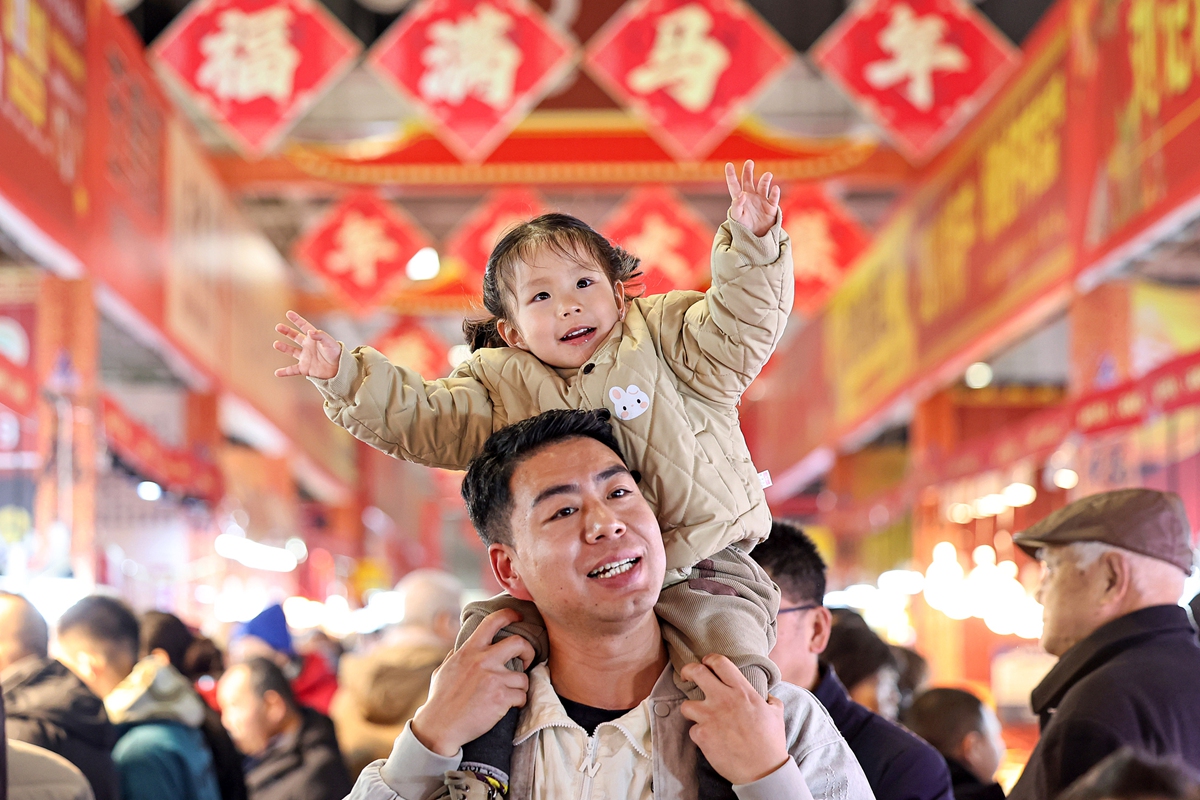
A father and daughter explore a fair featuring Chinese New Year goods. Photo: VCG
It is with this in mind that we have specifically invited three groups of friends to celebrate the Chinese New Year at the museum.The first group consists of teachers and students who, for various reasons, cannot return home for the Spring Festival and will stay in Tianjin.
"Home" is the core symbol of the Chinese New Year. Mention the Chinese New Year, and "returning home" comes to mind. On Chinese New Year's Eve, the powerful and heartwarming magnetic field of family affection, formed by countless households across China, draws every wanderer back. This is what we often describe in our culture as "love for home and nation," which is inseparable from the culture of the Chinese New Year. We invite students staying on campus to experience the profound feeling of "home" within the unique cultural atmosphere of the Chinese New Year, even when far from their families. The Chinese New Year is the home of our culture and the home of our emotions.
The second group is our international student friends. In 2024, the Spring Festival was inscribed on UNESCO's Representative List of the Intangible Cultural Heritage of Humanity, making it a global festival and a shared cultural treasure of all humanity. Therefore, we invited international students to gather together and celebrate this millennia-old cultural heritage that belongs to all of us.
The third group consists of primary and secondary school students. The vitality of intangible cultural heritage lies in its transmission. As we celebrate the Chinese New Year, we should not forget the important task of passing on our cultural legacy.
The transmission of intangible cultural heritage generally takes three forms: individual, group, and festival transmission.
Festival transmission is universal as we are all inheritors. We not only celebrate ourselves but also involve our children, allowing them to create beautiful and profound cultural memories through participation. In this way, they will consciously and proudly carry forward our splendid culture in the future. Only then will our lives remain rooted, soulful, and radiant.
Imagine how dull and monotonous our lives would be without such a wealth of cultural heritage, the captivating songs, dances, music, art, skills, and folk customs.
Therefore, let us immerse ourselves in this rich "Nian culture" and share the joy of the Spring Festival together. I wish everyone a prosperous Spring Festival.
RELATED ARTICLES