BRI connectivity accelerates as major railway projects in Europe, Asia, Africa report marked progress
By Published: Feb 12, 2026 07:28 PM

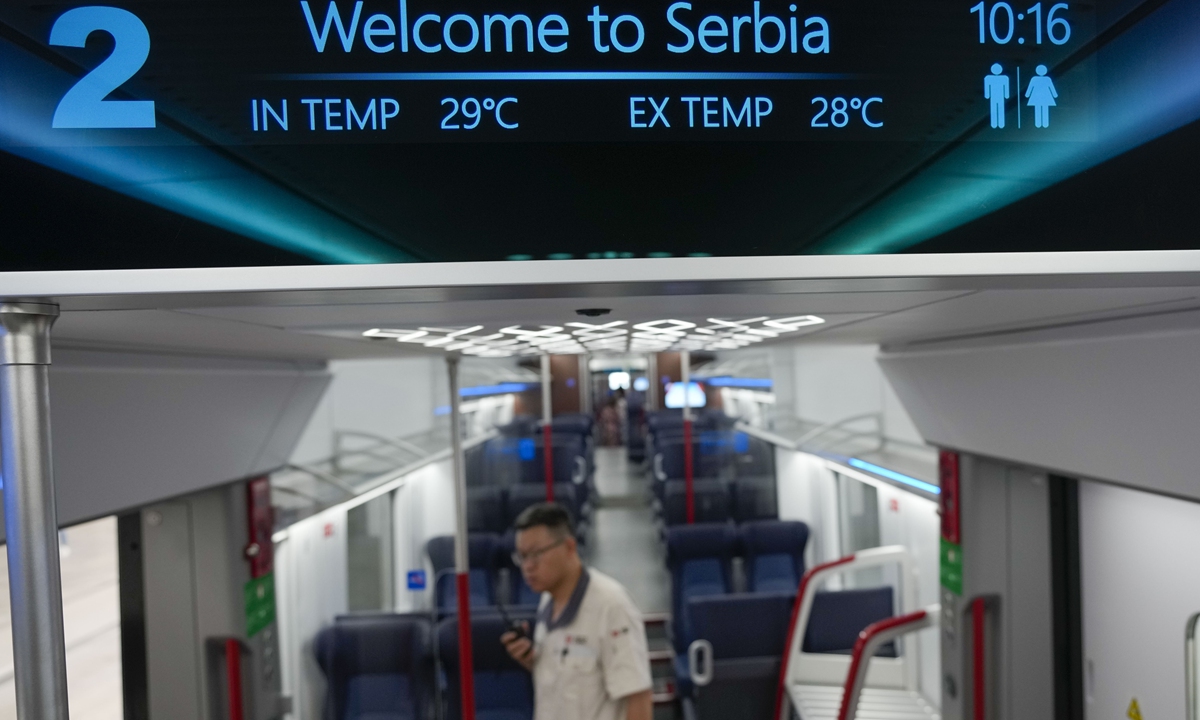
A Chinese worker walks inside of a new electric high-speed train for the Belgrade-Budapest railway. File photo: VCG
Connectivity projects under China-proposed Belt and Road Initiative (BRI) have seen progress this year, marked with the launch of some key railway projects.
A Chinese analyst said on Thursday that the fact that multiple ailway projects under the BRI are nearing or entering operation is not a coincidence, but reflects China's commitment to global connectivity and the ability of Chinese companies to pursue projects according to set timelines.
The Hungary-Serbia railway will begin operation soon, Hungarian Prime Minister Viktor Orban said during a meeting with visiting Chinese Foreign Minister Wang Yi on Wednesday, which signals progress is made on the Hungarian section of the landmark regional project, which is likely to launch cargo transport on February 20.
In October, Serbia's section of the Hungary-Serbia high-speed railway, which offers direct travel between Belgrade and Budapest, opened, Xinhua News Agency reported.
Other key BRI transportation projects have also advanced this year.
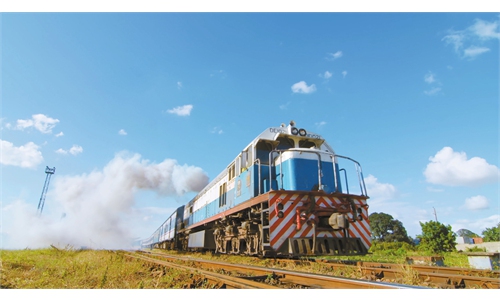
The first freight and passenger train sets for the East Coast Rail Link (ECRL) were unveiled in Pahang state in Malaysia on Wednesday.
The electric multiple unit for passenger services and the electric locomotive for freight, which arrived from China's Dalian in January, were unveiled by Transport Minister Anthony Loke, Xinhua reported.
"As of January 2026, the ECRL project has achieved 91.70 percent construction progress... The focus has now shifted to comprehensive preparations for the operational phase, considering that the ECRL is the largest rail project in Malaysia and a symbol of the Malaysia-China strategic cooperation," the minister was quoted as saying.
The event signals that the project, a major rail project in Malaysia being built by China Communications Construction Company, is moving rapidly toward completion.
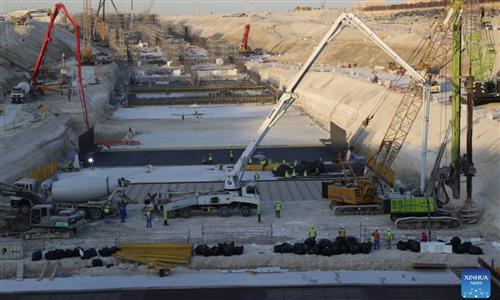
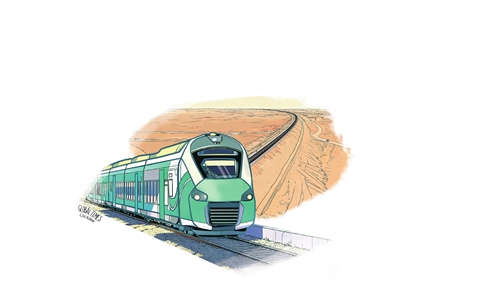
On February 1, the Western Mining Railway in Algeria, Africa's first heavy-haul desert railway, opened to traffic, improving Algeria's national railway network and promoting connectivity and economic development in the country's southwestern areas, Xinhua reported.
The 950-km-long railway, with 575 kilometers constructed by China Railway Construction Corporation and Algerian state-owned companies, represents the largest infrastructure project undertaken by a Chinese company in Algeria, the company told the Global Times.
"Three projects on three different continents are reporting progress, covering passenger services, cargo transport and technologically challenging desert routes. These developments underline the resilience of Chinese supply chains," Wan Zhe, a professor at Beijing Normal University, told the Global Times on Thursday.
These railway projects will bring tangible benefits to the local economy, improve connectivity, create jobs, and reduce logistics costs, highlighting the win-win nature of the Belt and Road cooperation, the expert said.
As more countries turn their attention to infrastructure buildup now, they are likely to consider Chinese contractors, known for cost efficiency, advanced technology, and on-time delivery, Wan noted.
China's BRI engagement has increased significantly in 2025. China's non-financial direct investment in countries along the Belt and Road totaled 283.36 billion yuan, growing by 18 percent year-on-year, data from China's Ministry of Commerce showed in January.
Chinese companies signed new engineering contracts worth 1.84 trillion yuan with Belt and Road partner countries during the period, marking an 11.2 percent increase, the data showed.
RELATED ARTICLES