New Year on the Frontlines: US designer weaves deeper ties through Li brocade in Haikou
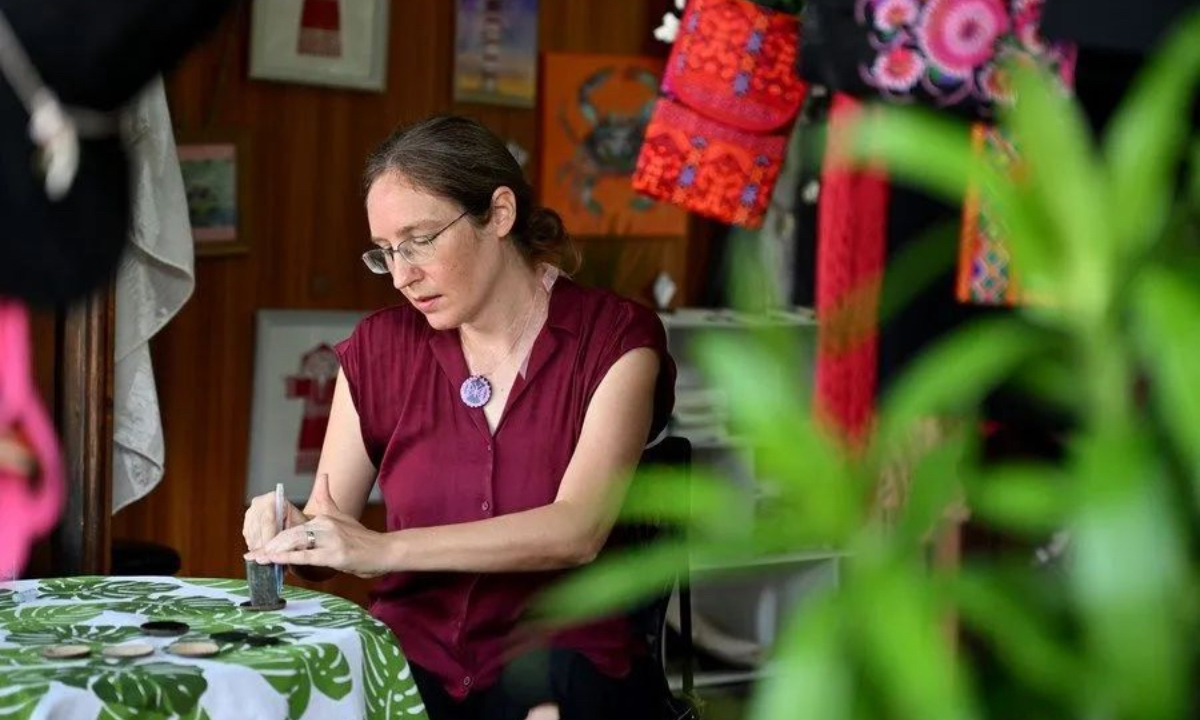
American designer Xie Min (Nicki Johnson) makes a handicraft in her Li brocade shop in Haikou, South China’s Hainan Province. Photo: Xinhua
Editor's Note:
This year marks the 105th anniversary of the founding of the Communist Party of China (CPC) and the opening year of the 15th Five-Year Plan (2026-30). A new year begins with new resolve and new momentum. The call to "fight for our dreams and our happiness, and turn our great vision into beautiful realities" continues to inspire actions across China.
In the column "New Year on the Frontlines," reporters from the People's Daily traveled to the grassroots to witness the vitality of a vast nation, see its mountains and rivers in motion and its fields in abundance, and listen to the stories of people finding fulfillment in both life and work.
Through these stories, the column seeks to present a vivid portrait of Chinese modernization.
At a small shop in Baishamen Park, Haikou, South China’s Hainan Province, Xie Min (Nicki Johnson) is painting a horse totem onto a piece of coconut shell. “Hey, this horse is really unique!” A blonde foreign visitor leaned over the counter, picking up one of the coconut-shell handicrafts for a closer look.
“You have a good eye. These lines and patterns are all traditional elements from Li brocade,” said Xie, an American designer, looking up with a smile without pausing her brush. In this little shop called “Island Joy,” Xie, who has traveled across the world, is working hard to be an “interpretor” for the thousand-year-old Li brocade.
Spring sunlight filters through the shop window, falling on the various handicrafts inside. Hair clips, earrings, fridge magnets and other daily items are painted in bright colors. Tourists stop to admire or touch the pieces, and this small, delicate space is often filled with curious questions and cheerful laughter.
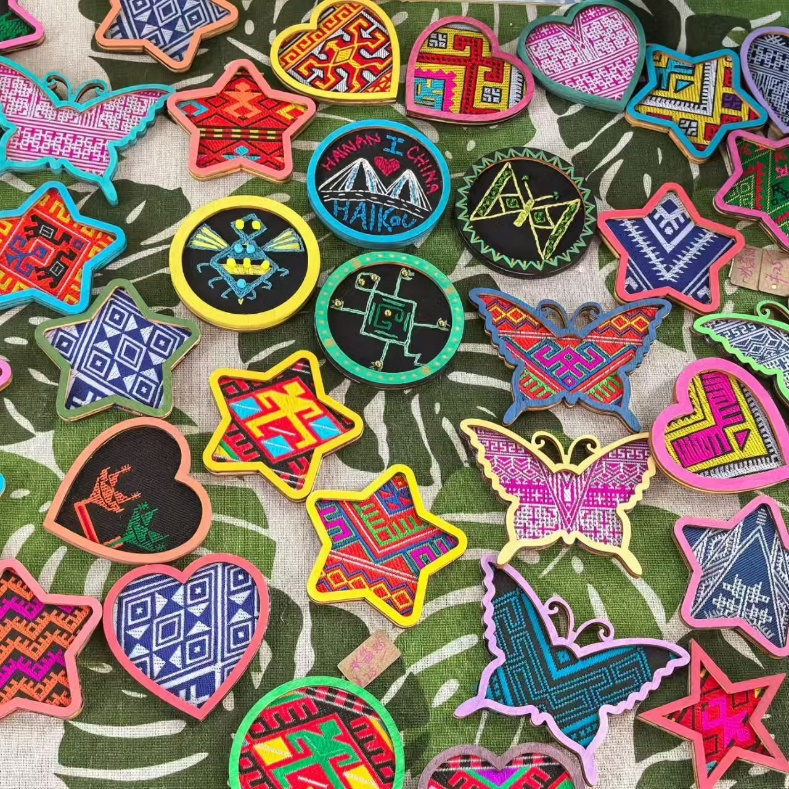
Various handicrafts with traditional elements from Li brocade made from coconut shells. Photo: Courtesy of Xie Min
“In Li culture, the horse symbolizes strength. I hope to give Li brocade new vitality through trendy interpretations and creations.” Xie’s fluent Chinese often makes customers forget she is a foreigner.
Having lived in Hainan for more than 20 years, Xie fell in love with Li brocade and opened her own shop here. She still remembers her first Li brocade piece — a gift from a friend. An open cultural week gave her access to abundant Li brocade materials – its diverse patterns, rich meanings and inherited stories fascinated her greatly. She began to visit villages across the region to learn from local masters, integrating the traditional Li spinning, dyeing, weaving and embroidery skills into her creations.
“China is paying increasing attention to cultural inheritance and innovation, which has given me many opportunities and inspirations,” Xie said. Taking part in the creative transformation and development of fine traditional Chinese culture has been deeply rewarding.
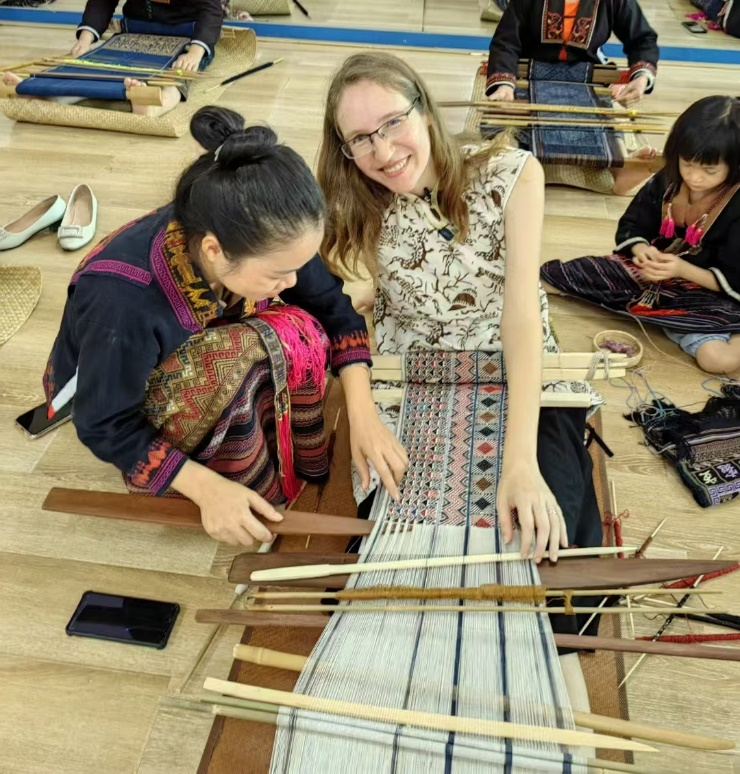
Xie Min learns the craft of Li brocade from a local resident. Photo: Courtesy of Xie Min
Li brocade is not the only thing in Xie's shop. Notebooks designed by her American friends, paintings by her Russian friend, and bags made by a South African artist are all on display, showcasing their unique design concepts.
With the adoption of Hainan Free Trade Port’s higher-level opening-up policies, a growing number of overseas tourists have come to visit, turning the shop into a new venue for international exchange. Visitors from afar often take home souvenirs, sharing a piece of Hainan’s warmth.
“So this is a special creation for the Year of the Horse?” one tourist asked.
“It’s for the Year of the Horse — and yet it’s more than that,” Xie picked up the coconut-shell handicraft. “It carries both traditional patterns and modern expressions, both Chinese culture and a global perspective.”
The vibrant celebration of Chinese New Year in the small shop serves as a bridge, fostering closer dialogue between the East and the West.
