China to protect legitimate rights of its companies following Panama’s forcible takeover of two ports operated by HK-based firm
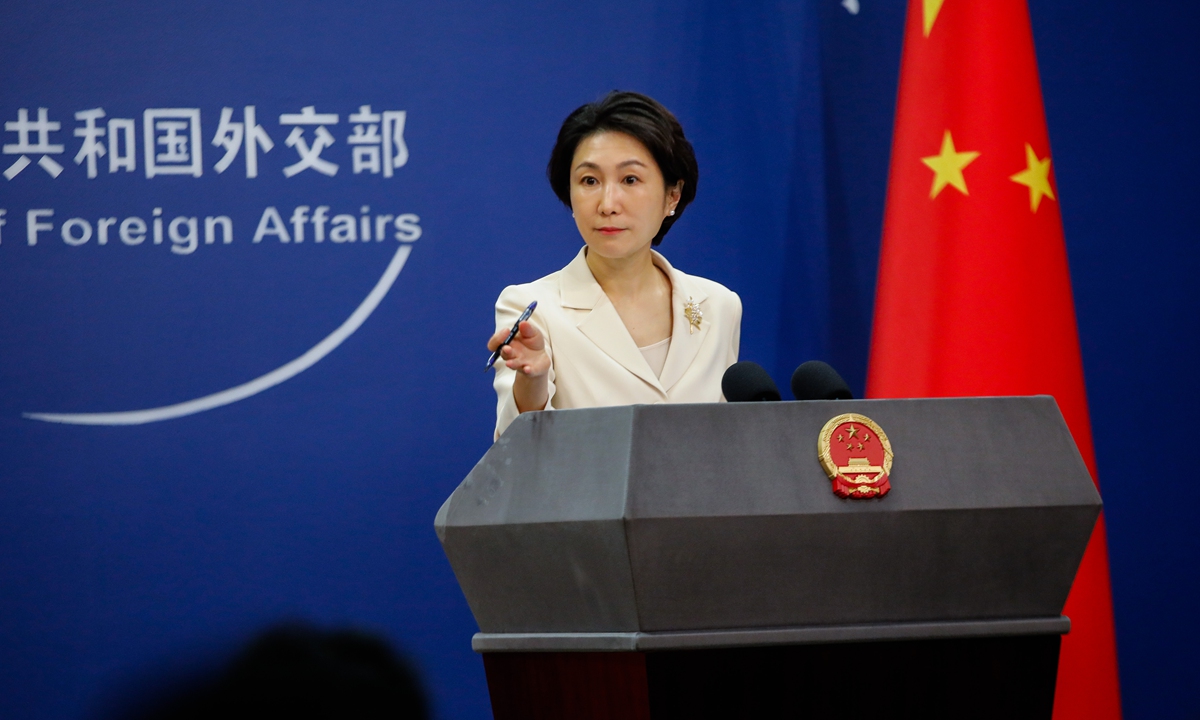
Chinese foreign ministry spokesperson Mao Ning
The Chinese Foreign Ministry on Tuesday vowed to firmly protect the legitimate and lawful rights and interests of its companies when asked to comment on Panamanian authorities' control of two ports on the Panama Canal from Hong Kong-based CK Hutchison Holdings (CKHH).
Commenting on the matter, spokesperson Mao Ning said at a press conference on Tuesday that China's position on relevant Panamanian ports is clear. "I believe you have noticed that the company concerned has issued a statement, saying that it will reserve all rights including to proceed legally. China will firmly protect the company's legitimate and lawful rights and interests," Mao said.
The HKSAR spokesperson on Tuesday reiterated that the earlier ruling by the Supreme Court of Justice of Panama, which declared the operation of the two Panamanian ports by the company concerned unconstitutional, disregarded facts and breached faith. The company concerned had already initiated and commenced arbitration proceedings.
However, the forceful takeover of the two ports by the Panamanian government yesterday [February 23] gravely damaged the legitimate rights and interests of the Hong Kong enterprise and undermined the spirit of contracts. The HKSAR government condemns such a blatant act, the spokesperson said.
The Panamanian government on Monday issued a decree ordering the occupation of two ports at the entrances of the Panama Canal, a move triggered by a final Supreme Court ruling that declared the operating concession held by Hong Kong-based company CK Hutchison unconstitutional, according to the Independent's Monday report.
The decree authorizes the Panama Maritime Authority to occupy the ports for so-called "reasons of urgent social interest," the report said.
The HKSAR government on Tuesday urged the Panamanian government again to respect the spirit of the contracts and provide a fair and just business environment for companies operating legally there, ensuring that the legitimate rights of enterprises are free from any interference.
The saga surrounding the two Panamanian ports is part of a broader rivalry between the US and China, after US President Donald Trump accused China last year of "running the Panama Canal," per a report by AP News.
China has repeatedly rejected US accusation over Panama Canal. China's permanent representative to the United Nations Fu Cong said last year that the US fabrication of lies and groundless attacks against China are nothing but a pretext for seeking control of the canal, Xinhua reported.
CKHH also said on Tuesday it objects to the Panamanian government's takeover of the assets, personnel and operations of CKHH's subsidiary Panama Ports Company (PPC).
According to the company's statement, Panama Ports Company has been forced to cease terminal operations.
"CKHH considers the Ruling, the Executive Decree, the purported termination of PPC's concession, and the takeover of the terminals to be unlawful," the company said in the statement.
PPC and CKHH will continue to consult with their legal advisors regarding the Ruling and forceful takeover, the purported termination of PPC's concession and all available recourse including additional national and international legal proceedings against the Republic of Panama and its agents and third parties colluding with them, to reserve all rights and recourse against them, in relation to this matter, it said.
Zhou Mi, a senior researcher at the Chinese Academy of International Trade and Economic Cooperation, told the Global Times on Monday that the measures may have been influenced by pressure from the US, although whether such steps would ultimately secure Washington's endorsement remains uncertain. What is clear, he said, is that the move has already inflicted damage on China-Panama economic and trade relations.
Zhou noted that the Panama Canal is a critical artery for global shipping, deeply embedded in international trade and cross-border commerce, and that such strategic infrastructure depends on a long-term, stable and predictable institutional environment. Without that stability, he said, sustained investment, operational upgrades and efficiency gains become harder to maintain, eroding competitiveness and potentially weakening the canal's support for the local economy.
RELATED ARTICLES