OPINION / VIEWPOINT
‘I truly look forward to future developments of China’s ice and snow tourism’
Published: Feb 24, 2026 09:52 PM
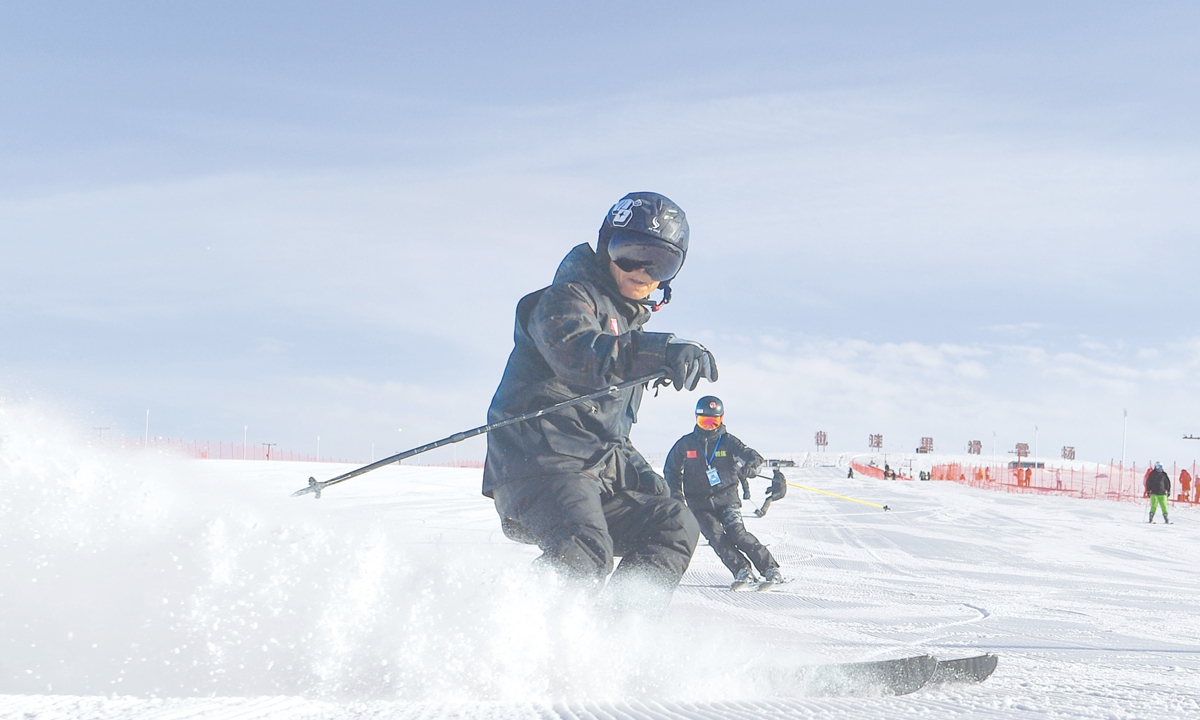
A herdsman from Emin county in the north of the Xinjiang Uygur Autonomous Region instructs students at a local ski resort on February 3, 2026. Photo: VCG

A herdsman from Emin county in the north of the Xinjiang Uygur Autonomous Region instructs students at a local ski resort on February 3, 2026. Photo: VCG


Editor's Note:

With the conclusion of the 2026 Milan-Cortina Winter Olympics, the Chinese delegation achieved its best-ever medal tally at an overseas Games. Once again, global attention has turned to China's winter sports and its rapidly growing ice and snow tourism. In recent years, China has experienced a surge of enthusiasm for winter sports and related industries. In 2025, the scale of the country's ice and snow economy exceeded 1 trillion yuan, attracting not only domestic participants but also a growing number of international visitors. What draws foreign tourists to experience China's winter tourism? From perspectives of international observers, what is the development potential of China's ice and snow tourism? The Global Times interviewed two snow sports experts who traveled to China to experience its winter sports scene firsthand to share their insights.


Tao Kreibich, an Austrian freeride pro-skier with two years on the Freeride World Tour

As a freeride skier raised in the Austrian Alps, I've always been driven by a passion for traveling to explore new zones and ride deep powder around the globe. Last November, I spent one week at Jikepulin Ski Resort in Hemu, Xinjiang. What I found was a ski destination with super cool terrain, good natural snow and some of the warmest hospitality I've experienced anywhere in the world.

In many places in China, artificial snow still plays a big role. What makes Hemu special is that it has a lot of good natural snow. The slopes are steeper, the runs are longer and there are plenty of off-piste possibilities and breaks. I found playful terrain with rocks to jump off and natural features that make freeriding exciting. The human experience also stood out. My friend and I were among the only Europeans there at the time, and we don't speak Chinese. Locals helped us order food, buy ski tickets and communicate using translation apps. We had funny and friendly conversations about skiing in Europe and China in the gondolas and cable cars. One evening, a group of local skiers invited us to dinner, which became one of the best meals I've ever had in my life - an unforgettable feast of Xinjiang lamb and hotpot. That night I experienced an open, generous and curious side of China.

Since the 2022 Winter Olympics, I've observed clear momentum in China's winter sports scene. More people in China are getting into skiing and snowboarding. In the past, those who wanted to try these sports often had to travel to Europe or North America. Today, with more resorts being built and more destinations emerging as hubs of the ice and snow tourism across the country, winter sports are becoming increasingly accessible and popular. At the same time, the global skiing community has begun to notice that there are good skiing opportunities in China. International competitions, freestyle events and social media exposure have helped showcase that China has serious mountains and real potential. As a result, more riders from around the world are becoming curious and coming to see for themselves.

Looking at the bigger picture, I see huge potential in China's ice and snow tourism. In Austria, winter sports are a major pillar of the national economy. China is much larger and more diverse, but winter tourism can still play an important role. People love to combine travel with sport. Skiing is not just an activity; it's an experience that connects nature, culture and community. For me, China's ice and snow economy is no longer a hidden story. It is developing quickly, and I truly hope to come back soon - to explore more mountains and witness this growth firsthand.


Jean-Yve Blondeau, an inventor of sports on wheels and snow from France, and creator of the international IP Rollerman

I was invited to several ski resorts in Xinjiang because of my expertise in Buggy Ski and my experience in developing equipment, events and safety protocols for emerging ski markets. From a professional standpoint, I saw development potential in the region which features big mountains and reliable cold weather. In recent years, many European resorts have struggled with a lack of snow, especially at lower altitudes. Xinjiang, by contrast, benefits from a natural climate advantage. 

The skiing experience in Xinjiang highlights a deeper connection between China and the Alpine regions of Europe - a reminder that mountain cultures, no matter how far apart geographically, often share the same spirit. In some areas, I felt as if I were back in the Alps. The mountains, the forests, the atmosphere - it all reminded me of home, which was a wonderful feeling, especially being so far away from France. I immediately connected with the local mountain safety teams and staff. When you grow up in the mountains, you share the same humor, understand the same risks and carry the same respect for nature. That unspoken bond created an instant connection, and this human exchange became one of the most meaningful parts of my experience. 

In recent years, I can feel an emerging local ski culture across China. I have seen the rapid development of ski resorts in the north of Beijing - modern facilities, brand-new equipment and high-quality service that reflect investment and ambition in the industry. I have also visited Harbin, though only in summer. I greatly admire its Ice and Snow Festival, which attracts massive numbers of visitors every year. It shows that winter tourism in China is about more than just skiing. What truly surprised me, however, was the level of skiers in China. I did not expect to see so many competitive and technically strong riders. Considering that modern ski culture in China is relatively young, the overall standard is impressively high. In China today, I see a broad base of skilled skiers and snowboarders across many resorts. That clearly demonstrates how quickly winter sports have progressed in the country.

China also has great strength in manufacturing. Producing snow sports equipment domestically allows for adaptation to local needs and the development of strong national brands. With its mountains, cold weather, geographic assets and industrial capacity, the potential for the development of China's ice and snow tourism is immerse.

The key question now is attractiveness. Each destination needs to find its own "treasure"- its unique identity that makes people want to come and return. Personally, I believe that if China can better integrate mountains currently divided into several smaller, separate resorts, expand ski-in/ski-out lodging with direct slope access, further improve transportation convenience, and continue enhancing hygiene standards and overall facilities, it could unlock even greater growth in winter tourism. I also hope China continues to look beyond traditional Olympic disciplines and stays open to innovation. The future of snow sports includes new, creative formats, such as Buggy Ski where the skier's movement becomes more dynamic and transformative. Embracing this spirit of experimentation and evolution could help China shape not only a bigger industry, but a more exciting and forward-looking one.

When winter tourism develops in a sustainable way, it raises the level of the sport, strengthens the local economy and creates opportunities for many people. I truly look forward to its future developments in China.