Hope Merz’s China visit will once again demonstrate the China-EU ‘stabilizing anchor’ role: Global Times editorial
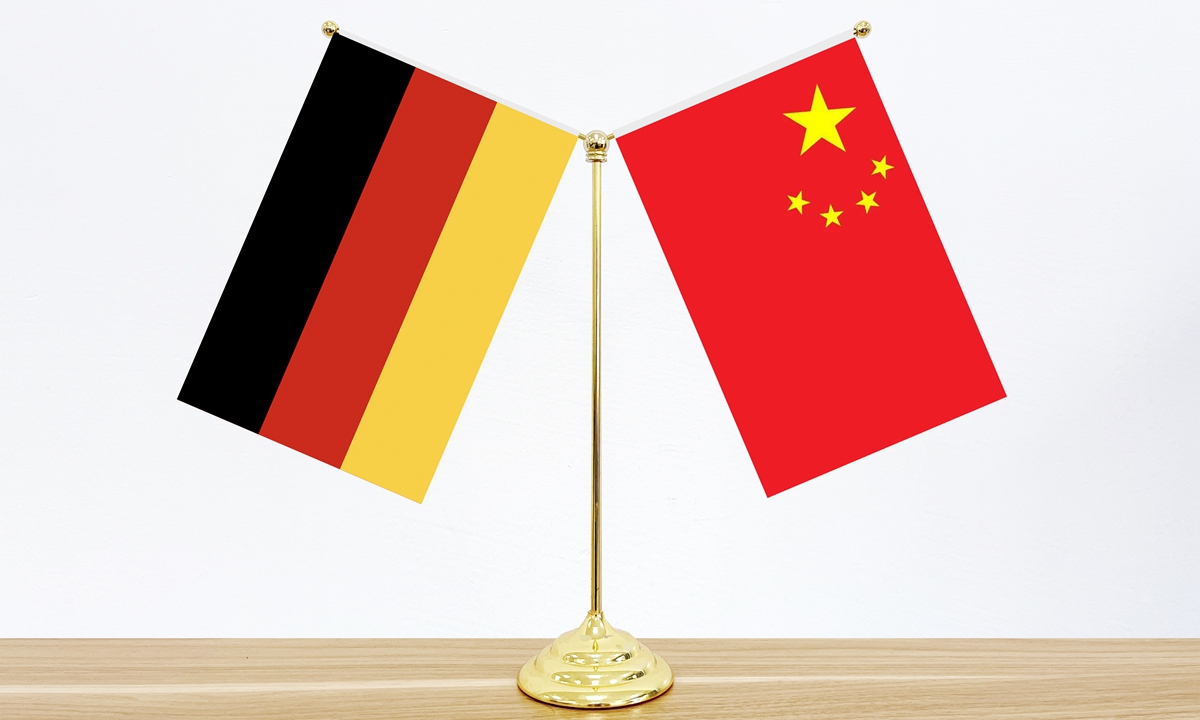
Photo:VCG
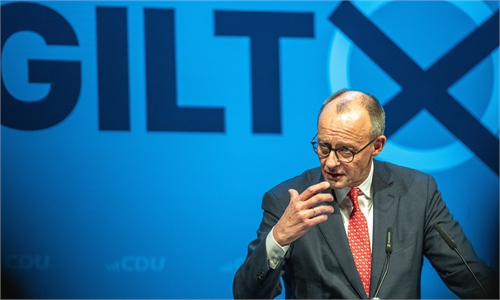
German Chancellor Friedrich Merz will pay his first official visit to China from February 25 to 26 since taking office. German media said that "Merz has never prepared for a trip so meticulously before." Around 30 executives from leading German companies, including Mercedes-Benz, BMW, Volkswagen, Bayer, Siemens, and Adidas, will accompany him, with interest in joining the delegation reportedly far exceeding the available slots. According to the announced schedule from the German side, the visit will be tightly packed and is widely regarded in Germany as highly significant.Many German media outlets have described the visit as "long overdue." Since assuming office in May of last year, Merz has repeatedly expressed his intention to visit China, and observers had expected the trip to take place last autumn. However, for various reasons, it was repeatedly delayed. At the same time, numerous European media outlets have noted a recent wave of European leaders visiting China. Against this broader backdrop, Germany clearly feels a sense of urgency.
The business delegation accompanying Merz is the largest to join a German chancellor on an overseas trip since the era of Angela Merkel. In recent years, rhetoric such as "systemic rival" and "de-risking" has at times complicated Germany's China policy. Yet the enthusiasm and actions of the German business community speak louder than political slogans. According to newly released data from Germany's Federal Statistical Office, bilateral trade between China and Germany reached 251.8 billion euros ($296.6 billion) in 2025, a year-on-year increase of 2.1 percent. China once again surpassed the US to become Germany's largest trading partner, underscoring the strong internal momentum of China-German economic ties. In recent years, bilateral trade has consistently exceeded $200 billion each year, and two-way investment stock has surpassed $65 billion, accounting for nearly one-quarter of the total China-EU volume. These tangible figures provide a powerful rebuttal to the so-called "de-risking" narratives.
It is also noteworthy that alongside Merz's visit, voices within Germany's strategic community have called for a "wise China strategy" and for promoting positive and pragmatic bilateral relations. A recent survey by the German Chamber of Commerce in China found that 64 percent of respondents hope the German government will improve China's image in Germany. A senior official from the German Chamber of Industry and Commerce publicly praised China as a "reliable economic partner," stating candidly that "given the erratic behavior of US President Donald Trump, China is currently a more predictable partner." Some German scholars have argued that the so-called "de-risking" has achieved little, urging Germany to move away from the "systemic rival" framing and instead expand cooperation in areas of shared priority. The emergence of such views is no coincidence; they reflect broader sentiments in Germany and across Europe: Rather than being driven by geopolitical noise, it is better to seize concrete opportunities for cooperation.
The international landscape is undergoing profound transformation. The unilateralism and protectionism pursued by the US have prompted European countries to reassess their external relations. However, relations between China and Germany, and between China and Europe more broadly, should be viewed from a broader perspective that goes beyond the US factor. China is the world's second-largest economy and a firm supporter of free trade and multilateralism. The initiatives it proposes and the actions it takes on the international stage are aimed at upholding the international system centered on the United Nations. In this sense, constructive cooperation with China itself contributes to building a more just and equitable global governance system. It is of significant importance for the EU and the entire Western world that China and Germany strengthen strategic communication to jointly resist unilateralism and bloc confrontation while adhering to the correct direction of mutual respect, seeking common ground while reserving differences, and achieving win-win cooperation.
This year marks the beginning of the 15th Five-Year Plan, and China is promoting high-quality development while expanding high-level opening-up, providing vast market opportunities for German companies. Merz will also make a special trip to Hangzhou to visit Chinese robotics companies, offering him a valuable opportunity to gain a deeper understanding of China. Only through continuous dialogue and engagement can one see a real, multi-dimensional, and comprehensive China. Hopefully the German side, after further understanding China's development, will provide more policy support and convenience for bilateral investment cooperation, ensuring a fair, transparent, and non-discriminatory business environment for Chinese enterprises.
In a world of turbulent change, dialogue is more valuable than confrontation, and win-win cooperation is more enduring than zero-sum outcomes. Chancellor Merz's visit to China is not only an important sign of the resetting of China-Germany relationship but also a key step in recalibrating China-Europe relations amid changing circumstances. Against the backdrop of the popularity of "China Travel" and "Becoming Chinese" among young people in the West, German and European elites should put aside their prejudices and, through close contact, not only recognize China's developmental achievements but also understand the logic behind China's development. We look forward to this visit opening a new chapter in the comprehensive strategic partnership between China and Germany, leading to new developments in China-Europe relations and contributing to the stable growth of the world economy.
RELATED ARTICLES