Separated conjoined twin becomes mother 28 years after life-saving surgery in East China’s Nantong
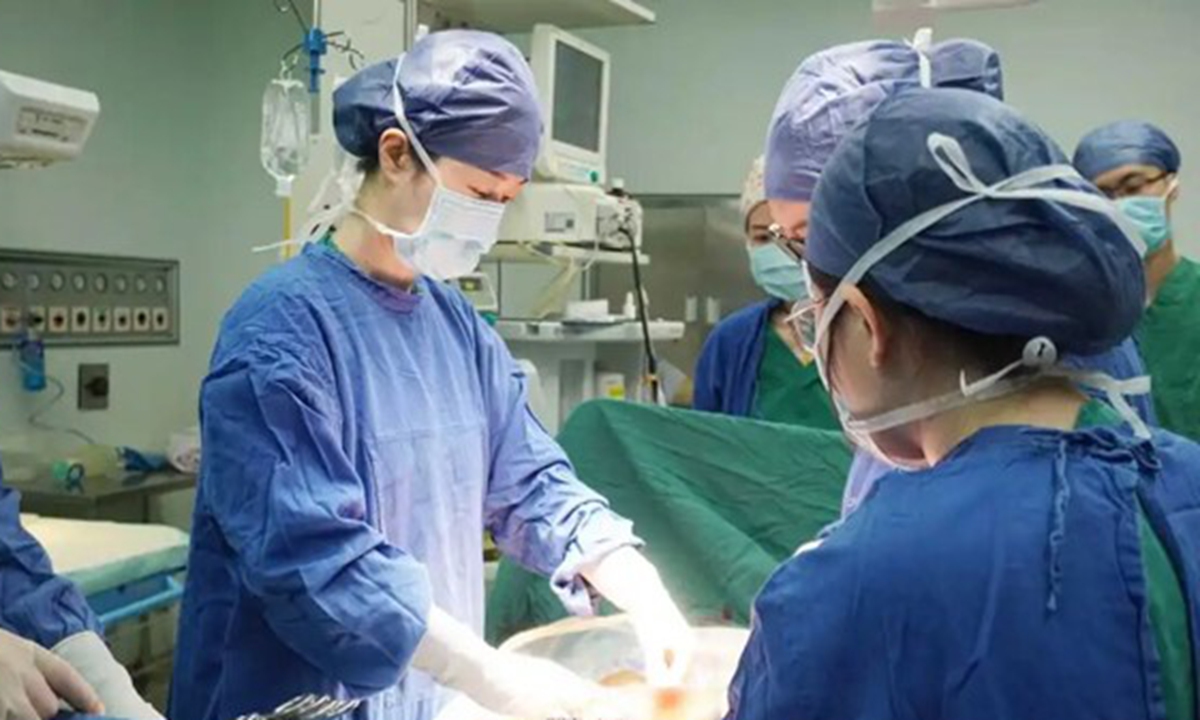
Separated conjoined twin gives birth to a baby girl on February 22, 2026 in Nandong, East China's Jiangsu Province. Photo: Affiliated Hospital of Nantong University
Good news from a hospital in East China during the just-concluded Spring Festival holidays has drawn widespread attention online and trended on social media platform Weibo - one of the conjoined twin girls who underwent separation surgery 28 years ago has now become a mother.
The Affiliated Hospital of Nantong University in East China's Jiangsu Province welcomed 56 "Horse babies" during the Chinese New Year of the Horse. Among them was a baby whose mother had undergone the life-and-death surgery at the same hospital. This newborn represents a continuation of life spanning almost three decades, according to the hospital.
Back in 1997, a pair of conjoined twins underwent separation surgery at the hospital. Conjoined twins are a rare congenital condition, and their separation surgery is extremely challenging, involving issues such as shared organs and complex vascular distributions.
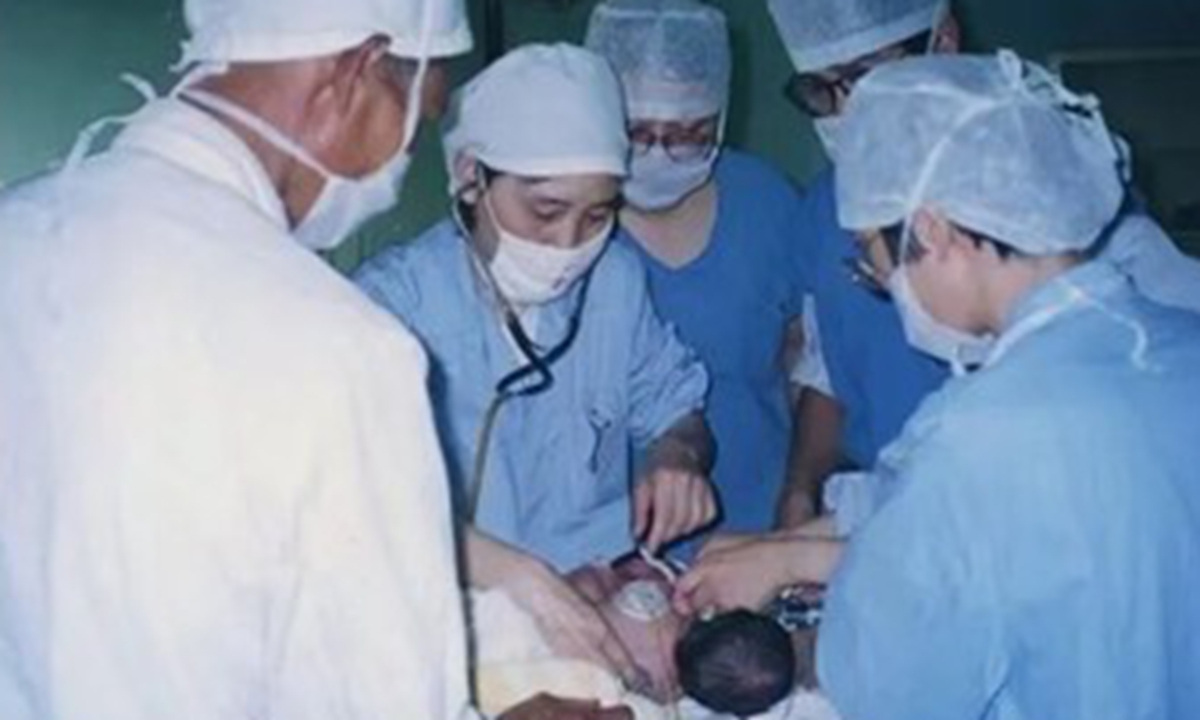
The separation surgery of the conjoined twins File photo: Affiliated Hospital of Nantong University
A team of more than 20 hospital experts, headed by Chen Yuquan, a member of the International Society of Surgery, performed the surgery, during which every blood vessel had to be carefully ligated and every piece of tissue precisely separated. After hours of intense surgery, the two babies were successfully separated. Both later grew up healthy, and one of them is the young mother in the delivery room during the Spring Festival.The life-saving surgery forged a lasting bond between her and the hospital, prompting her family to contact Zhou Yan, the attending physician at the Pediatric Surgery Department 28 years ago after learning of the pregnancy, and decided to give birth to the baby at the same hospital.
However, the young woman's medical history of congenital heart disease (status post Pentalogy of Fallot surgery) made her pregnancy higher-risk. During a routine cardiac ultrasound, the mother-to-be's pulmonary artery pressure showed a mild increase compared to previous readings. Though it was in the Spring Festival holidays, doctor Xu Yunzhao promptly reviewed her report via the online outpatient service. Xu quickly identified the subtle change in her condition and immediately contacted the on-duty doctor and the ward emergency room to arrange for her hospitalization and formulate a detailed delivery plan through a multidisciplinary team approach.
At 10:32 am on February 22, the sixth day of the Chinese New Year, a 2,800-gram baby girl was delivered safely.
The baby was given the nickname "Tangyuan," referring to glutinous rice balls usually eaten at Lantern Festival, which symbolize reunion and good fortune.
Global Times
RELATED ARTICLES