China’s new beverage culture is reshaping everyday life globally
By Published: Feb 25, 2026 10:44 PM
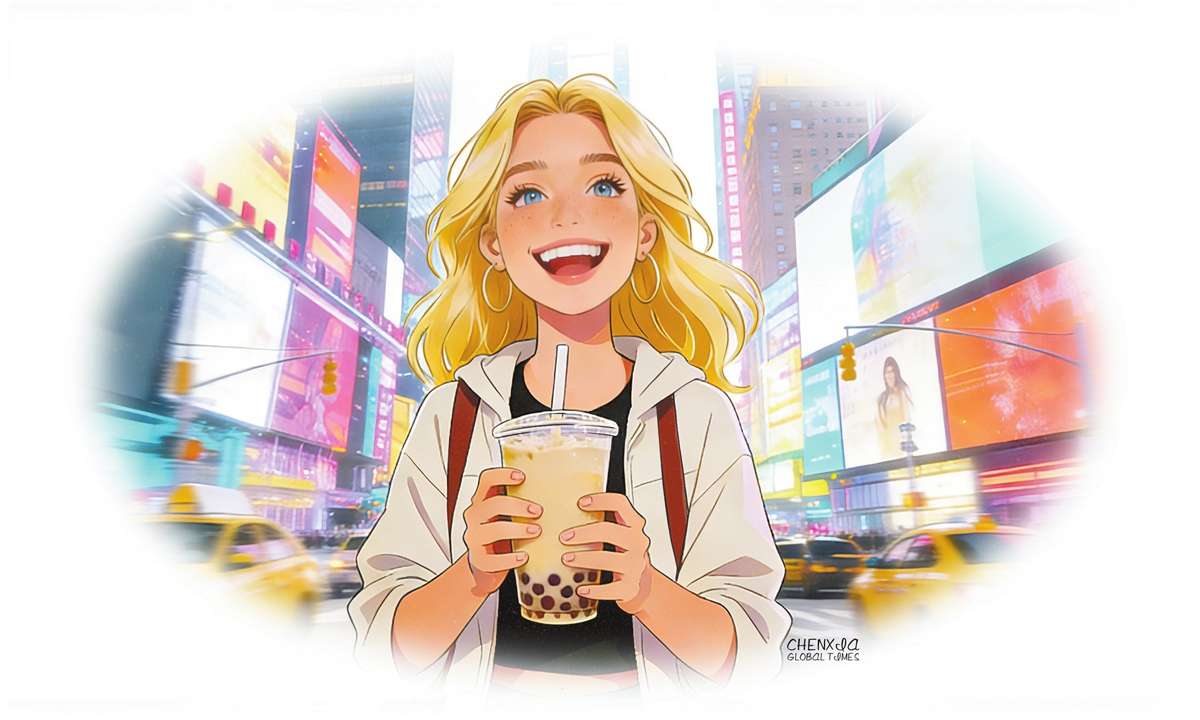
Illustration: Chen Xia/GT
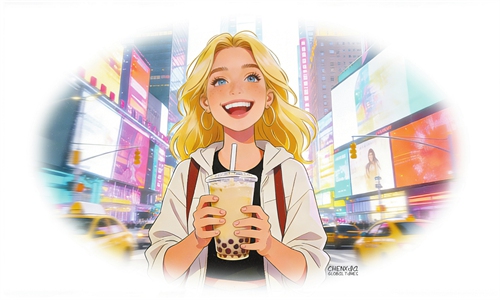
On the streets in China this Spring Festival, there was a scene impossible to ignore: amid the bustling crowds, many young people held a cup of freshly made milk tea or fruit tea in their hands. In the prosperous commercial districts of first-tier cities and at the temple fairs of small county towns, the sound of straws stirring in various fruit-colored drinks formed the most vivid and ubiquitous backdrop of this holiday.In the past, when we talked about the cultural symbols of the Spring Festival, lion dances, lantern shows, fireworks and floats always came to mind. These are traditional, grand festive rituals. However, culture is not a stagnant specimen; it always seeks new anchor points in the daily lives of each generation.
Today, drinking a sweet beverage while walking and chatting has quietly become a Chinese festival cultural phenomenon with a strong contemporary flavor.
During this Spring Festival, many young people even used WeChat to send milk tea vouchers, replacing traditional red envelopes. This lightweight "cloud treating" strips away the heavy and cumbersome reciprocal etiquette of a traditional relational society.
We are standing at a historical intersection.
As the most representative brand, Mixue Ice Cream & Tea has opened over 50,000 stores globally. In terms of scale, it has surpassed the once-unrivaled McDonald's, becoming a highly influential global fast-food brand.
The Washington Post published a report titled "The world's biggest fast-food chain lands in the U.S. Here's how it tastes," on February 23, using a slightly marveling tone to describe the scene of this Chinese beverage shop at Herald Square in New York.
The author acutely perceived that this dessert shop - offering freely selectable sugar levels from zero to 200 percent, extremely affordable prices and strong sensory stimulation - is forcefully intervening in the public life of American youth.
The author wrote at the end: "But the chain's global surge shows there's always an audience for cheap sweets, so don't be surprised if the Snow King arrives in your city sooner than later."
This tone suggests that some Americans are still viewing "Made in China" through a traditional lens.
In fact, like many other "Made in China" products that have gone global, they are no longer capturing markets merely by being cheap. This is a quietly occurring global generational shift and a transformation in consumer culture.
Coca-Cola defined older generations as a symbol of US globalization. Today, Chinese beverages like Mixue, born from China's youth culture, are reshaping global tastes and entering the world stage.
Why is there such a global resonance in consumer culture?
The answer may lie in the astonishing surge of orders in China's lower-tier markets during this Spring Festival.
During the holidays, returning urban youth bring their reliance on milk tea to their hometowns. Long lines at county tea shops reflect an "affordable indulgence." Stressed youth everywhere, from China to the US, crave accessible, instant joy and casual social spaces.
The vitality of a culture often depends not on how exquisite it is in a museum, but on how ubiquitous it is on the streets. Globalization is never a one-way indoctrination, but a mutual observation and blending of lifestyles.
China's younger generation has demonstrated an extremely natural subjectivity. While embracing urbanization and adapting to the pace of modern life, they have changed traditional ways of celebrating festivals and reshaped their own living habits.
And when this local Chinese experience, having adapted to changing times, goes overseas through capital, supply chains and brand symbols, it inevitably begins to alter the landscape of world culture.
True culture needs no grand preaching - it reshapes the world quietly, one sip at a time.
The author is a senior editor with the People's Daily and currently a senior fellow with the Chongyang Institute for Financial Studies at Renmin University of China. dinggang@globaltimes.com.cn. Follow him on X @dinggangchina
RELATED ARTICLES