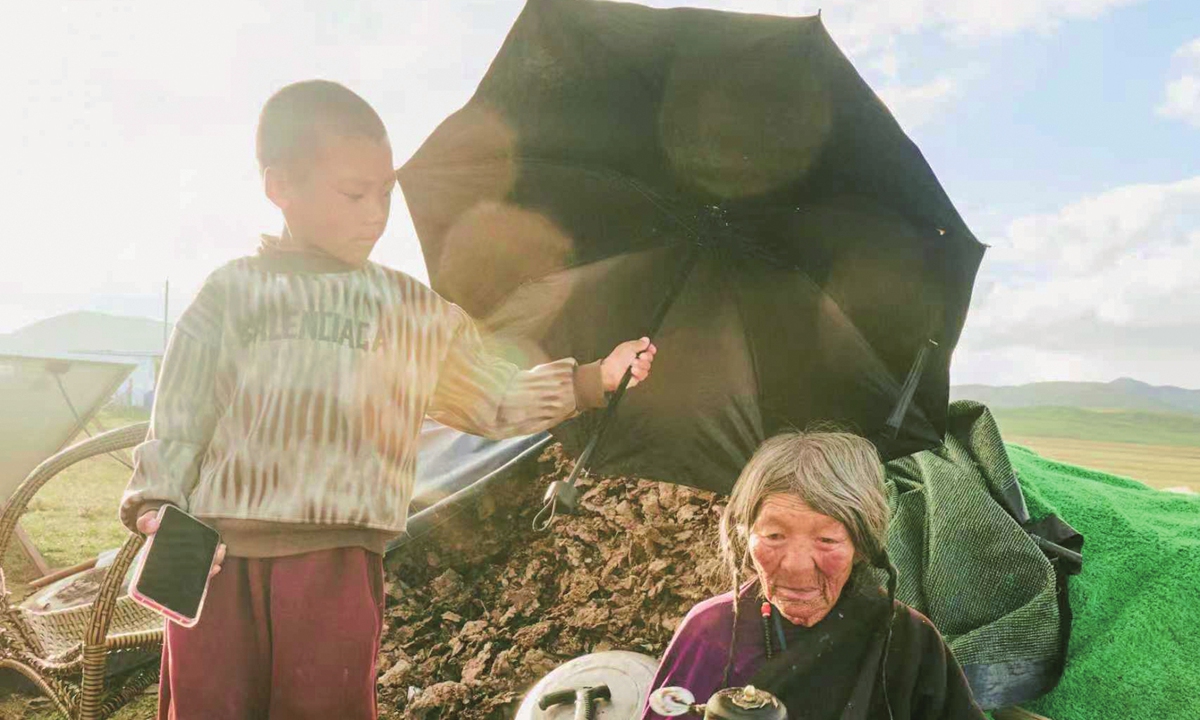
A young nomadic Tibetan shields his great-grandmother from the sun in Northwest China's Qinghai Province, in 2024. Photo: Chellali
Editor's Note:"China in Photos" is a series featuring foreign photographers who have explored China through their lenses. With cameras and curiosity, they capture the country's landscapes and people, revealing a China that is raw, intimate and deeply human. Each interview offers a unique perspective on China's diversity. Join us as we see China through their eyes.
In the seventh article of this series, Global Times (GT) reporter Su Yaxuan spoke with French photographer Laurence Chellali (Chellali), who has a deep fascination with cities in northwestern China's Qinghai and Xinjiang, and just experienced the Tibetan New Year with a Tibetan family in mid-February.
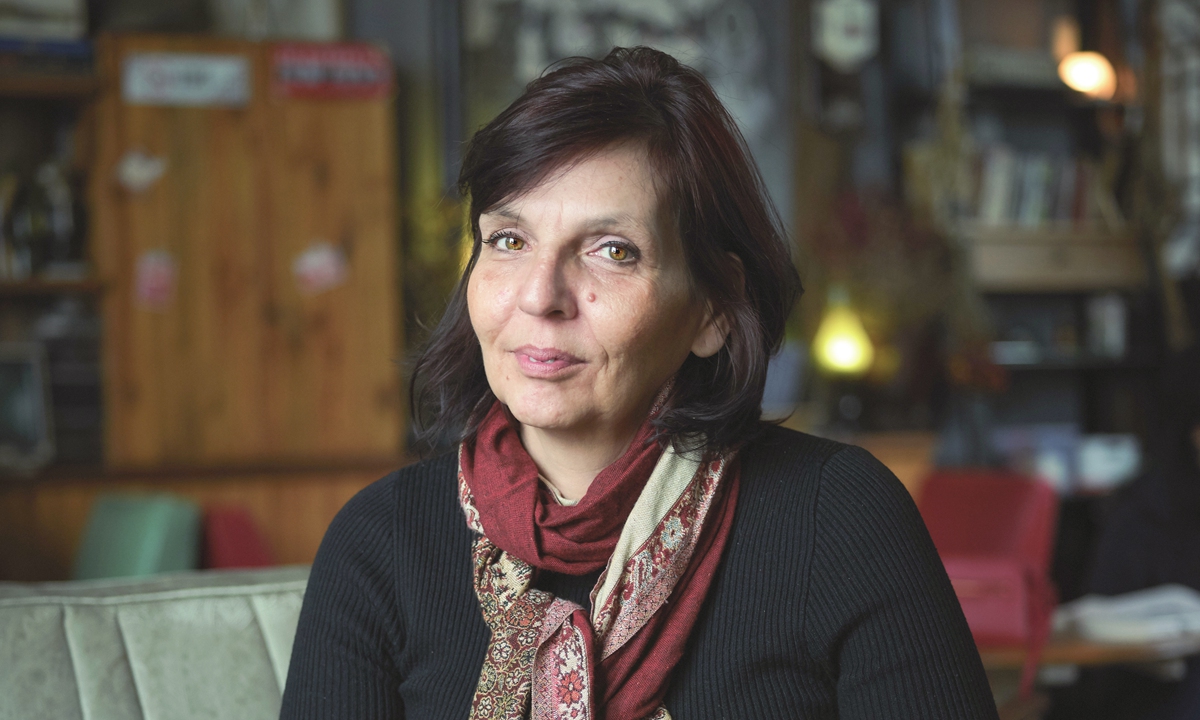
Laurence Chellali Photo: Courtesy of Chellali
GT: Since you first came to Nanjing in 2008, nearly two decades have passed. Looking back on the years you have spent in China, what changes in the country do you feel your camera has most vividly captured?
Chellali: I have one example I always like to share. A few years ago, we were staying at one of the most important hotels in Nanjing. At that time, it was the tallest building in the city - more than 30 floors. Back then, it seemed huge to me. But when I came back recently, that same building suddenly looked tiny compared to all the new skyscrapers surrounding it. The whole area had completely transformed. I even kept the photos from both times I took them and put them side by side for comparison - it's almost hard to believe how quickly the city changed. It's moments like these that really impress me and make me realize how fast China has developed over the years.
GT: Has living in China, perhaps in ways you didn't expect, influenced your creative work?
Chellali: Living in China challenges me every single day - in a very positive way. Every day, there are new things to discover, new situations to experience, new details to observe and understand. For me, this constant stimulation is fantastic. I never feel bored here.
Of course, the language is still a challenge for me. I can manage basic things, like asking for directions, but I can't really have deeper conversations in Chinese yet, and that can be frustrating. Still, thanks to technology and the openness of people here, it doesn't stop me from living or creating. Overall, life in China has influenced my work in ways I didn't expect - it has made me more attentive, more curious, and more inspired.
China has deeply influenced my creative work. When I was living in Europe, I was focused on form, composition, and personal expression. But after coming to China, my work slowly shifted toward a more documentary approach. This wasn't a decision I made consciously at first - it happened naturally, because everything around me felt new and meaningful. I wanted to understand what I was seeing, to meet people, to listen to their stories, and to capture real life as it unfolded.
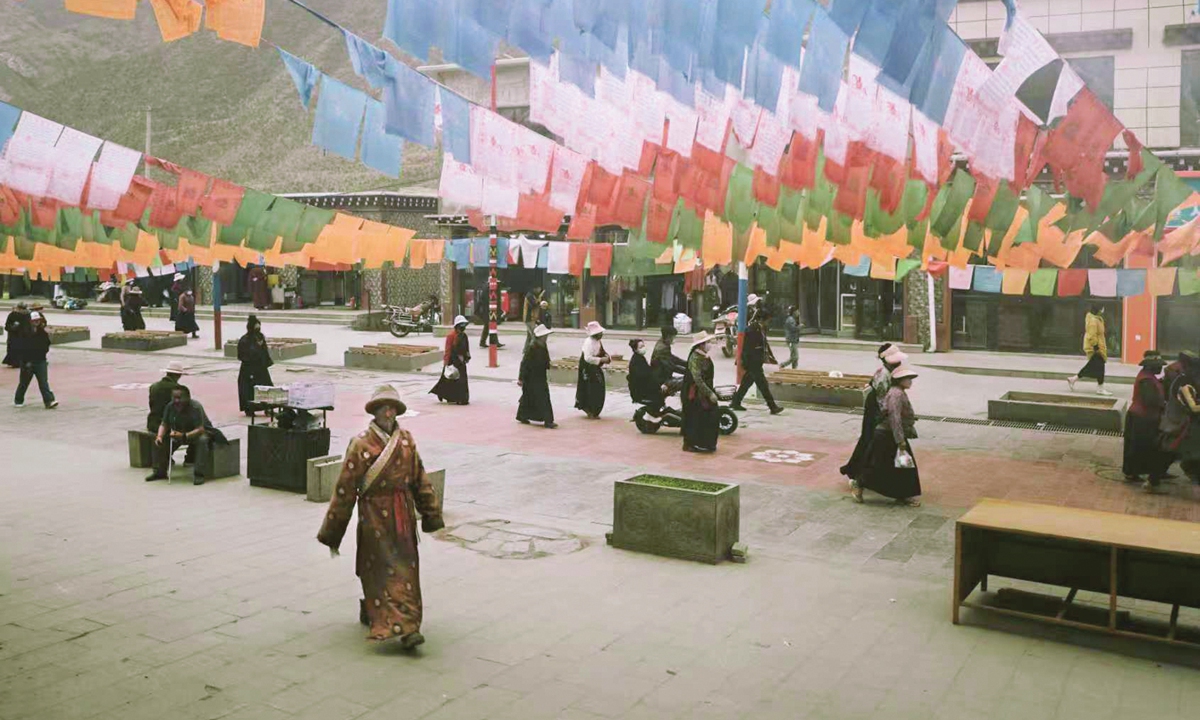
A street scene in Yushu city, Yushu Tibetan Autonomous Prefecture, Qinghai Province, in 2025. Photo: Chellali
GT: The photographs and articles related to Qinghai on your website are particularly striking. Could you share the stories behind them with us?
Chellali: There is a place in China where I feel a very deep and almost unexplainable connection, and that place is Qinghai. From the first moment I arrived, I felt drawn to it. I still can't fully explain why. Maybe it's the altitude, the thin air, the vast landscapes - but above all, it's the people. They are incredibly kind, calm, and welcoming, and being there makes me feel very present.
I am deeply interested in photography focused on Tibetan themes. A Chinese friend suggested that I go to Qinghai instead, telling me that I could experience Tibetan culture there. Honestly, I didn't expect much at first, but when I arrived, I suddenly found myself immersed in a Tibetan world.
On my first trip, I was traveling with my husband. One day, we saw a large gathering of people with many horses and assumed it was a horse race. We stopped out of curiosity. But it turned out to be a big family reunion. Even though we couldn't speak the same language, they invited us to join them. Their hospitality was immediate and sincere. They even suggested that we stay with them and travel into the mountains together the next day. We spent four days with this family and were fully part of their lives.
Some of them have since become close friends. Thanks to these connections, I discovered many other places in Qinghai that I would never have found on my own. I think that's why Qinghai has become my favorite place in China - it's not just about the landscapes, but about the human connections.
Language has never really been a big problem. Sometimes we use translation apps, and often young people help translate. But sometimes, words aren't even necessary. There are moments when you simply feel a connection with people. We communicate through gestures, expressions, and shared experiences. I like to call it a kind of "universal language," and those moments are often the most meaningful.
GT: You were previously invited to visit Xinjiang for a tour and on-site observation. Would you be willing to share one or two of your favorite photographs taken in Xinjiang? What stories lie behind those images?
Chellali: Let me tell you about one place in Xinjiang that really captured my heart. It is a small local museum - a book and art museum. Honestly, at first, I wasn't that interested. But the moment I stepped inside and saw the paintings, I was completely blown away. The artworks were unlike anything I had seen before. The colors, the sensitivity, the way they captured everyday life - it was simply incredible.
What struck me most is that these paintings were unique to that village. They showed how people live. Every brushstroke felt personal and alive. It was amazing to realize that during winter, when the villagers have a bit freer time, almost everyone in the village becomes an artist in their own way. They told me that in spring and summer, they are busy with work and daily responsibilities, but winter is when their creativity truly blossoms.
Later, we even met a family there, and they welcomed us to dance with them. Some of them had even been invited to Paris for exhibitions. For me, this combination of intimacy, openness, and artistic spirit is unforgettable. It's the kind of place that makes you want to go back and document their lives again and again.
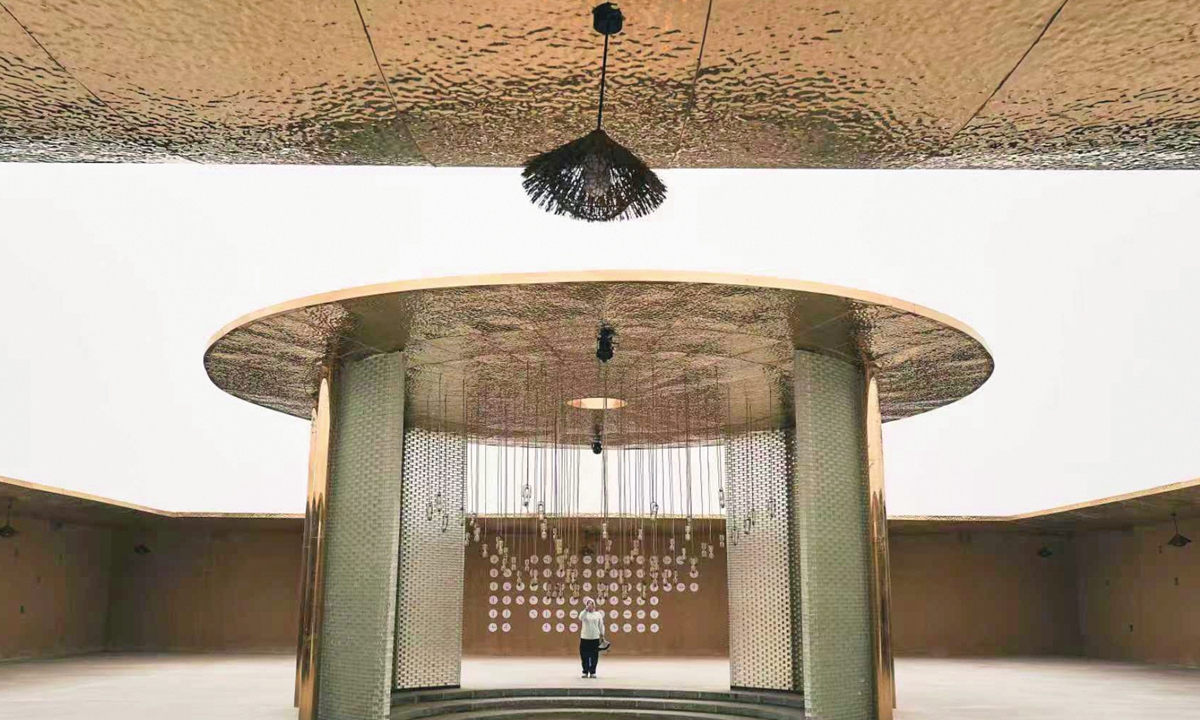
A new attraction park in the desert of Makit county, Xinjiang Uygur Autonomous Region, in 2025. Photo: Chellali
GT: Have your photos been shown in exhibitions in other countries? How did audiences respond, and were there any reactions that particularly stood out to you?
Chellali: Last year, I presented a series focused on landscapes from China, particularly from Gansu Province, northwestern China. I'm deeply drawn to extreme landscapes - the desert, dryness, emptiness. These places really speak to my heart.
What surprised me most was how curious people were. During the exhibitions, I gave talks about how China is trying to address desertification through large-scale tree planting. Many people told me afterward that they wanted to go and see China for themselves. That reaction means a lot to me.
However, what saddens me deeply is how little people in Europe actually know about China. And I include myself in that. Before I came here, I knew almost nothing - not about Chinese history, not about society. That lack of understanding is a real pity. So, I simply want to share what I see, as honestly and respectfully as I can, and let people discover China for themselves.
Because I want to share, I try my best - not only as a photographer, but also as a bridge between people. As a photographer, I aim to connect people. I like to think of myself as a bridge, bringing photographers to China and sharing my work with the world, so that more people can discover this incredible country for themselves.
RELATED ARTICLES