Exclusive: China is our largest, most irreplaceable soybean customer; stable US-China trade ties essential for American farmers, exporters: USSEC head
Stable bilateral trade ties essential for American farmers, exporters: industry group
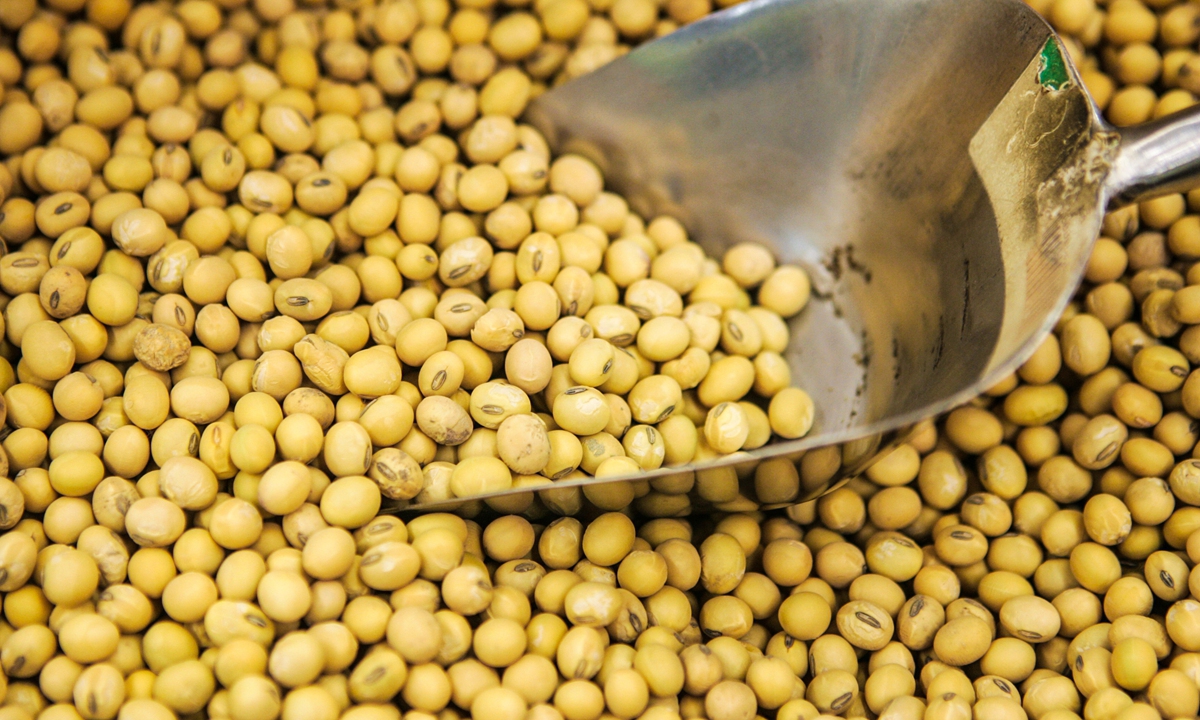
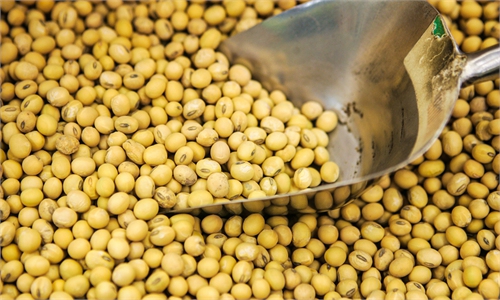
Soybean Photo: VCG
China is, quite simply, our largest and, in many ways, our most irreplaceable customer for US soybeans, said Jim Sutter, CEO of the US Soybean Export Council (USSEC), in a written interview with the Global Times, stressing the high importance of the Chinese market for the American soybean industry.
The remarks were made as US-China trade, in which soybeans account for a significant share, shows a positive trend. According to the latest data from the USSEC, in market year 2024/25, a total of 22.6 million metric tons of US soy was shipped to China. Sutter said that he is "cautiously optimistic" that US soybean exports to China can reliably stay in the mid‑20‑million‑metric-ton range on an annual basis, given the high complementarity between the two sides, with China having been the key market for decades for the American soybean industry.
"We've been working in China for more than 40 years and over the last several decades, China has consistently been our largest export destination, often taking around half of all US soybean exports in a given year, which translates into billions of dollars in value for American farmers and the broader supply chain," said Sutter, noting that the trade supports jobs not only on farms, but in rural communities, transportation, export terminals, and related service industries across the US.
This trade relationship has never been a one-way deal but rather underscores the high degree of complementarity. China relies heavily on imports to meet its soybean needs, purchasing the majority of its soybean supply to feed its livestock, aquaculture, and food sectors, and "that creates a deeply interdependent relationship: US farmers depend on China as a cornerstone customer, and Chinese feed and food companies depend on the US as a reliable, high‑quality supplier," said Sutter.
Having said that, the American industry representative noted that the work it does is to strengthen this relationship through technical cooperation, sustainability programs, and frequent in‑market engagement and trade access, which are critical for both countries.
The US-China soy trade relationship is central to maintaining farm incomes and economic opportunity in America, and food and feed security in China, said Sutter. He said that "for many years, I believe that both countries considered it a real win-win relationship - we want to make sure that is what it is, which is why the USSEC continues to do work in China."
Last year, China-US trade showed signs of stabilizing following multiple rounds of bilateral talks on tariffs, with China's trade with the US exceeding 4 trillion yuan ($573 billion), accounting for 8.8 percent of China's total import-export value in 2025, according to China's General Administration of Customs.
"From the US soybean industry's perspective, stable and predictable US-China economic and trade relations are essential," said Sutter, noting that when tariffs, counter‑tariffs, and policy uncertainty escalated, US soybean exports to China dropped sharply, and that volatility made it extremely difficult for farmers and exporters to plan and invest for the future.
"With stable market access, confidence on both sides will grow, as will our trade opportunities," the industry representative said.
"What I'm encouraged by right now is that agricultural trade - and soy in particular - has been kept on the agenda in high‑level US-China discussions, and we are seeing signs of stabilization in the relationship," said Sutter. He noted that China has honored a significant portion of its commitments, including meeting its first 12 million metric ton purchase agreement, and that is restoring confidence on the US side.
For both countries, predictable, rules‑based trade allows businesses to invest in infrastructure, sustainability, and innovation, which ultimately benefits consumers and producers in the US, in China, and around the world, the USSEC head said.
Looking ahead, Sutter expressed his optimism about the soybean trade. "We know Chinese crushers value US soy's reliable, high‑quality supply, and we're already seeing signals of stronger Chinese buying interest reflected in futures markets," he said.
Moreover, while the global demand for protein and vegetable oil continues to grow and US Soy is looking to serve those markets, "China remains our most significant export market and our farmers are eager to supply it and maintain our long-term relationship with our Chinese buyers," Sutter said.
The remarks from the USSEC highlight the strong complementarity between China and the US in trade and the American soybean industry's high focus on the Chinese market, Lü Xiang, research fellow at the Chinese Academy of Social Sciences, told the Global Times on Wednesday.
Lü noted that domestically produced soybeans in China account for only about one-fifth of actual consumption, creating a huge and stable market for global suppliers. "While the US aims to provide a steady supply, its trade policies are not always stable — a primary concern for American soybean farmers, given the country's role as a major global producer," Lü said.
Policy shifts, such as US unilateral tariff measures, have caused significant disruption for US soybean farmers and other agricultural producers, he added. At the same time, China is diversifying imports, including from Brazil and Argentina, to reduce risks from trade uncertainties.
For example, in recent years, Brazil's soybean production has steadily increased, and with strong economic and trade ties between the two countries, it has fully surpassed the US to become China's largest source of soybean imports, according to the Securities Times.
A stable and predictable US-China trade relationship is crucial not only for soybeans but for multiple sectors on both sides, Lü said, urging the US government to heed the call of its domestic industries, reduce trade barriers, and engage cooperatively with China. "Only then can American soybean farmers secure more stable and lasting benefits, which would be a good thing for all."
RELATED ARTICLES