China unveils 2026 crewed space plan as lunar landing program advances toward 2030; Pakistani astronaut flight scheduled
By and Published: Feb 27, 2026 11:29 AM


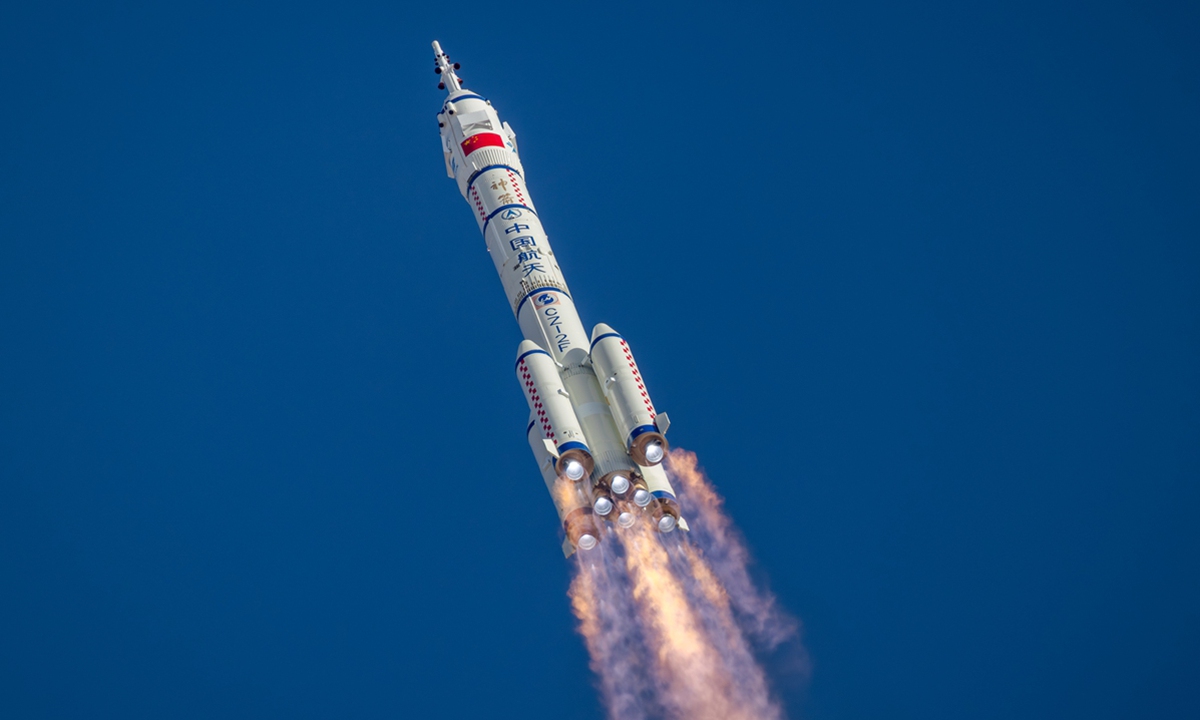
The Long March-2F Y20 carrier rocket carrying the Shenzhou-20 manned spacecraft lifts off from the Jiuquan Satellite Launch Center on April 24, 2025. Photo: VCG
The China Manned Space Agency (CMSA) on Friday unveiled plans to conduct two crewed spaceflight missions and one cargo resupply mission in 2026, with astronauts from the Hong Kong and Macao special administrative regions expected to undertake a space station mission. The agency also revealed that the landing missions of China's crewed lunar exploration program have been progressing smoothly, targeting the execution of the country's first crewed Moon landing before 2030. And one Pakistani astronaut is scheduled to carry out a short-term mission aboard the China Space Station serving as a payload expert.China's manned space program will thoroughly implement the directives of the 15th Five-Year Plan (2026-30), and at the new starting point, deepen efforts to advance the two major tasks of space station application and development, and crewed lunar exploration, striving to make greater contributions to accelerating the building of China into a space power, according to a release CMSA provided to the Global Times.
In 2026, two crewed spaceflight missions and one cargo resupply mission are planned. Taikonauts from Hong Kong and Macao special administrative regions are expected to carry out spaceflight missions as early as this year. Also, one taikonaut of the Shenzhou-23 crew will undertake a year-long space stay experiment, said CMSA.
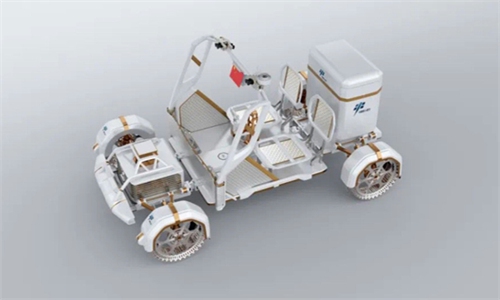
Aiming to achieve the goal of landing Chinese astronauts on the Moon for the first time before 2030, research and development as well as construction work for the lunar landing phase of the crewed lunar exploration program are progressing steadily. So far, development of major flight products — including the Long March-10 carrier rocket, the Mengzhou crewed spacecraft, and the Lanyue lunar lander — has advanced smoothly.
A series of major tests have been completed, including the Mengzhou spacecraft's zero-altitude escape test, the Lanyue lander's landing and liftoff test, the Long March-10 carrier rocket's tethered ignition test, the rocket system's low-altitude demonstration verification test, and the Mengzhou spacecraft system's maximum dynamic pressure escape flight test, according to the release.
In 2026, full efforts will also be made to advance the construction of supporting facilities and equipment for lunar missions at the Wenchang space launch site, as well as ground support systems such as tracking, telemetry and command, communications, and landing sites.
Since the program was launched, it has actively promoted international cooperation and exchanges in the field of human spaceflight. Last year, China and Pakistan signed an agreement on cooperation in astronaut selection and training. The selection process is progressing smoothly and according to mission planning arrangements, one Pakistani astronaut will later carry out a short-term mission as a payload specialist, conducting scientific experiments for Pakistan aboard the Chinese space station, said CMSA.
CMSA also said that it will continue advancing cooperative projects with the United Nations Office for Outer Space Affairs. China always welcomes international partners to participate in and share the achievements of its human spaceflight development, working together to promote global space technology advancement and make new and greater contributions to the peaceful use of outer space for the benefit of all humanity.
In the Friday release, CMSA also noted that at present, the Chinese space station is operating steadily in orbit and delivering strong performance. Meanwhile, research, development and construction work for the lunar landing phase of the crewed lunar exploration program is progressing smoothly, with multiple phased breakthroughs achieved.
Since entering the space station application and development stage, all systems of the program have worked in close coordination, successfully completing six crewed missions, four cargo resupply missions, and seven spacecraft return missions. The first emergency launch was also successfully carried out. Six astronaut crews, totaling 18 astronauts, have conducted long-term stays in orbit. A total of 13 extravehicular activities (EVAs) have been completed, along with multiple payload EVAs and several extravehicular maintenance operations. A new world record was set for the duration of a single spacewalk by an astronaut.
The fourth batch of taikonauts — including payload specialists from Hong Kong and Macao — have been selected, and the selection of a low-cost cargo transportation system has been completed with development initiated.
So far, 267 scientific research and application projects have been deployed and implemented aboard the Chinese space station, covering areas such as space life sciences and human research, microgravity physics, and new space technologies. A number of internationally leading scientific and technological achievements have been made, some of which have been transferred and applied, significantly advancing China's space science and application capabilities, according to CMSA.
RELATED ARTICLES