At onset of 15th Five-Year Plan, new growth drivers will power China's industrial upgrade
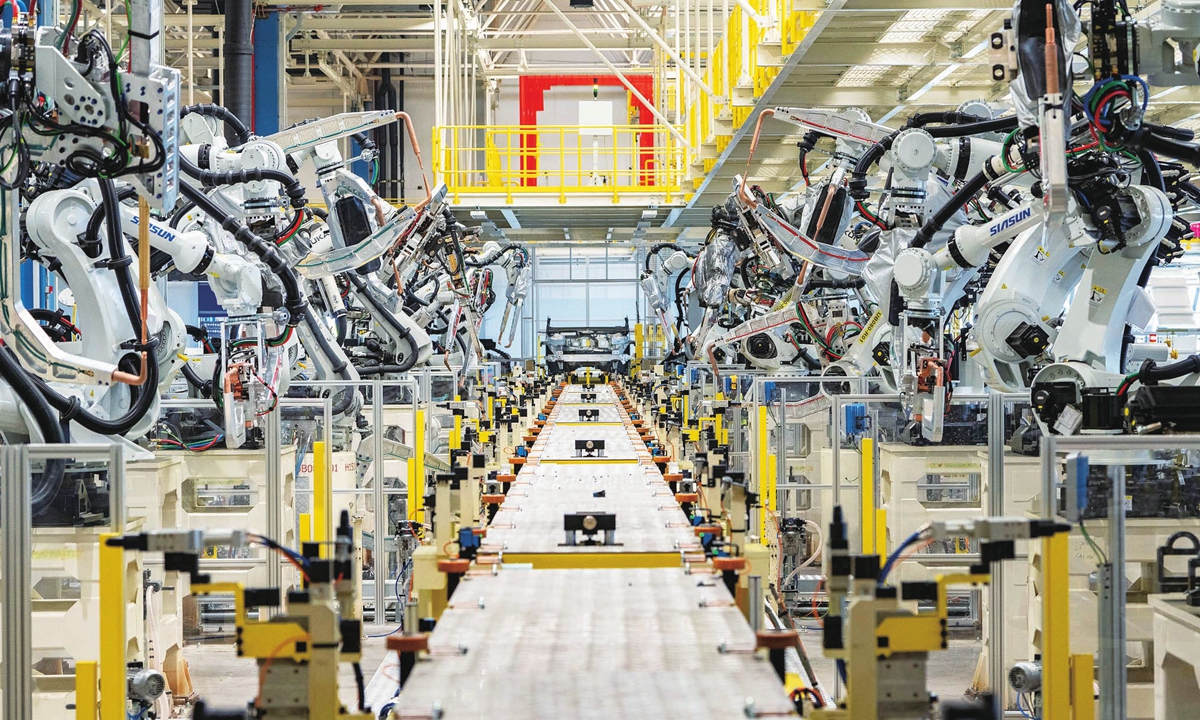
Robots work at the welding assembly line of Geely Auto's Lynk electric vehicle plant in Yiwu city, East China's Zhejiang Province, on February 25, 2026.
This is the opening year of the 15th Five-Year Plan (2026-30) period. With the annual two sessions now approaching, attention is focused on China's economic restructuring and its medium- to long-term growth drivers.
The annual Central Economic Work Conference in December noted that it will be essential to enhance innovation-driven development to accelerate the cultivation of new growth drivers. China needs to promote the deep integration of scientific and technological innovation with industrial innovation to develop new quality productive forces.
Against this backdrop, the implementation of technology innovation policies, industrial restructuring, and the cultivation of new growth drivers are expected to become key topics during the two sessions. In recent years, China's economy has been continuously exploring new development paths amid a high-quality transformation, and emerging growth drivers have begun to take shape. Three areas deserve particular attention this year.
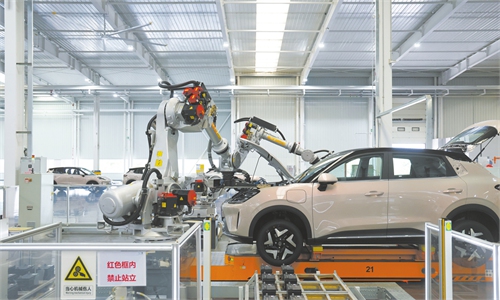
First is the new-energy and smart-driving vehicle industry.
In recent years, China's automotive production and sales have remained high, yet the penetration of NEVs still has significant room for growth, and overseas market share also holds expansion potential. More importantly, the trend toward intelligent features is profoundly reshaping the technological structure and value chain of the automotive industry.
Industry data shows that a traditional vehicle requires a limited number of chips, whereas the use of chips in smart electric vehicles has grown geometrically, from dozens in early models to hundreds or even more than 1,000. Cars are no longer mere assemblies of mechanical systems; they have become mobile intelligent terminals integrating algorithms, sensors, and computing platforms. Intelligent driving systems, in-vehicle operating systems, environmental perception, and data-processing capabilities are becoming the new core of industry competition.
This means that new-energy and smart-driving vehicles not only drive whole-vehicle manufacturing but also help expand upstream and downstream industries, including semiconductors, sensors, and algorithm platforms. The deep integration of digitalization, networking, and intelligence makes the automotive industry an important carrier of new quality productive forces and a key breakthrough for China's manufacturing sector to move up the value chain.
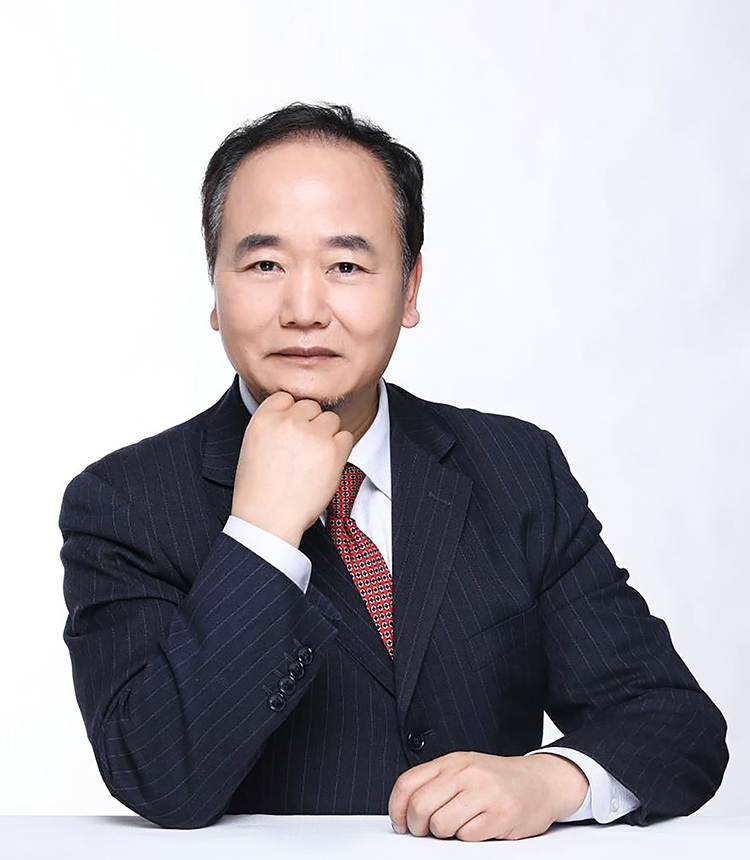
Cao Heping
The second potential growth driver is the humanoid robotics and embodied intelligence industry. In manufacturing, if large-scale smart manufacturing and automation upgrades are implemented over the next three to five years, there is enormous potential for robots to collaborate with human labor. The robot market alone could generate substantial market demand.
Even more promising is the services sector. Demand for intelligent devices in eldercare, rehabilitation, and home assistance is rising. Should humanoid robots achieve breakthroughs in price, stability, and algorithmic capability, their adoption in households could be significant. According to my estimates, this market could reach a scale comparable to today's automotive industry.
The significance of this industry goes beyond end-product sales. It also extends to stimulating advancements in artificial intelligence algorithms, precision manufacturing, core components, and operating system platforms.
The third area to watch is smart homes and digitalized living spaces.
Similar to the intelligence component of vehicles on the move, residential spaces have massive potential for large-scale smart upgrades in static settings. From sofas and beds to walls, doors, mirrors, and home appliances, fully embedding sensors and data collection units could result in thousands of sensing nodes within a single room. Each node will require chips and processing capacity to function.
China's vast building stock provides extensive opportunities for smart homes. Once large-scale retrofitting and standardization are implemented, demand for chips, Internet of Things systems, and data services could expand exponentially.
The formation of new growth drivers is not merely the result of expansion in individual industries, but highlights China's new growth logic and structural upgrade path. Notably, policy thinking is moving from "investing in projects" to "investing in human capital."
By optimizing the research system, supporting the entrepreneurship and innovation of scientific talent, and improving the science and technology financing system, talent becomes the central node in the innovation chain. At the same time, promoting regional coordination and research collaboration will help address development imbalances and improve resource allocation efficiency.
If in past decades China relied on large-scale manufacturing and modular production systems to achieve industrial leap, the future development logic lies in building on this industrial foundation while deeply integrating "Industry 4.0" concepts with digitalization, achieving a steady transition from the industrial era to the digital era.
The global economic environment is likely to remain complex and uncertain this year. Against this backdrop, China's cultivation of new sectors accelerates the growth of new quality productive forces, thereby strengthening economic resilience and endogenous growth capacity.
In the opening year of the 15th Five-Year Plan, policy initiatives centered on innovation-driven development and the cultivation of new growth drivers are likely to open new avenues for China's economic expansion, while also enhancing China's role in the global economic landscape.
The author is a professor at the School of Economics of Peking University. bizopinion@globaltimes.com.cn
RELATED ARTICLES