China says it has made clear its concerns to US over reported AI-powered reconnaissance against China
By Zhang Wanshi and Published: Mar 02, 2026 05:21 PM

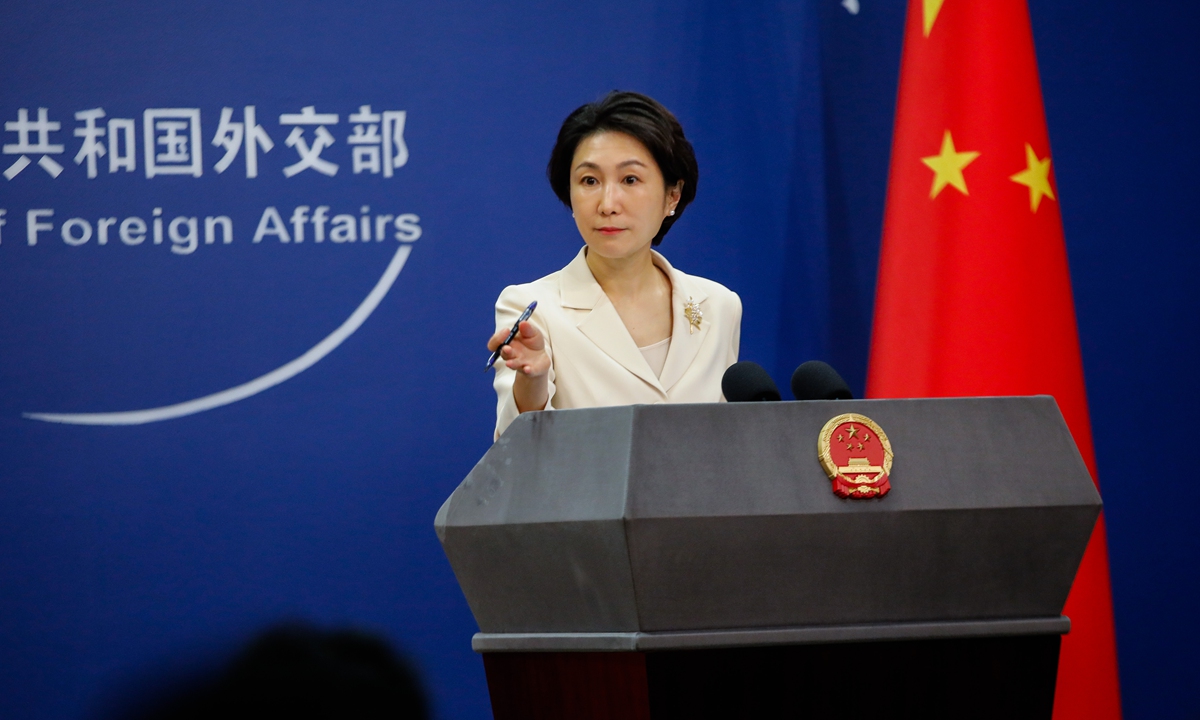
Chinese foreign ministry spokesperson Mao Ning
The Chinese side has made clear its deep concern to the US side through multiple channels and will ensure China's cyber security with all measures necessary, a Chinese Foreign Ministry spokesperson said on Monday after the US Department of War was reportedly in talks with leading AI companies about partnerships to conduct automated reconnaissance of China's power grids, utilities and sensitive networks.The response came after a report published by the Financial Times, which claimed that the Pentagon is seeking to make AI-powered cyber tools to identify infrastructure targets in China as part of an effort to improve US capabilities in any future military conflict with Beijing.
It was in talks with leading artificial intelligence companies about partnerships to conduct automated reconnaissance of China's power grids, utilities and sensitive networks, as well as those of other US adversaries, the report said.
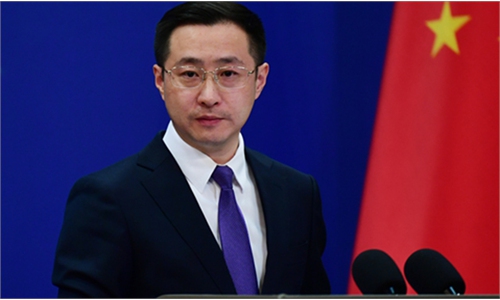
The spokesperson Mao Ning said during the press conference that, "We have noted reports on this. The US has long been the leading source of instability in cyberspace. It had been conducting cyber attacks and prepositioning against China's key infrastructure even before the development of AI."
The US government even asks major tech companies to directly serve US geopolitical, political and military targets, a move that has grave global impact, Mao added. "The Chinese side has made clear its deep concern to the US side through multiple channels and will ensure China's cyber security with all measures necessary."
According to the report by FT, the US is seeking to deploy new AI-powered tools to identify software flaws in opponents' systems that could then be exploited to enhance infiltration and degrade those systems in any conflict. The proposed system would also use AI to penetrate computer networks, map vulnerabilities and integrate potential targets into US war planning.
On July 2025, the US Department of Defense has said it's granting contract awards of up to $200 million for AI development at Anthropic, Google, OpenAI and xAI, according to the report by NBC News. The awards will help the agency accelerate its adoption of "advanced AI capabilities to address critical national security challenges."
The report by FT noted that which companies will be involved in the new cyber initiative is yet to be determined.
AI could play an expanded role on future battlefields, both conventional and asymmetric, military affairs expert Song Zhongping told the Global Times on Monday. He noted that AI can be deployed across the entire battlefield, enabling efficient and precise intelligence analysis while enhancing the smart, autonomous capabilities of weapon systems. To bolster its defense in the face of the potential risks, China should also retain this kind of ability to develop and apply AI across relevant domains including cyberspace.
The Pentagon's move comes at a time of heightened tensions with some of the country's most advanced AI companies over how far their technology should be used in military operations.
As a recent step, in negotiations over the $200 million contract, the Pentagon had demanded that it be able to use Anthropic's AI system for all lawful purposes, or it would cut the company off from government business, according to The New York Times on Friday. But Anthropic said it needed terms that would ensure that its AI technology would not be used for domestic surveillance of Americans or for autonomous lethal weapons. The Pentagon, in turn, said a private contractor could not decide how its tools would be used for national security.
Their disagreement erupted into public view this month and escalated as both dug in their heels, the report noted.
While China opposes an AI arms race, it will firmly strengthen its defense in the AI field to deal with the potential risks, Song added.
RELATED ARTICLES