We hope Taiwan compatriots clearly understand 'Taiwan independence' is a dead end: NPC deputy from Taiwan delegation
By and Chen Zishuai Published: Mar 04, 2026 09:05 PM

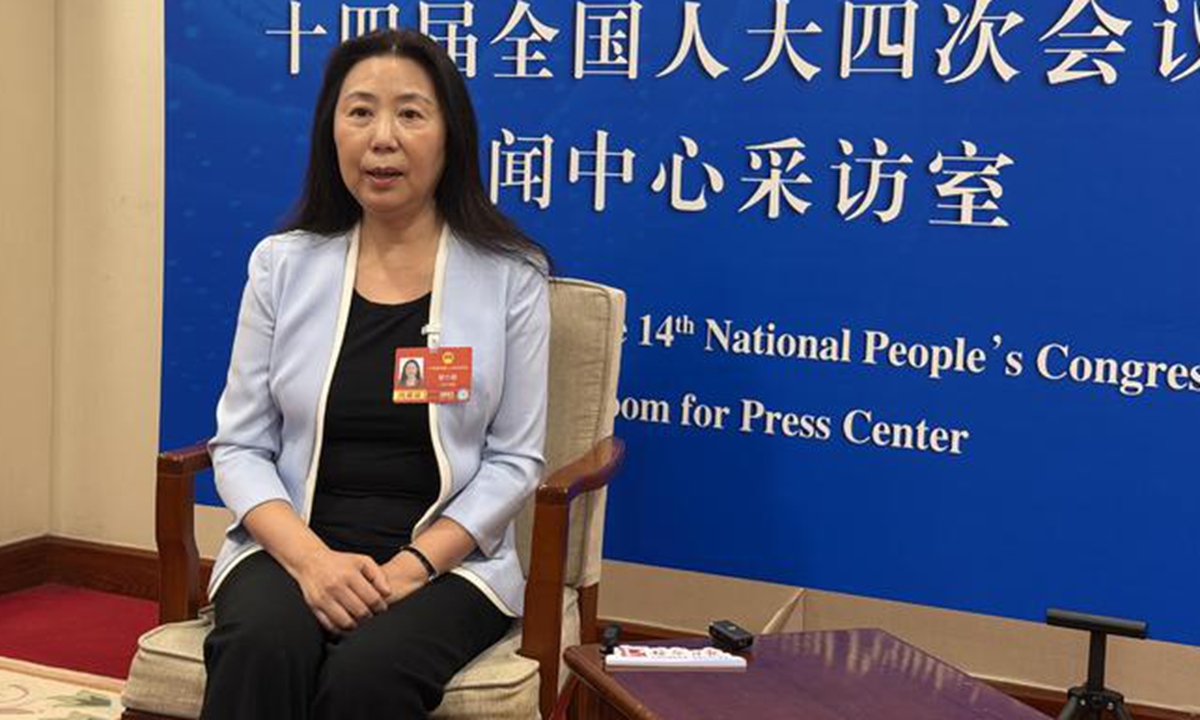
Zeng Liqun, a deputy from the Taiwan delegation to the 14th National People's Congress, speaks with the Global Times on March 4, 2026. Photo: Chen Qingqing/GT
"We hope that the vast number of Taiwan compatriots clearly understand that 'Taiwan independence' is a dead end, external forces are unreliable, the process of reunification is unstoppable, and the Democratic Progressive Party (DPP) authorities' attempt to seek independence by relying on external forces is doomed to fail," said Zeng Liqun, a deputy from the Taiwan delegation to the 14th National People's Congress and executive director of the national federation of Taiwan compatriots, in an interview with the Global Times on Wednesday during the national "two sessions" - the annual meetings of China's top legislature and top political advisory body.
Zeng said the development of cross-Straits relations presents both opportunities and challenges. In terms of opportunities, the mainland's comprehensive national strength continues to rise, its economic and social development demonstrates strong resilience, its national defense capabilities are steadily increasing, and its international influence is expanding. All of this has laid a solid foundation for the peaceful development of cross-Straits relations and provided strong support for the development of Taiwan region.
China is formulating and implementing the 15th Five-Year Plan (2026-30), and this period will be a crucial stage for basically realizing socialist modernization, consolidating foundations, and making comprehensive advances, she said.
"If Taiwan island seizes this historic opportunity and actively participates in integrated development across various fields on both sides of the Straits, it will be able to broaden its development space and share in the fruitful achievements of Chinese modernization," Zeng noted.
At the same time, Zeng pointed out that cross-Straits relations face two major challenges. First, the DPP authorities refuse to recognize the 1992 Consensus, which embodies the one-China principle, and stubbornly adhere to a separatist stance of "Taiwan independence," seriously undermining the political foundation for cross-Straits exchanges and cooperation and exacerbating tensions in the Taiwan Straits.
Second, certain external forces have intervened in the Taiwan question through political manipulation and arms sales to Taiwan, interfering in China's internal affairs and obstructing efforts to promote peaceful cross-Straits development and advance national reunification. In particular, recent US arms sales to Taiwan and Taiwan-related remarks by certain Japanese politician may appear to "support" Taiwan, but in fact harm its interests.
Zeng said these countries and politicians primarily consider their own interests, treating Taiwan merely as a pawn that will ultimately become a sacrifice. Therefore, she reiterated her call for Taiwan compatriots to recognize that "Taiwan independence" is a dead end, external forces cannot be relied upon, reunification is unstoppable, and the DPP authorities' attempt to seek independence by relying on external forces is bound to fail.
"Taiwan's future lies with the motherland; Taiwan's youth should seize this opportunity by coming to the mainland to explore for themselves," Cai Peihui, a deputy from the Taiwan delegation to the 14th NPC, told the Global Times on Wednesday.
Only by aligning their personal futures with the broader development of the mainland and coming here with confidence can Taiwan's youth gain access to wider opportunities, he said, noting that Taiwan island does have certain strengths in technological sectors such as artificial intelligence, but due to limitations in market scale and development space, these advantages cannot be fully realized.
"If they integrate more effectively into the overall development landscape of the mainland, they will be able to better leverage their expertise and maximize their value," Cai noted.
In addition to the deputies from the Taiwan delegation to the 14th NPC, some journalists from the island also show great attention to and expectations for the national "two sessions."
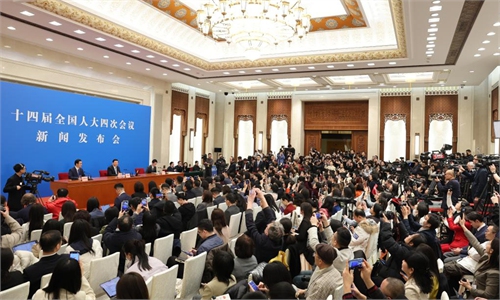
While waiting in line to a press conference at the Great Hall of the People ahead of the opening of the annual session of the NPC on Wednesday, Wang Guijiao, deputy president of the Taiwan-based Huaxia News, told the Global Times that cross-Straits economic, trade, and cultural exchanges are the issues she cares about most.
"Given the current tense international geopolitical situation, as media professionals from the island, we hope for peaceful reunification as soon as possible. That is the dream of many of us. We are all Chinese," she said.
RELATED ARTICLES