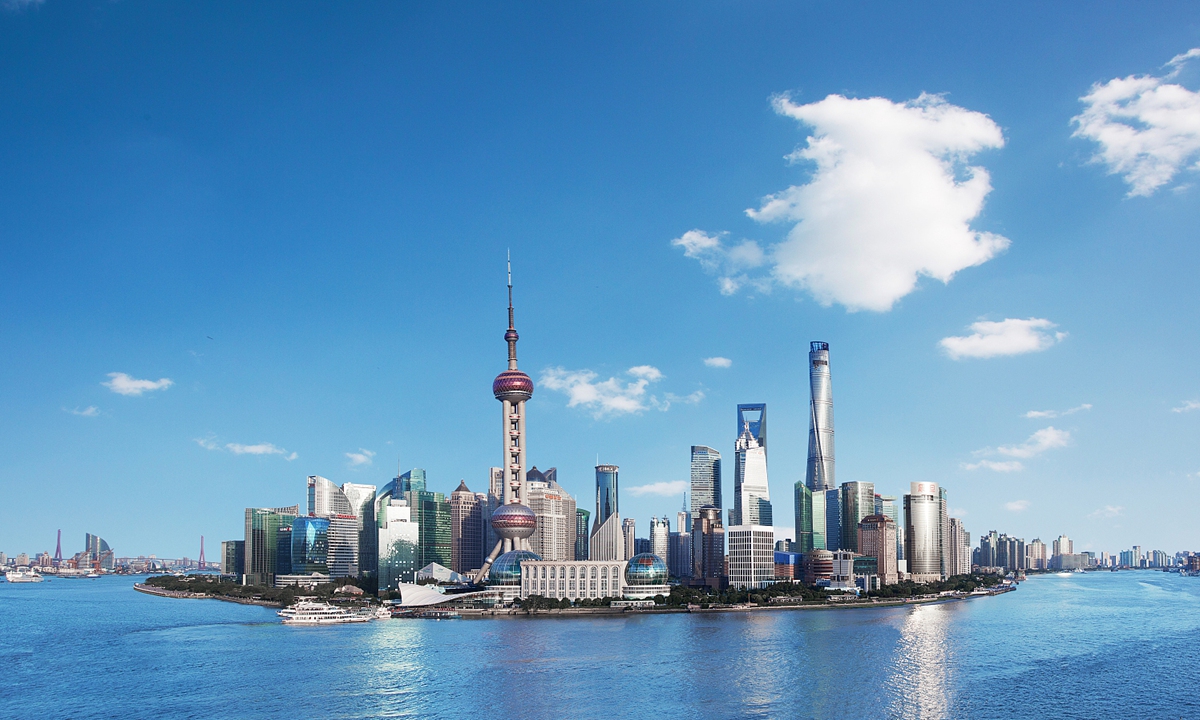
A view of Shanghai, China Photo: VCG
Editor's Note:
As China convenes the 2026 two sessions - the annual meetings of China's top legislature and top political advisory body - China is expected to send strong and fresh signals on pushing high-quality development, leveraging greater policy and reform support to ensure steady economic growth and social progress.
In the "Understanding signals at two sessions" series, the Global Times (GT) invites internationally renowned scholars, policy observers and business leaders to interpret the key signals from the two sessions regarding China's domestic roadmap, covering advancements in whole-process people's democracy, high-quality development, high-level opening-up, major-country diplomacy and the improvement of people's wellbeing.
In the second piece of the series, Helmo Preuss (Preuss), an economist who founded Forecaster Ecosa, an economic and market research company in South Africa, shared his views on China's economic growth prospects during the 15th Five-Year Plan period (2026-30), the country's advancement in emerging fields, the significance of its high-quality development, among other topics, with GT reporter Xia Wenxin.
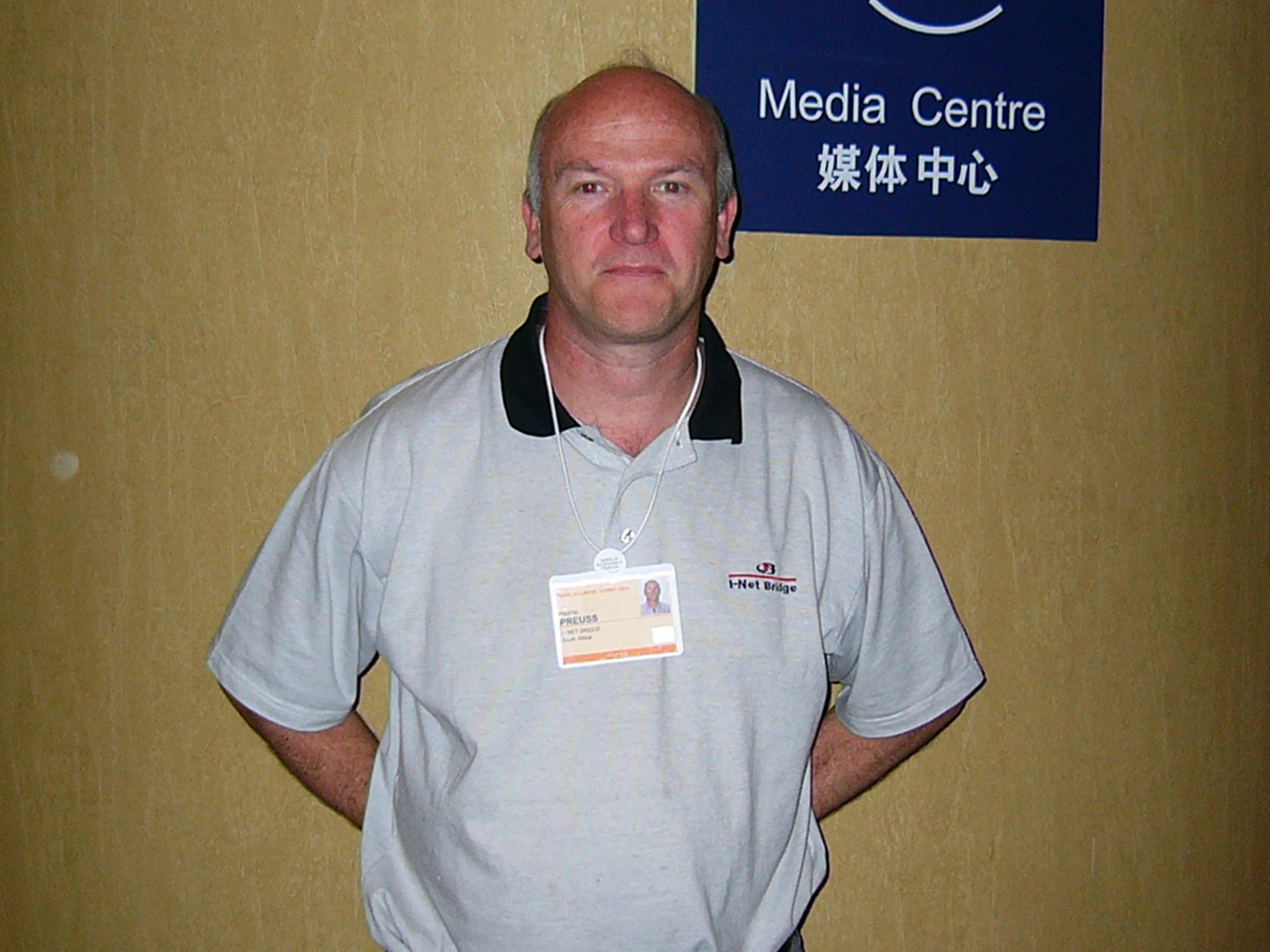
Helmo Preuss Photo: Courtesy of Preuss
GT: On Thursday, China unveiled major development targets for the 2026-30 period as a government work report was submitted to the country's top legislature for deliberation. As an economist who has long followed China's economic development, what is your expectation for China's economic growth this year and in the long term?
Preuss: In 2025, China's GDP grew by 5 percent, with the total exceeding 140 trillion yuan ($20.44 trillion) for the first time. I think what China has achieved is remarkable. Once again, it showed the world that the doomsayers were wrong.
In a short period of time, China has reached this tremendous landmark and will continue to receive "excellent" comments on its report card. This has been achieved because the citizens of China work together to ensure a vibrant economy.
China has set an economic growth target of 4.5 percent to 5 percent this year. As China has been the preeminent source of global growth for many years, China's increase in growth will dwarf the total national economy of most countries. In particular, I doubt that there is any country on the African continent that has a national economy that matches China's increase in national income and its importance in the global trading system.
Besides, the consecutive Five-Year Plans provide policy certainty and lay out a clear roadmap toward a future common prosperity. This will uplift millions of people in China and around the world, as China is the world's largest exporter. In the long term, during the 15th Five-Year Plan period, I expect China to stabilize economic growth at the current level and grow the green economy. This means that China will make the greatest advancement in renewable energy and strengthen the national electricity grid by building more pumped storage projects.
GT: Looking ahead, what do you see as the most significant new highlight in China's economic development?
Preuss: I expect the property sector to bottom out this year and start a gradual recovery next year. That is the most significant new highlight, but progress in the green economy and artificial intelligence (AI), which have been the drivers of growth in the past two years, needs to be encouraged to deliver on the promise of "shared prosperity," not only for China, but for the rest of the world. A world that is cleaner and where mundane and/or dangerous work is moved to robots will benefit all the citizens of the world.
GT: In recent years, the two sessions have emphasized developing new quality productive forces, with China's rapid advancement in several emerging fields. How do you think China's accelerated development in these industries will translate into stronger cooperation momentum and new opportunities with regions like Africa?
Preuss: AI, quantum technology and green energy are all enablers that help to de-risk exploration, restoring a barren piece of land that may have a decent, economically viable deposit. These technologies can then be harnessed to bring that deposit into production at a reduced cost and with technology that is safer and less harmful to the environment. New copper mines in the Democratic Republic of the Congo and Zambia show how this works in practice and will help to stabilize the copper market.
GT: China is transitioning from "high-speed growth" to "high-quality development." How do you see this transformation? What insights does this offer to other developing countries?
Preuss: The aim of "high-quality development" is to move up the value chain. Its distinctive feature is that instead of relying on cheap labor costs, the new developmental model relies on intellectual prowess. It makes sense to initially start with "high-speed growth" to lift a large number of people out of extreme poverty, but once that has been achieved, there should be a transition to "high-quality development," when individuals achieve a better life-work balance and enjoy the benefits of the arts, culture, entertainment and connecting with family and like-minded individuals. The example of China shows that you can lift millions of people out of poverty and give them an aspirational model that has worked and is not just some economists' utopia. This is a model that can be replicated in other developing countries.
GT: In addition to economic development, what other areas of the two sessions, for example foreign policy, are you paying close attention to?
Preuss: I expect a renewed commitment to multilateralism and the rule of law in international relations. It is unacceptable that we return to the "gunboat" era, which took place from the "Scramble for Africa" in the 19th century and only ended with decolonization in the second half of the 20th century. We have institutions such as the United Nations, International Monetary Fund, World Bank and World Trade Organization that help the "middle powers" to take up their rightful place in the pantheon of nations. The two sessions should signal that China is firmly on the side of justice to stand up to the bullies.
RELATED ARTICLES