A China that has grown strong and its 1.4 billion people will never allow anyone to reverse verdict on aggression: Chinese FM Wang Yi on relations with Japan
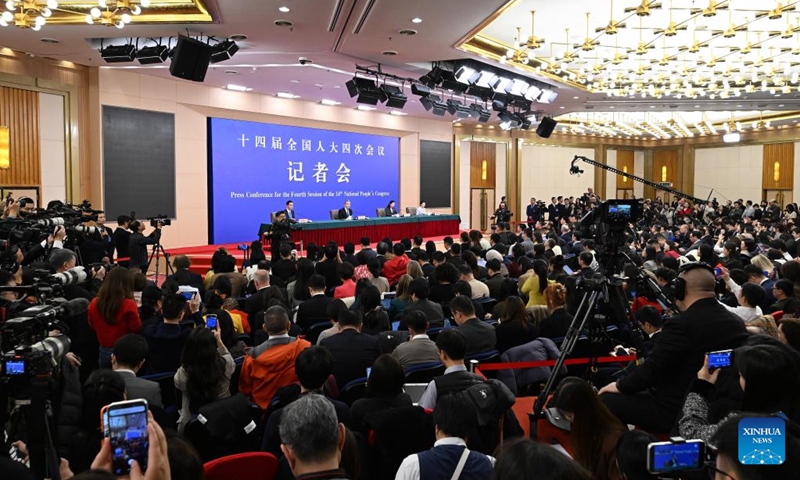
Chinese Foreign Minister Wang Yi, also a member of the Political Bureau of the Communist Party of China Central Committee, attends a press conference on China's foreign policy and external relations on the sidelines of the fourth session of the 14th National People's Congress (NPC) in Beijing, capital of China, March 8, 2026. (Xinhua/Cao Yiming)
China is already a strong country. The 1.4 billion people of China will never allow anyone to justify colonialism or reverse history’s verdict on aggression, Chinese Foreign Minister Wang Yi said at a press conference on Sunday on the sidelines of the fourth session of the 14th National People's Congress, responding a question regarding China's relations with Japan.
The future of China-Japan relations hinges on Japan’s choice, the Chinese Foreign Minister remarked when responding a question raised by a Japan's Kyodo News Agency reporter on Sunday. The question mentioned that in last November, China had lodged a strong protest against Japanese Prime Minister Sanae Takaichi's remarks on Taiwan. At present, China-Japan relations face challenges, and cooperation in various areas has also been affected.
The Kyodo reporter also claimed that since the Japanese government claimed that it always keeps the window for dialogue open since Takaichi won the election in February and then inquired what expectations the China has for the development of China-Japan relations.
Future of China-Japan relations hinges on Japan's choice, Wang said.
Last year marked the 80th anniversary of the victory of the Chinese People’s War of Resistance Against Japanese Aggression. In such a special year, Japan should have deeply repented of the wrong path it chose, including its brutal invasion and colonization of Taiwan. Yet the current Japanese leader claimed that a Taiwan contingency could constitute a “survival-threatening situation” for Japan, under which Japan may exercise its so-called “right of collective self-defense.” It’s well-known that the right of self-defense shall be invoked only when a country has come under armed attack, Wang said.
Wang continued with a series of questions, saying that one would ask: Since Taiwan affairs are purely China’s internal affairs, what gives Japan the right to interfere with them? Why is Japan entitled to invoke self-defense if anything happens in China’s Taiwan region? Is exercising the “right of collective self-defense” simply a way to hollow out Japan’s pacifist Constitution, which renounces the right of belligerency? Given that Japanese militarists had used “survival-threatening situation” as pretext for launching aggression, such rhetoric can only make the people in China and the rest of Asia alert and deeply worried: Where exactly is Japan headed?
Wang Yi pointed out, this year also marks another significant 80th anniversary—that of the opening of the Tokyo Trials. Eighty years ago, judges from 11 countries commenced proceedings that would span two and a half years, reviewed a mountain of irrefutable evidence, and laid bare the innumerable crimes of Japanese militarists. The Tokyo Trials, a litmus test of humanity’s conscience, delivered historical justice. Eighty years on today, Japan is given another opportunity for serious soul-searching. As Chinese adages remind us, “History is a mirror that reflects the rise and fall of human affairs” and “The past, if not forgotten, can serve as a guide for the future,” he said.
We hope the Japanese people will keep their eyes wide open and never allow anyone foolish enough to tread the same disastrous path today, Wang said.
China is already a strong country. The 1.4 billion people of China will never allow anyone to justify colonialism or reverse history’s verdict on aggression, Wang warned.
Global Times
RELATED ARTICLES