NPC deputy suggests optimizing vacations, breaks to stimulate domestic consumption
By Published: Mar 09, 2026 11:17 PM

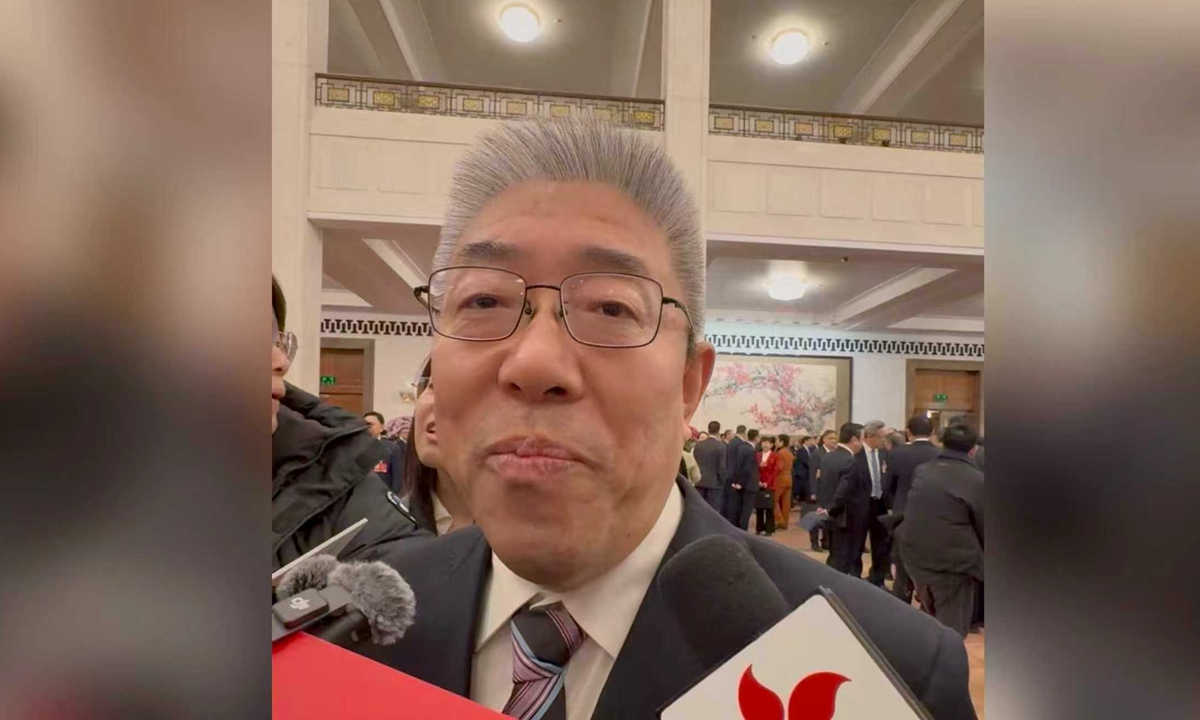
Zhang Yi, a deputy to the National People's Congress and a member of the academic divisions of the Chinese Academy of Social Sciences, speaks to the press during the "two sessions". Photo: from web
In an interview with the Global Times on Monday regarding unleashing consumption potentials with the introduction of spring and autumn breaks for primary and secondary schools, Zhang Yi, a deputy to the National People's Congress and a member of the academic divisions of the Chinese Academy of Social Sciences, noted that only by combining "consumption capacity" with "time available for consumption" can domestic demand be more effectively stimulated.
Getting people to spend more has emerged as a major economic task for China in 2026 and beyond, aligning with the country's broader shift toward a consumption-driven growth model, per the Xinhua News Agency.
At the ongoing "two sessions" in Beijing, the strategic importance of domestic demand has been underscored in both the government work report and the draft outline of the 15th Five-Year Plan (2026-2030), Xinhua said.
Amid a complex and challenging international environment, the work report stressed the need to remain committed to expanding domestic demand, pledging a range of measures to stimulate consumption - a pivotal pillar of domestic demand, per Xinhua.
This year's government work report pointed out that the government will abolish all excessive restrictions on consumption and unlock spending potential in areas such as culture, tourism, sports events, and healthcare. Spring and autumn holidays will be introduced for primary and secondary school students in localities where conditions permit, and a staggered paid leave system will be implemented.
This heartwarming proposal on spring and autumn holidays along with implementing a system of paid staggered leave for employees mentioned in the report has received widespread praise from netizens, China National Radio reported, as many people say they hope to travel with their children during the pleasant blooming spring or crisp autumn periods.
At the same time, questions such as how to design spring and autumn breaks in a scientific way, how to effectively implement staggered paid leave for employees, and how to coordinate holidays between parents and children have become center of public attention, the media report said.
In regard to this topic of concern, Zhang told the Global Times that "by combining the spring and autumn breaks with workers' paid leave, and extending vacation time through staggered holidays, workers will not only have the financial means to spend but also the time to do so," while noting that only by combining "consumption capacity" with "time available for consumption" can domestic demand be more effectively stimulated.
Zhang also shared his view on expanding domestic demand in this year's government work report and the draft outline of the 15th Five-Year Plan (2026-2030).
Zhang said the key foundation for expanding domestic demand is raising workers' incomes and per capita disposable income. Only when income levels increase will consumption correspondingly grow, enabling residents to expand spending through market channels, he said.
In terms of income distribution, Zhang suggested that efforts can be made on three levels. First, workers' incomes should be increased, especially the income paid directly to employees during the labor process.
Second, the role of redistribution in the income distribution system should be strengthened by increasing transfer mechanisms in order to further adjust income disparities, he said.
Third, stronger support should be provided to low-income groups through tertiary distribution, Zhang added.
At present, there are differences in development levels across China's cities and regions, and the nature of unbalanced and inadequate development also varies. Against this backdrop, I propose viewing consumption from two perspectives: subsistence consumption and developmental consumption, Zhang noted.
For subsistence consumption, there are still considerable difficulties in achieving upgrading. Developmental consumption, on the other hand, reflects the widespread demand among residents nationwide for consumption upgrading and represents an important future trend, the deputy said.
Therefore, it is necessary to combine rising incomes with improvements on the consumption side. Only by linking higher income levels with the transformation of consumption can consumption be effectively stimulated, Zhang added.
RELATED ARTICLES