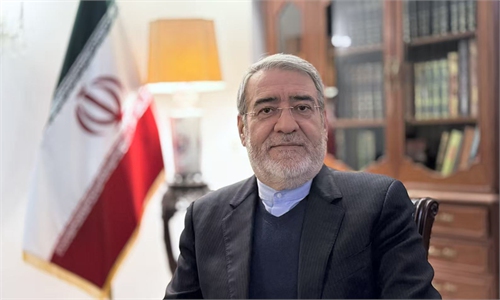
Traffic through the Strait of Hormuz will be regulated, but this does not equate to closing the strait: Iranian Ambassador to China
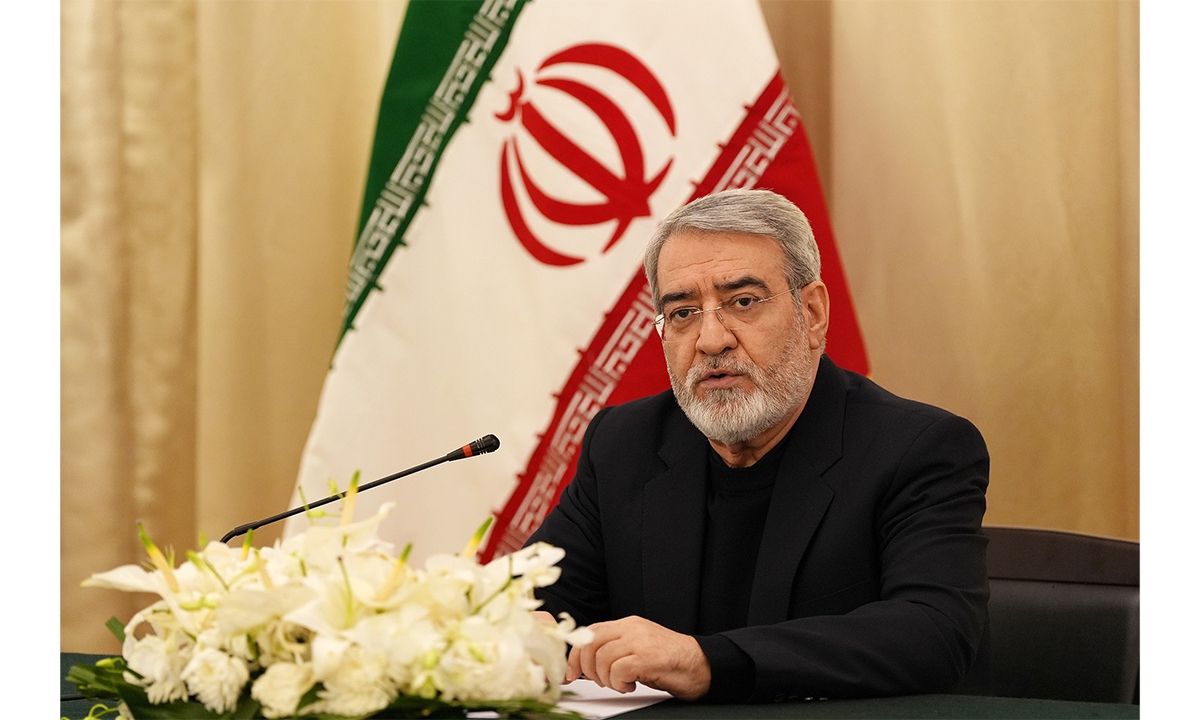
Iranian Ambassador to China Abdolreza Rahmani Fazli Photo: VCG
The US-Israeli military strikes against Iran have entered the 11th day. The escalating situation not only affects peace and stability in the Middle East, but also makes the navigation safety of the Strait of Hormuz, a vital global energy shipping route, a spotlight of global attention.Iranian Ambassador to China Abdolreza Rahmani Fazli said Monday at a press conference that if security in the Strait of Hormuz and surrounding areas cannot be guaranteed, Iran will implement regulation on passage through the strait, but he emphasized that this does not equate to closing the strait.
The Strait of Hormuz and its surrounding waters are an important international trade route for goods and energy, with an average daily passage of about 20 million barrels of crude oil, accounting for 20 percent to 30 percent of global seaborne oil trade.
An Iranian Revolutionary Guards senior official said on March 2 that the Strait of Hormuz is closed and Iran will fire on any ship trying to pass, Iranian media reported. However, according to a report by Iran's Tasnim News Agency on Friday, senior officer of Iran's Islamic Revolutionary Guard Corps (IRGC) said in an interview with state TV that claims by some media outlets that Iran had closed the Hormuz strait were inaccurate.
Despite the adjustment in official statements, the actual situation regarding shipping through the strait is not optimistic. According to investigation of Bloomberg, recent shipping has effectively stopped in the crucial channel.
At the press conference on Monday, Fazli said that it was the US and Israel that caused insecurity in the region. If the world wanted to ensure the safety of energy transportation routes, first of all, the US and Israel must leave the region.
"As the guarantor of security in the Strait of Hormuz, we attach great importance to the safe passage of vessels from all countries. However, if the overall security of the strait and the surrounding area cannot be guaranteed, we cannot guarantee the safety of passage through the Strait of Hormuz," he said.
"Traffic through the Strait of Hormuz will be regulated, but this does not equate to closing the strait."
RELATED ARTICLES