Strait of Hormuz tensions simmer as Iran war lasts; China steps up shuttle diplomacy
By Published: Mar 12, 2026 12:11 AM

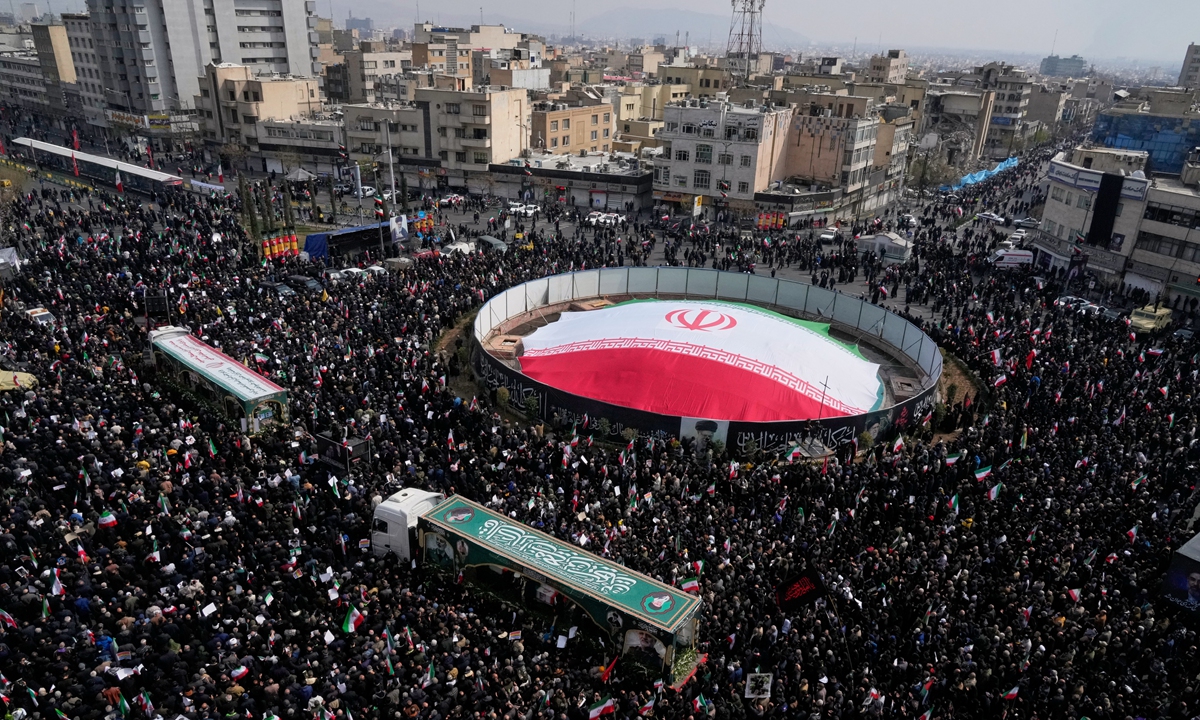
Mourners attend the funeral procession for senior Iranian military officials and some civilians killed during the US-Israel strikes, in Tehran on March 11, 2026. Photo: VCG
The US-Israeli military strikes against Iran have entered 12th day with mounting civilian casualties, global oil prices lingering at high level and deepening risks of a full blown regional conflicts. As the conflict drags on with the potential turning into an "endless war," the US administration is also facing more domestic differing voices, meanwhile, US President Donald Trump again signaled that the war with Iran will end "soon."
Against this backdrop, China has stepped up shuttle diplomacy to push for an immediate ceasefire and a political settlement.
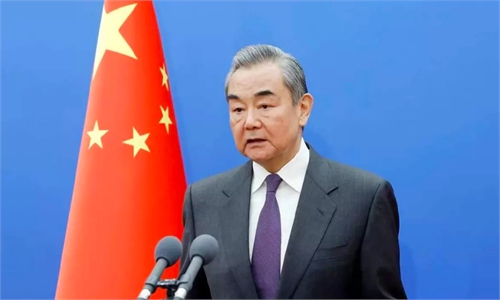
According to releases from the Chinese Foreign Ministry on Wednesday, Foreign Minister Wang Yi on Tuesday held phone conversations with Qatari Prime Minister and Foreign Minister Sheikh Mohammed bin Abdulrahman Al Thani and Pakistani Deputy Prime Minister and Foreign Minister Mohammad Ishaq Dar.
In the conversations, Wang expressed China's stance as call for an immediate ceasefire in the Middle East and efforts toward a political solution. The key to preventing further escalation lies in the US and Israel halting their military operations, and that China does not approve of attacks on Gulf countries and condemns all attacks on civil facilities and innocent civilians, according to Wang.
These latest phone calls follow two separate conversations Wang held on Monday with Bahraini Foreign Minister Abdullatif bin Rashid Al Zayani and Kuwaiti Foreign Minister Sheikh Jarrah Jaber Al-Ahmad Al-Sabah.
Parallel diplomatic efforts are underway on the ground. Zhai Jun, special envoy of the Chinese government on the Middle East issue, on Tuesday met with Sheikh Abdullah bin Zayed Al Nahyan, deputy prime minister and foreign minister of the United Arab Emirates (UAE), after his Monday meeting with Saudi Arabian Foreign Minister Faisal bin Farhan Al Saud in Saudi Arabia.
At a regular press conference on Wednesday, in response to media inquiries about China's position and efforts to promote de-escalation, Chinese Foreign Ministry Spokesperson Guo Jiakun said that as a permanent member of the UN Security Council and sincere friend of Middle Eastern countries, China will stay committed to urging peace and defending justice and fairness. China will continue to strengthen communication with relevant parties, including parties to the conflict, and play a constructive role for de-escalation and restoration of peace.
Zhu Yongbiao, a Middle East affairs expert with Lanzhou University, said that China's shuttle diplomacy in the Middle East is broad in scope and highly inclusive.
"China enjoys a solid foundation of trust with the relevant Middle Eastern countries. In addition, China has consistently adhered to promoting peace talks and reconciliation in regional and international issues, earning it high credibility," Zhu said.
Liu Zhongmin, a professor at the Middle East Studies Institute of Shanghai International Studies University, said that China's distinctive position of having friendly relations with both Iran and Arab countries alike. "Therefore China is well placed to play a crucial role in helping to ease tensions and contradictions with various parties," Liu said.
'Most intense' operation
On the battlefield, the violence has intensified further. According to Al Jazeera, powerful blasts were heard in Tehran due to Israeli air strikes early Wednesday. Military headquarters, oil infrastructure, residential areas, schools, and hospitals have been hit.
Meanwhile, Iran claimed a new wave of attacks on Israel and US assets in the Middle East, including in Iraq, Bahrain, the UAE, and Kuwait. On Wednesday, Qatar sent out an "elevated" threat level alert, telling residents to remain indoors, per Al Jazeera.
Iran's Islamic Revolutionary Guard Corps (IRGC) said it launched its "most intense and heaviest operation" since the start of the war overnight into Wednesday, CNN reported.
Additionally, the US Central Command on Tuesday night (local time) released footage on X of what it claimed as eliminated multiple Iranian naval vessels, including 16 minelayers near the Strait of Hormuz.
The continued tension in the Strait of Hormuz is a double-edged sword for both sides: for the US, it threatens energy security and the economy; for Iran, it is detrimental to its relations with Gulf countries, Liu said.
Liu added that the conflict is in a stalemate period, but this kind of high-intensity, high-cost conflict is unsustainable for both sides and for the countries in the region.
Concern over 'endless war'
US President Donald Trump said Wednesday that the war with Iran will end "soon," claiming there is "practically nothing left to target," US online media Axios reported.
Despite US Secretary of War Pete Hegseth pledging during a Tuesday press briefing that the US will not enter another prolonged conflict in the Middle East, following Trump's Monday claims that the war would end "very soon," the Democrats warned war costs are expected to grow and there is no end in sight, with oil prices soaring, CNBC said.
After attending the classified briefing on Capitol Hill on Tuesday, Democratic Senator Chris Murphy, who sits on the Appropriations and Foreign Relations Committees, said on X that the Trump administration's Iran war plans are "incoherent and incomplete" and said he worries the conflict could turn into an "endless war."
In a previous interview with CNN on Monday, Kamal Kharazi, Iran's foreign policy adviser to the office of the Supreme Leader, warned that the government is prepared for a long war with the US.
"I don't see any room for diplomacy anymore. Because Donald Trump had been deceiving others and not keeping with his promises, and we experienced this in two times of negotiations - that while we were engaged in negotiation, they struck us," Kharazi said.
Citing three US officials, the Washington Post on Monday reported that the Pentagon has burned through $5.6 billion worth of munitions during the first two days of its military assault on Iran.
Citing a Pentagon official on Tuesday, US media reported that seven US troops had been killed and about 140 service members wounded. However, sources with knowledge of the situation told ABC news that the number of wounded troops appeared to be significantly higher than what had been publicly disclosed.
As conflict continues to escalate, rifts have also widened among Western nations and within the European Union. Per Al Jazeera, on Wednesday, Spain has formally withdrawn its ambassador to Israel, signaling a further cooling of diplomatic relations between the two countries. The Left group in the European Parliament criticized European Commission President Ursula von der Leyen for "failing to condemn" US and Israeli strikes in the Middle East, according to Anadolu Agency.
RELATED ARTICLES