China, US to hold trade talks in France on March 14-17
Foreign and commerce ministries slam Washington's unilateral trade probes
By Published: Mar 13, 2026 10:36 PM

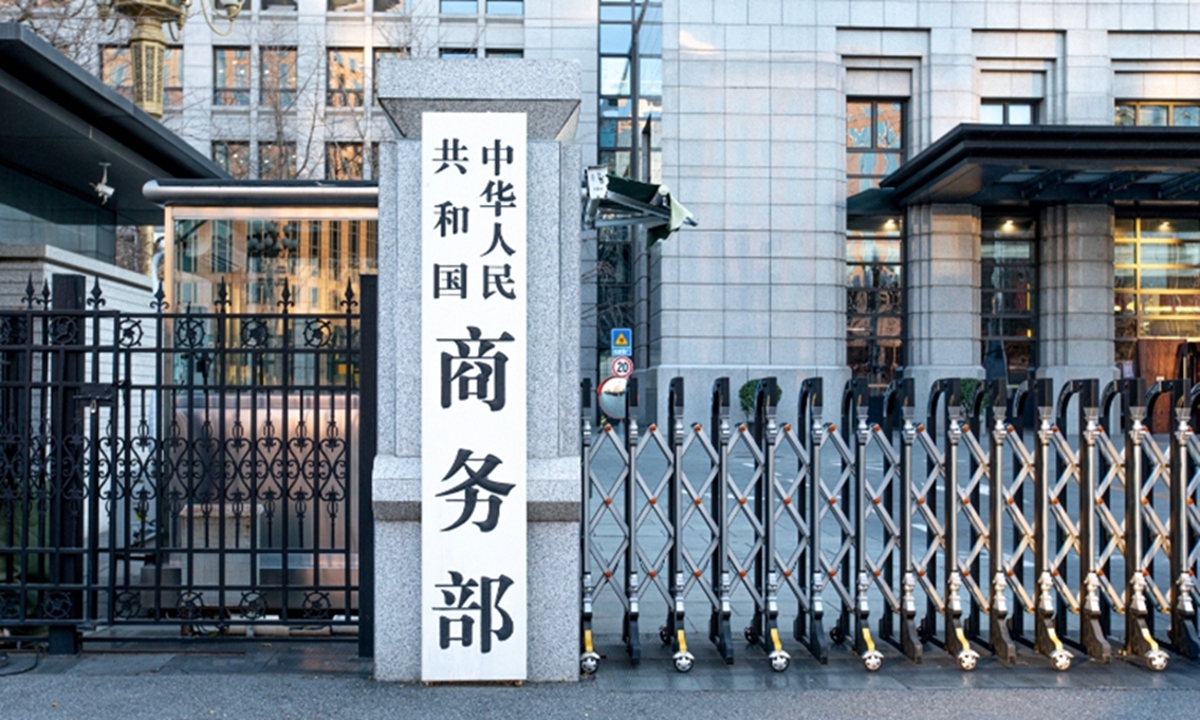
The Ministry of Commerce of China File photo: VCG
Chinese Vice Premier He Lifeng, also a member of the Political Bureau of the Communist Party of China Central Committee, will lead a delegation to France to hold economic and trade talks with the US from Saturday to Tuesday, China's Ministry of Commerce announced on Friday.
In response to a media query for further information on the holding of the sixth round of China-US economic and trade talks, a ministry spokesperson said in a statement that guided by the important consensus reached between the heads of state of the two countries during their meeting in Busan and all previous phone calls, the two sides will engage in consultations on economic and trade issues of mutual concern.
Amid the current global turmoil, with the conflict between US-Israel forces and Iran entering its 14th day and the tensions in the Strait of Hormuz fueling fears over global crude supply, the mechanism-based meeting between negotiating teams from the world's two largest economies is in itself a positive signal to the world, Chen Fengying, a research fellow at the Beijing-based China Institutes of Contemporary International Relations, told the Global Times on Friday.
The news of the upcoming talks, announced just one day after the 14th National People's Congress, China's national legislature, held the closing meeting of its fourth session on Thursday, with lawmakers having approved the Government Work Report and the outline of the 15th Five-Year Plan (2026-2030) for national economic and social development, also highlighted China's readiness to engage in economic cooperation with the world, Chinese analysts reached by the Global Times said.
"These trade talks are set to lay a better foundation for cooperation between China and the US in trade and economic fields, as well as in a wider range of areas," Li Haidong, a professor at the China Foreign Affairs University, told the Global Times on Friday.
The upcoming talks in France followed previous rounds of meetings held in Geneva, London, Stockholm, Madrid and Kuala Lumpur, Malaysia.
During these talks, the two sides reached a number of outcomes, including the US side's canceling the 10-percent so-called "fentanyl tariffs" and suspending, for an additional year, the 24-percent reciprocal tariffs levied on Chinese goods, while the Chinese side would make corresponding adjustments to its countermeasures against the aforementioned US tariffs.
The news of the sixth round of China-US economic and trade talks also came as the US has ramped up a number of unilateral measures, including Section 301 probes against countries, including China.
Right after announcing sweeping trade investigations on Wednesday against 16 major trading partners on so-called excess capacity ground, the United States Trade Representative (USTR) announced on Thursday (US time) that it has initiated investigations of 60 economies to look for practices by these economies in relation to what it called failures to take action on forced labor.
In response to the US probe on "excessive capacity," a MOFCOM spokesperson said on Friday that China has noted the situation. The Section 301 investigation is a typical act of unilateralism that seriously undermines the international economic and trade order, and a WTO panel has already ruled that the tariff measures taken based on Section 301 investigations violate WTO rules, the spokesperson said.
The US should not narrowly define production capacity that exceeds domestic demand as "excess capacity" and label it as so-called "overcapacity." Nor does the US have the right to unilaterally determine whether its trading partners have "excess capacity" through Section 301 investigations and impose unilateral restrictive measures, the spokesperson said.
With regard to US probes on the grounds that they have not banned the import of goods made with "forced labor," the spokesperson noted that China is conducting analysis and assessment over the move.
China urges the US to correct its wrong practices and return to the right track of resolving issues through dialogue and consultation, the spokesperson said, noting that China will closely follow the developments and reserve the right to take all necessary measures to firmly safeguard its legitimate rights and interests.
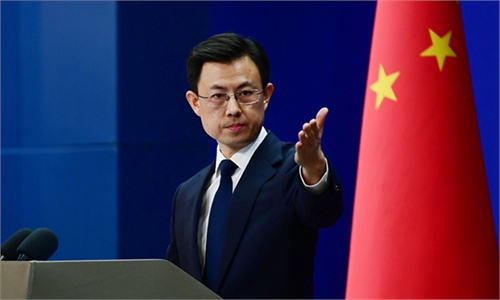
With regard to the Section 301 probe based on so-called "forced labor" claims, Chinese Foreign Ministry spokesperson Guo Jiakun said on Friday that "when it comes to handling economic and trade issues between China and the US, China's position is consistent and clear. We oppose any form of unilateral tariff measures. Tariff and trade wars serve no one's interests. The two sides need to resolve relevant issues through consultation on the basis of equality, respect and mutual benefit."
The so-called issue of "force labor" is US-made disinformation and should not be used as a pretext for political manipulation, Guo noted.
"The US' usual approach is to expect China to address its concerns. However, the US should be well aware that China-US economic and trade relations are based on equality and mutual benefit. The US should take China's demands seriously and respond positively," Li noted, adding that this is the proper way for major powers to interact.
RELATED ARTICLES