Photo: Screenshot from the website
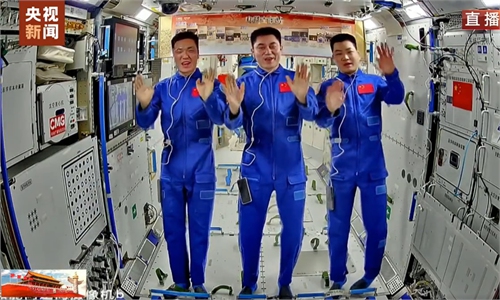
The Shenzhou-21 crew aboard the Tiangong space station has recently reported updates on their work, with "space tomatoes" yielding a bumper harvest, the China Central Television (CCTV) reported on Sunday.
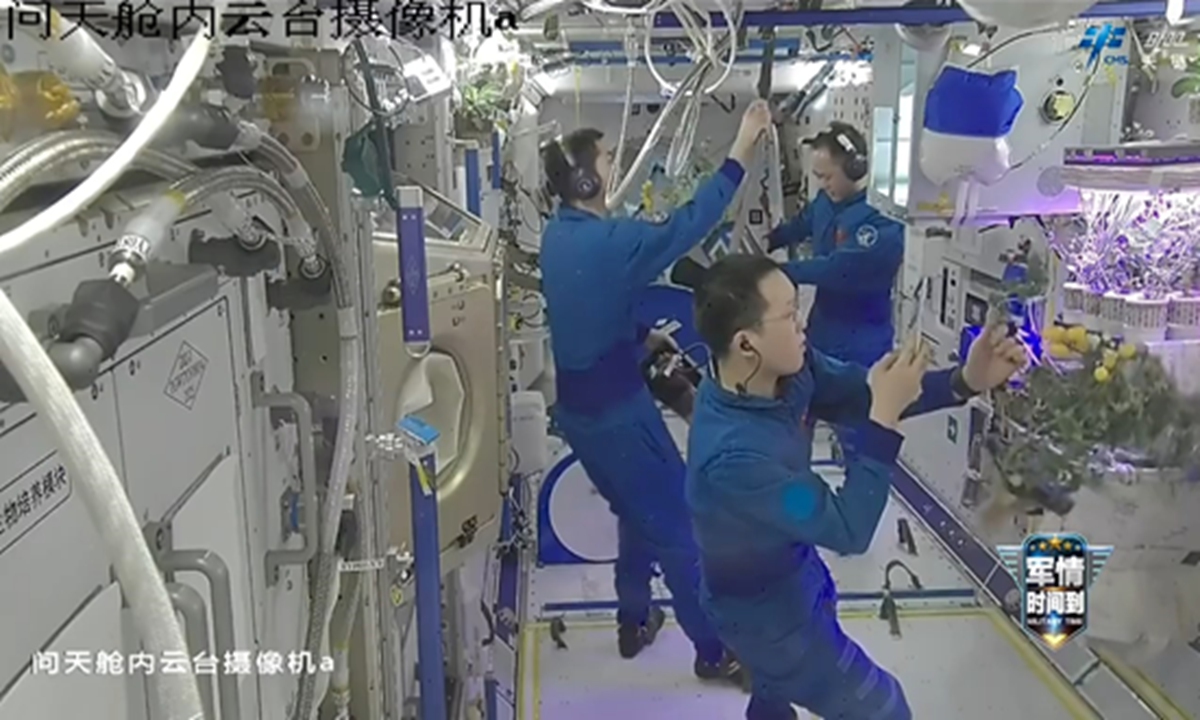
Inside the space station, cherry tomatoes grown using an aeroponic cultivation device are thriving. The astronauts photographed and harvested the ripe fruits, and separately sealed and stored the plants and tomatoes, according to a video published by the CCTV.
In the next stage, the crew will also carry out aeroponic cultivation experiments on wheat, carrots and medicinal-edible plants as planned, to verify key technologies and expand the range of crops and technical capabilities for space cultivation.
In a video reported by China Media Group (CMG) in February, astronaut Zhang Hongzhang gave people on Earth a tour of what he calls a "healing corner" of the Tiangong to show the tomato plants exhibiting vigorous growth, per Xinhua.
The device nurturing these plants is called an aeroponic cultivation system, developed by a research team from the China Astronaut Research and Training Center. It works by vaporizing water into a fine mist. This method can significantly improve the efficiency of water usage, Zhang explained.
The data gathered will inform future long-duration space missions where bioregenerative life support systems may prove essential.
In the video released by the CCTV, the crew also conducted other experiments such as microgravity physical science experiments. Focusing on experimental projects in the field of space materials science, the crew completed a series of tasks including cleaning sample residues from the experimental chamber of the containerless experiment rack, replacing experimental samples, maintaining the electrodes of the axial mechanism, and cleaning the lens of the axial mechanism's viewport cover.
Inside the space station, the crew conducts inspections and maintenance of equipment related to the regenerative life support system. They also regularly monitor microorganisms in the station's environment and assess their growth to support on-orbit microbial control.
The astronauts have also carried out medical emergency training to familiarize themselves with rescue procedures and force application in microgravity. In addition, they performed blood tests using fingertip blood sampling, with the data helping ground teams monitor the crew's health, according to CCTV.
The Shenzhou-21 manned spacecraft was launched from the Jiuquan Satellite Launch Center in northwest China on October 31, 2025. The Shenzhou-21 crew completed their mission's first series of extravehicular activities on December 9, per Xinhua.
Global Times
RELATED ARTICLES