First ministerial meeting of China-Vietnam “3+3” strategic dialogue reflects strategic depth, high-level nature of relations
Mechanism ‘a microcosm’ of China’s approach to neighbors rooted in equality, mutual respect
By Published: Mar 16, 2026 12:17 AM

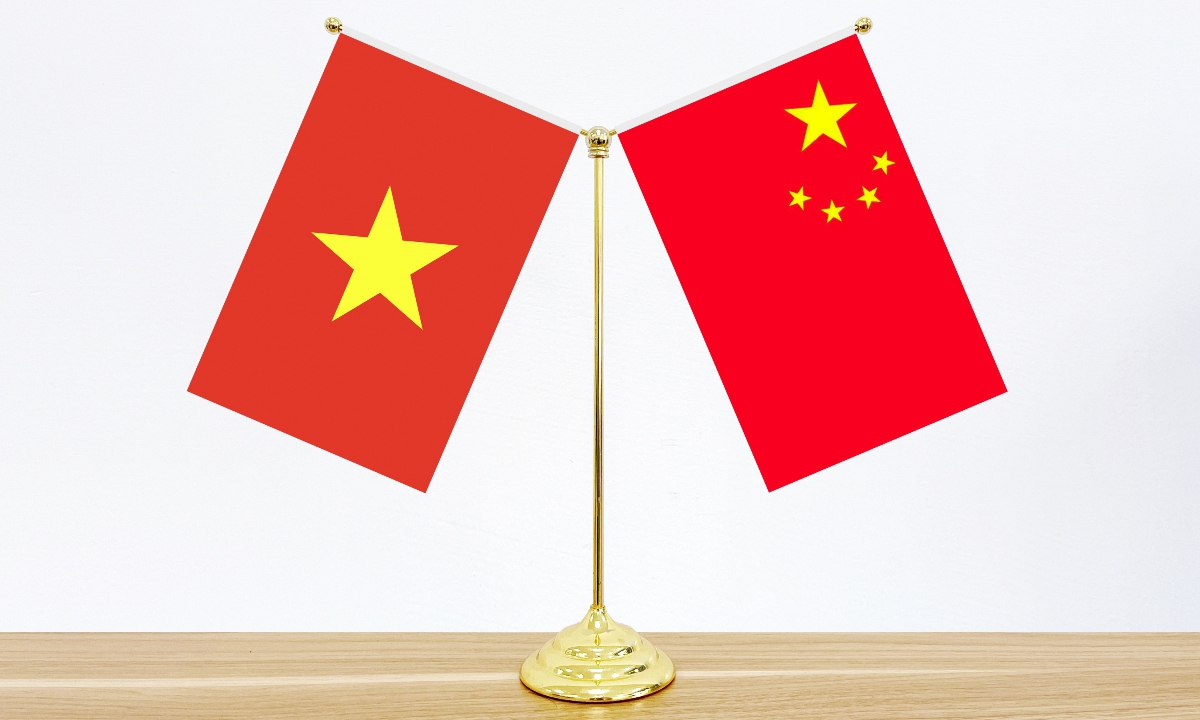
China Vietnam Photo: VCG
The first ministerial-level meeting of the China-Vietnam "3+3" strategic dialogue mechanism on diplomacy, national defense and public security started in Vietnam on Sunday. This marks the inaugural "3+3" mechanism established by two sides on a global scale, fully reflecting the strategic depth and high-level nature of the relations between the two parties and the two countries, Chinese observers said.
According to Chinese Foreign Ministry spokesperson Guo Jiakun on March 13, at the invitation of the Vietnamese side, Member of the Political Bureau of the CPC Central Committee and Minister of Foreign Affairs Wang Yi, Member of the CPC Central Committee Secretariat and Minister of Public Security Wang Xiaohong, and Minister of National Defense Dong Jun will be in Vietnam from March 15 to 17 for the first ministerial meeting of the China-Vietnam "3+3" strategic dialogue.
Noting that the dialogue was established under the personal guidance of the top leaders of the two parties and two countries, Guo said, "Amid transformations and turbulence in the world, closer strategic communication and deeper strategic coordination between China and Vietnam, two major socialist countries, is needed to accelerate the building of the China-Vietnam community with a shared future, advance both countries' modernization drive, and jointly address common challenges."
Zhou Shixin, director of the Center for Southeast Asia Studies at the Shanghai Institutes for International Studies, who has been closely following how China interacts with neighboring countries, hailed the first ministerial meeting of the 3+3 strategic Dialogue mechanism as being of "milestone significance."
It not only demonstrates the firmness of China-Vietnam relations through an innovative security consultation mechanism, but also enhances the comprehensiveness of cooperation, expanding security cooperation from a single defense or diplomatic field to all-round cooperation including domestic security, Zhou told the Global Times on Sunday.
Through this mechanism, exchanges and cooperation between security personnel of the two countries can be promoted more quickly and effectively, laying a more solid foundation for the long-term development of bilateral relations, Zhou said.
From a broader perspective, the China-Vietnam relationship is a microcosm of China-ASEAN relations, and the establishment of such mechanisms reflects how China manages ties with its neighbors, an approach which is rooted in setting aside "big-power mentality" and strengthening cooperation on an equal footing, Zhou said.
Serving as 'stabilizer' for ties
According to spokesperson Guo, during the meeting of the "3+3" mechanism, Foreign Minister Wang Yi, Public Security Minister Wang Xiaohong and Defense Minister Dong Jun will have in-depth exchanges of views with the Vietnamese side on political and security issues, cooperation on fighting crimes, defense cooperation, and the international and regional situation.
Mi Liang, Director of the Center for Southeast Asian Studies at Beijing Foreign Studies University, told the Global Times that China and Vietnam have much to accomplish together amid the shifting international landscape.
He cited cross-border crimes, smuggling, drug trafficking, human trafficking and telecom fraud as areas requiring joint action. He added that both countries share broad common interests in defense and regional security, concluding that "these areas of cooperation call for a higher-level platform to drive progress forward."
Globally, the "2+2" model, which typically involves diplomacy and defense, is very common. It's a relatively stable bilateral security mechanism used by both large and small nations. In contrast, the "3+3" model, which adds public security to the mix, is rare worldwide, according to Zhou.
Though the public security departments of China and Vietnam primarily serve to safeguard domestic security in their respective countries, police from the two countries have been working effectively together for years particularly in combating cross-border telecom fraud and anti-drug, according to media reports.
In 2025, for example, Chinese and Vietnamese police forces launched a joint special operation to crack down on telecommunications and online fraud as well as gambling crimes, successfully arresting 149 criminal suspects, according to China's Ministry of Public Security., ac
Under this "3+3" mechanism, Zhou expects that public security departments of both countries in the future can engage in more cooperative law enforcement in border regions. Besides that, the public security department of one country may, with official consent, enter the other's territory to carry out operations, he said.
Meanwhile, the latest news from the Chinese Ministry of National Defense on Sunday showed that China and Vietnam will hold their 10th border defense friendship exchange in mid-March. The event is set to take place in designated areas and ports in China's Guangxi Zhuang Autonomous Region and Vietnam's Quang Ninh province, as well as waters in the Beibu Gulf. During the event, the two sides will organize joint naval fleet patrols and training exercises. They will also hold medical consultations and cultural events with civilians in the border areas, the statement said.
"Regularly conducting friendly defense exchanges to continuously enhance political mutual trust between China and Vietnam, thereby providing a solid guarantee for the stable and healthy development of bilateral relations, represents a concrete practice of implementing high-level consensus and advancing bilateral strategic cooperation," said military affairs expert Zhang Junshe.
Zhang told the Global Times that the friendly defense exchange activities along the China-Vietnam border serve as a vivid embodiment of the "3+3" mechanism. "They strongly promote the comprehensive development of bilateral relations and contribute positively to safeguarding regional peace, stability and development."
"As our cooperation deepens, the '3+3' platform allows us to put out fires before they catch fire," Zhou said, characterizing the mechanism as a "stabilizer" for the bilateral relationship. "Whether it's the South China Sea, cross-border crime, or any other emergency, this mechanism provides the stability to resolve issues early and strengthen our ties."
In establishing the "3+3" strategic dialogue on diplomacy, defense and public security with Vietnam, China is demonstrating a different path for a major country to engage with its neighbors through various initiatives.
Whether it is mediating the Cambodia-Thailand conflict or establishing the "3+3" mechanism with Vietnam, both efforts follow China's principles of fostering friendship, security, and prosperity in dealing with neighbors, Zhou noted.
By letting go of a "big-power mentality" and choosing to cooperate on equal footing, China keeps the relationship with neighboring countries steady through turbulent times, Zhou told the Global Times.
RELATED ARTICLES