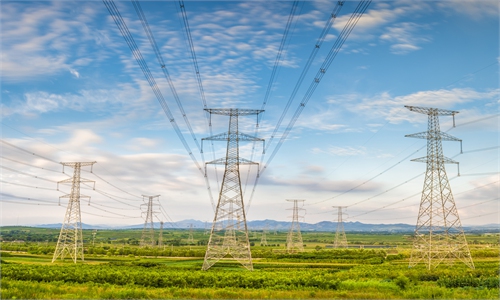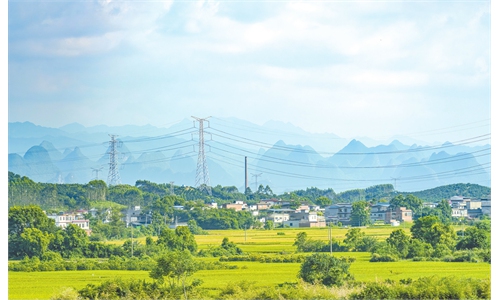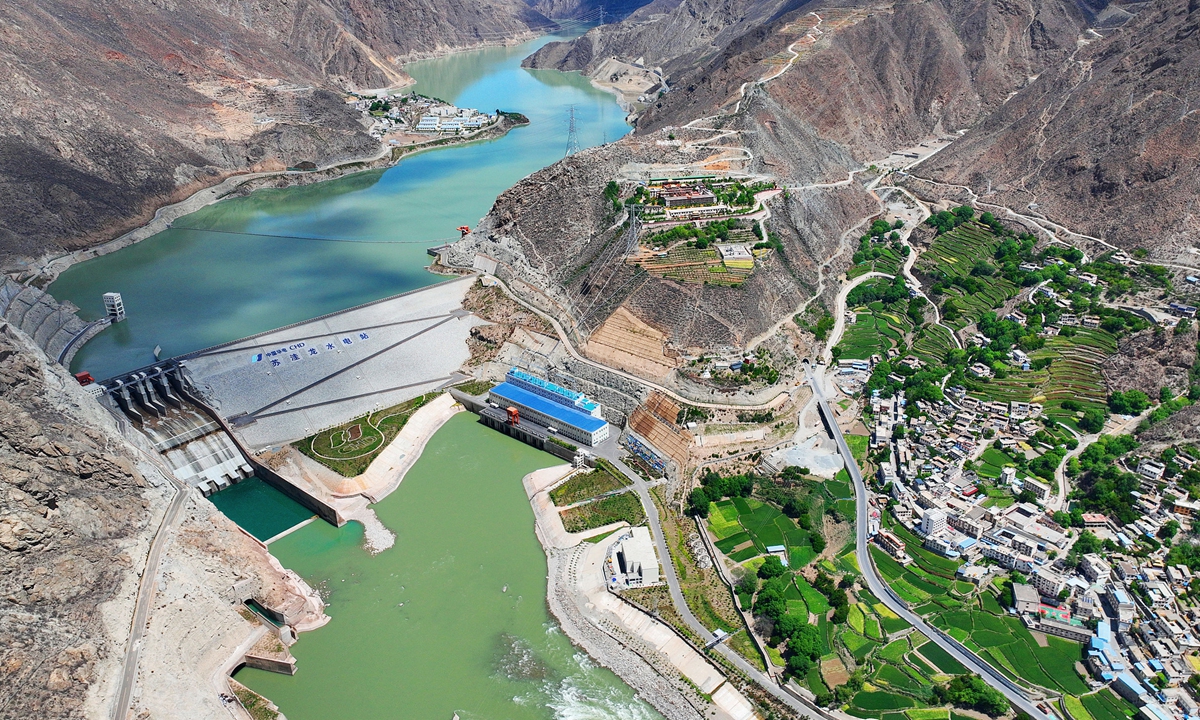
A view of the Suwalong Hydropower Station on the upper reaches of the Jinsha River at the border between Markam county in the Xizang Autonomous Region and Batang county in Sichuan Province Photo: VCG
Editor's Note:National support for Xizang's development has yielded remarkable achievements. Over the decades, numerous volunteers from across the country have come to Xizang, making indispensable contributions to the autonomous region's growth. Their efforts focus on various fields such as education, healthcare and infrastructure. Despite harsh conditions, these volunteers persevere in their roles, writing chapters of endeavor on the snowy plateau. Each diary they pen serves as a vivid testament to the building of the Chinese national community. Against this backdrop, the Global Times launches the "My Xizang Diary" series, presenting firsthand reflections from these dedicated volunteers. This is the third piece of the series.
In July 2018, I embarked on a three-and-a-half-year journey as part of the fourth batch of staff sent by my company, Power Construction Corporation of China, to support Xizang, serving in the Development and Planning Division, Bureau of Energy of Xizang's Development and Reform Commission.
Although many years have passed, my heart still swells with emotion whenever I look back on my days in Xizang. The sunlight and snowstorms of that plateau, the time spent walking along the serene and peaceful rivers, and the deep connection forged with the local people - these experiences have left an indelible mark on my life.
In October 2018, the high plateau was gripped by the deepening chill of late autumn. In the early hours of October 11, a sudden alert pierced the silence of the night. Our hydrological monitoring system showed an abnormal plunge in the flow of the Jinsha River's main channel. Almost simultaneously, news arrived: a massive landslide had struck Bolo township in Jomda county. The collapsing mountain, like a giant axe splitting firewood, had violently severed the mighty Jinsha River, and a vast barrier lake was rapidly taking shape.
I promptly joined the emergency task force. However, an even greater challenge soon followed - just six days later, on October 17, another massive landslide struck the Yarlung Zangbo River gorge near Galai village in Nyingchi, once again damming the river and forming a barrier lake. I immediately began reporting the latest developments while swiftly coordinating efforts to mobilize all available resources to the disaster site. With limited access, extremely complex geological conditions and large populations residing along the riverbanks, the rescue and emergency response operations faced immense challenges.
In the days that followed, my colleagues and I raced against time as we battled the unfolding danger, working on the front lines of emergency response for days and nights on end. Every step - from analyzing hydrological data and evaluating rescue strategies to coordinating evacuations and ensuring the supply of essential materials - demanded seamless coordination. Through our collective efforts, the emergency response advanced methodically: The river channel was gradually cleared, the obstruction removed and the water levels slowly returned to normal.
Thanks to timely warnings and well-coordinated responses, we achieved a "zero casualty" outcome in the face of this major disaster, safeguarding the lives and property of residents along the river to the greatest extent possible.
This dramatic and high-stakes emergency operation became an unforgettable chapter in my journey of supporting Xizang, profoundly reminding me how closely the safety of our energy infrastructure is intertwined with the well-being of the people.
As a member of the Development and Planning Division, Bureau of Energy, my work took me across the rugged terrains of the Jinsha River, Lancang River, and Yarlung Zangbo River basins. Over the course of three and a half years, I contributed to advancing several major initiatives that shaped the broader landscape of Xizang's energy development - from drafting the blueprint for the clean energy bases in the upper reaches of the Jinsha and Lancang rivers to refining the hydropower planning for the lower Yarlung Zangbo.
Energy development and the improvement of people's livelihoods are deeply intertwined. The construction of a power station does more than just light up Tibetan homes; it broadens the channels for local income growth and reshapes the dreams that local children hold for their future.
Tsering Dhondup, a villager from Suoduoxi town in Markam county near the Suwalong Hydropower Station on the banks of the Jinsha River, never failed to greet my fellow colleagues and me with great enthusiasm.
In his halting Putonghua, he eagerly shared the transformations he had witnessed: "Since the project began, the roads around our village have been widened and cleaned up. The project team has also installed many modern facilities in the village - our living environment has become so much better and more beautiful. I got a job at the project site, and now I have a stable income. I even bought my own pickup truck. My children have been exposed to so much new knowledge and are studying even harder now - they all hope to work at the power plant when they grow up."
When emotion got the better of him, he would raise his thumb and say, "Thanks to the government policy, we are now living a happy life!"
The Chinese government's policy of national support for Xizang's development is one marked by warmth, depth and foresight. By integrating Xizang's development into the broader national strategy, the central government has not only significantly strengthened the sense of unity and belonging among all ethnic groups in Xizang, but also effectively safeguarded national sovereignty and territorial integrity. This has laid an unshakable foundation for the long-term stability and security of the border regions.
Under the care and guidance of the policy of supporting Xizang, the region's energy and power sector has embarked on a remarkable journey, growing from nothing to something, from small to large and from weak to strong.
With the in-depth implementation of the national "dual carbon" (peak carbon and carbon neutrality) strategy and the full execution of the Party's strategy for governing Xizang in the new era, the region's clean energy development is now facing unprecedented historical opportunities.
Through the continued dedication of generation after generation of staff who come to Xizang with the support mission, Xizang is surely able to build a cleaner, safer, more efficient energy system, providing firm strategic support for the nation's energy security.
For my part, I take great pride in having contributed, however modestly, to this historic process.
The author was the fourth batch of staff from Power Construction Corporation of China to support Xizang. Currently, he serves as the deputy director of the Development and Planning Department of the company and deputy general manager of Xizang Corporation of Chengdu Engineering Co Ltd. opinion@globaltimes.com.cn
RELATED ARTICLES