ARTS / CULTURE & LEISURE
Beijing museums enter blossom season as magnolia-inspired products gain popularity
By Published: Mar 17, 2026 11:26 PM

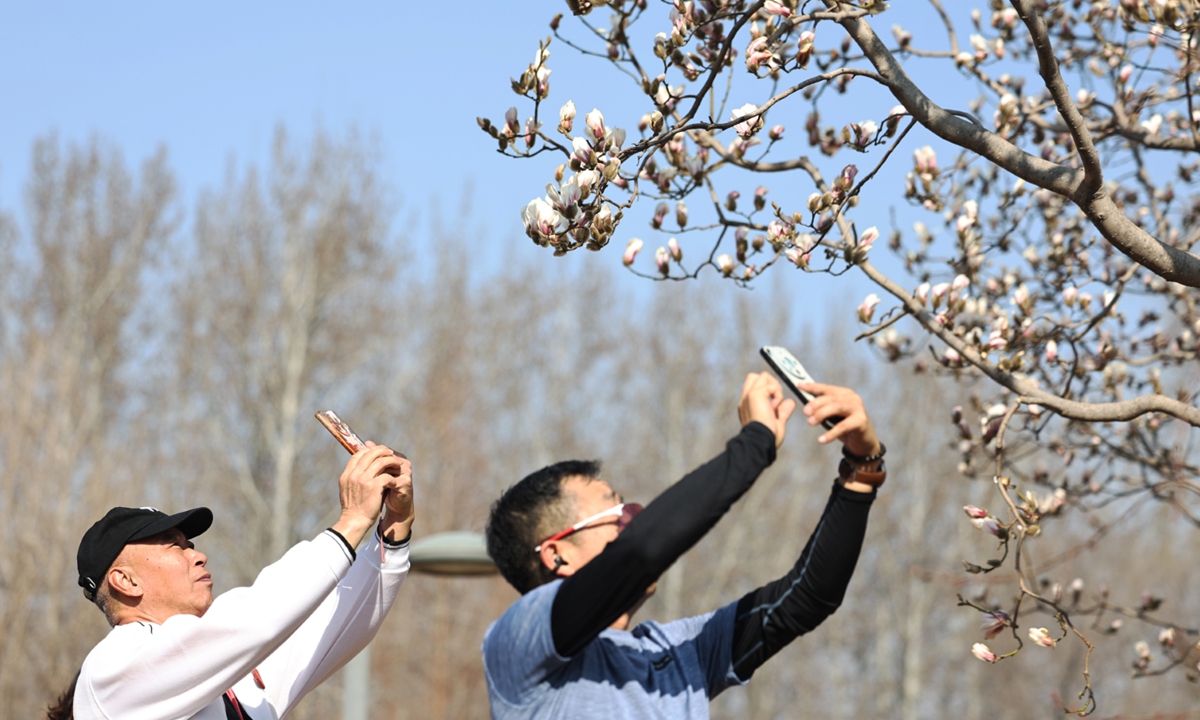
Photo: VCG
As the weather grows warmer, inside the Beijing Art Museum located at Wanshou Temple, magnolia buds are about to bloom and a series of spring-limited cultural and creative products are already gaining popularity. This has attracted many visitors to the museum early to seek out spring scenery in the season.In the central courtyard of the temple, magnolia buds dot the branches, adding a touch of poetry and vitality to the ancient architecture. Around 9 am, visitors enter in small groups, mostly heading straight for the magnolia trees, raising their phones and cameras to find the best angle to capture the spring light, according to a report by the Beijing Daily.
"I often see posts online saying this is a top-tier spring photo spot in Beijing, so I specifically made plans with a friend to come early," said one visitor surname Chen. "Although the magnolias aren't in full bloom yet, my friend and I still had a great time taking photos. The flower shadows against the red walls are a perfect match. We plan to come back in a few days to enjoy a courtyard full of spring colors."
Hailed as the "Little Forbidden City of Western Beijing," Wanshou Temple was built during the Wanli era of the Ming Dynasty (1368-1644). It is a large-scale ancient architectural complex combining an imperial temple, gardens, and a traveling palace.
For Wanshou Temple, the most beautiful seasons are spring and autumn. Spring begins with the winter sweet blossoms in February, lasting for nearly three months. Particularly when the pure white magnolias are in full bloom, the scene of red walls reflecting the "jade snow" is, in the eyes of many, an unmissable floral spectacle of the capital.
Xu Yanwei, director of the Exhibition and Cultural Creation Department at the Beijing Art Museum, said that around March 20, the five magnolia trees within the temple, a major photo spot for visitors, will bloom. The temple also has three crabapple trees, three cherry blossom trees, including wisteria, and more.
Recently, as the weather warms and flowers bloom, public attention in the temple has been increasing significantly. On social media platforms, people are not only sharing photography tips but also recommending various cultural and creative products.
Visitors continually stop to browse and select cultural products. "We live near the museum and come often. We really like the museum's cultural products; they're beautiful and meaningful," a visitor surnamed Zhang, who brought her mother to the museum to admire the magnolias and buy some products as well, told the Global Times on Tuesday.
"This magnolia and cat refrigerator magnet is already getting popular on social media; I came specifically for it. In a moment, I'll take a photo with it under the flower tree to preserve this beautiful spring memory."
Several newly launched refrigerator magnets have become bestsellers. Two newly arrived designs are particularly dynamic: One is a three-dimensional potted plant, capturing the temple's main gate hall, magnolia flowers, and the lively cats of the museum within a small space; the other is a flowing sand refrigerator magnet, capturing a scene of a cat napping in front of the Heavenly King Hall.
As the museum's magnolia season begins, Beijing's museums are also welcoming their own blossom viewing seasons. It is expected that from late March to early April, the pear blossoms and lilacs at the Beijing Cultural Exchange Museum (Zhihua Temple) will bloom. From late March to mid-April, the magnolias, peach blossoms, and crabapple flowers at the Beijing Dajue Temple and Tuancheng Management Office will bloom as well.
RELATED ARTICLES