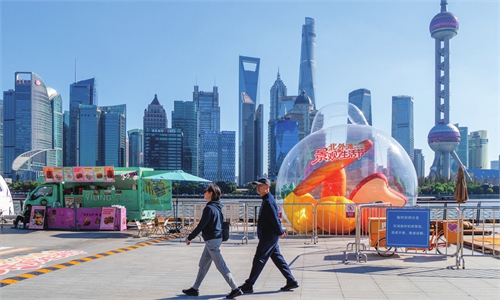
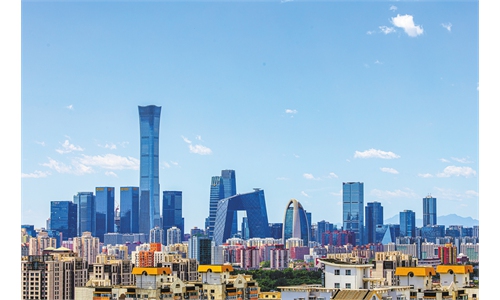
How will China write a new chapter of high-quality development during the next five years? The recently-released outline of the 15th Five-Year Plan (2026-2030) for national economic and social development provides the answer. This plan sets the sight on high-quality development, by consolidating current strengths, removing bottlenecks and constraints, and cementing weak links, which together will propel the advancement of Chinese modernization toward reaching a new stage. The plan also serves as China's "construction blueprint" for the coming five years and sends a clear signal of continued opening-up and coordinated development, offering a cooperation framework to global partners, and injecting much-needed certainty into the world economy. Today, our newspaper launches a special series focusing on China's high-quality development. It analyzes and interprets key deployments and fresh formulations in the 15th Five-Year Plan (2026-30) and invites readers at home and abroad to explore this grand new blueprint together.
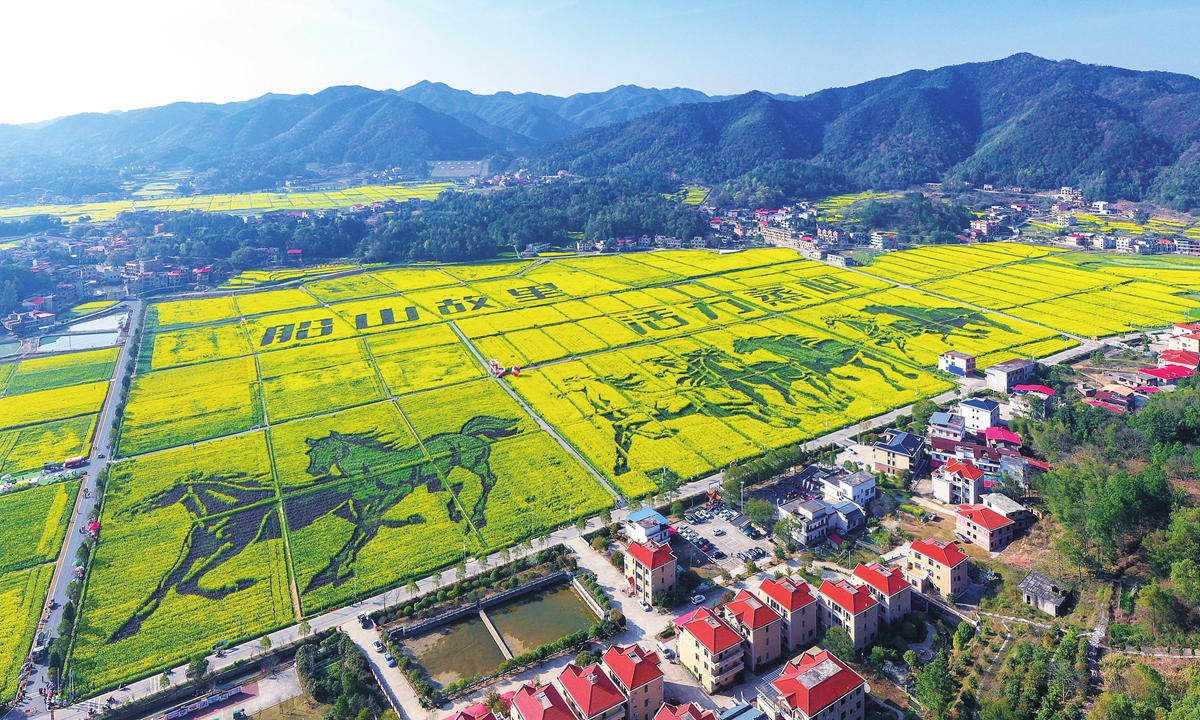
An aerial view of a rapeseed flower fields in Hengyang, Southwest China's Hunan Province on March 13, 2026 Photo: VCG
Understanding the modern industrial system through three major industriesBy Wang Junling
A strong manufacturing base makes for a strong economy. The 15th Five-Year Plan explicitly proposes that "we must modernize the industrial system with advanced manufacturing as its core," placing it prominently among the various strategic tasks set for the 15th Five-Year Plan period.
Overseas media have paid close attention to these developments. Kazakhstan's Delovoy Kazakhstan newspaper stated that China is building a new technological ecosystem and a modern industrial system based on advanced technologies, which will influence the global economic landscape for decades to come. The UK's Guardian notes that the Chinese economy is shifting from export-oriented growth to growth increasingly driven by scientific and technological innovation.
How to build a modern industrial system? The 15th Five-Year Plan has outlined specific measures, such as upgrading traditional industries and nurturing emerging industries and industries of the future. Experts say that placing the three categories of industries in key positions within the modern industrial system allows for coordinated efforts from multiple dimensions, forming a clear, tiered industrial layout.
"Traditional industries perform the foundational supporting functions, while emerging industries play the role of strategic pillars, and the future-oriented industries shoulder the mission of frontier breakthroughs," said Zhang Linshan, a researcher at the Academy of Macroeconomic Research under the National Development and Reform Commission.
Looking at traditional industries, including steel, petrochemicals, textiles, and building materials, contribute substantial output value and employment. And through technological upgrading and green transformation, the foundational capabilities of the industrial system are strengthened.
Looking at emerging industries, sectors such as new energy vehicles and new materials have already achieved the conditions for large-scale development. And they have been serving as key drivers of economic growth and critical forces in international competition. Over the next five years, policy focus will be placed on consolidating and expanding leading advantages, while effectively improving the quality of development.
Turning to future industries, sectors such as AI, quantum information, and bio-manufacturing remain in their early stage of development. These industries hold great significance for engaging in global technological competition and cultivating new quality productive forces. And they are essential for building momentum to support medium- and long-term development.
"Traditional industries, emerging industries, and future industries complement and reinforce one another, helping to form a development pattern for the modern industrial system characterized by 'solid foundation, strong pillar, and vibrant frontier,'" said Zhang.
It is believed that as the five-year plan is implemented, China's industrial system will continue to scale up.
Riding the wave of 'digital intelligence' toward a smarter future
By Qiu Haifeng
In recent days, overseas media outlets including the Reuters and the New York Times have continued to closely follow the development of AI in China. Their reports note that China's proposal to fully implement the "AI Plus" initiative over the next five years demonstrates the country's commitment to embracing AI in economic development. They also said that China's AI efforts focus on practical applications in areas such as healthcare and transportation allow ordinary people to tangibly experience the convenience brought by the new technology.
From "internet+" to "AI Plus," the construction of the Digital China Initiative continues to advance. At present, China has built the world's largest network infrastructure, with the added value of the core digital economy industries accounting for more than 10.5 percent of GDP. How to further promote the construction of the Digital China Initiative? The 15th Five-Year Plan notes that China should promote digital and intelligent development.
"Compared with the 'accelerating digital development' contained in the 14th Five-Year Plan (2021-2025), building up "Digital China" in the 15th Five-Year Plan points to a shift from 'laying a solid foundation and building platforms' to 'building up strength and achieving new momentum,'" said Chen Xi, an associate researcher at the Academy of Macroeconomic Research under the National Development and Reform Commission.
In particular, the transition from digitization to digital, smart development reflects a precise grasp of the world's technological development trends, while highlighting the empowering role of latest information technologies across science and technology, industry, people's livelihood, governance, and other domains. This means that over the next five years, China will ride the wave of digital advancement, with digital intelligence leading the construction of the Digital China Initiative, according to Chen.
Moving toward the stage of digital intelligence, AI represents the greatest variable and the largest source of economic growth. The 15th Five-Year Plan proposes that "the AI Plus Initiative should be advanced across the board, and we should strive to gain the edge in AI applications." The Government Work Report this year notes that China should foster new forms and models of AI-driven businesses.
Chen believed that the digital-intelligent technologies, represented by AI, are continuing to accelerate their penetration across economic, social, and other domains. And the speed of their development, the breadth of their reach, and the depth of their impact are unprecedented.
Over the next five years, the development of AI will shift from technological breakthroughs and pilot applications to large-scale implementation and systematic empowerment. "This will profoundly reshape production methods and lifestyles, and it will also require us to continuously improve AI governance, by propelling the construction of Digital China to a new level," Chen said.
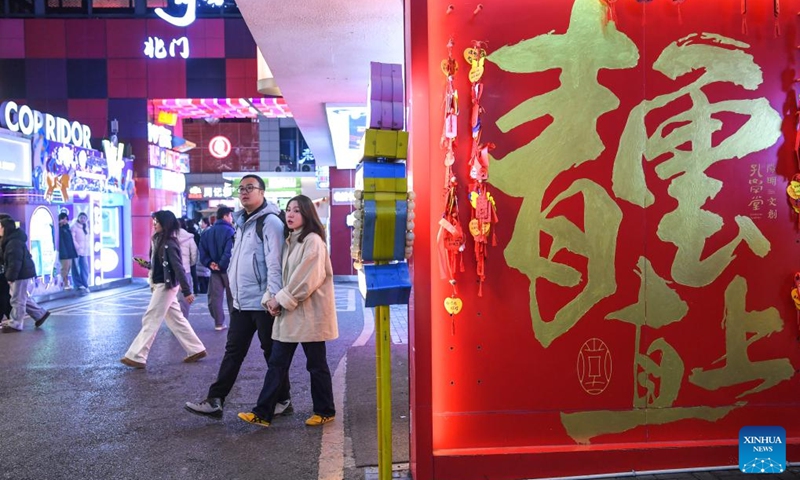
People visit the Qingyun Market in Guiyang, southwest China's Guizhou Province, Jan. 5, 2026. Photo: Xinhua
Releasing the dividends of an ultra-large market
By Kong Dechen
In the eyes of multinationals' top executives, China's ultra-large market remains one of its most compelling attractions. They said that "China has been our fastest-growing market in recent years" and "Chinese consumers are eager to try new things, so we choose to launch new products in the country first."
The 15th Five-Year Plan proposed building a robust domestic market and fostering a new pattern of development. The plan notes that "we should see positive interactions fostered between consumption and investment and between supply and demand. All this will help enhance the dynamism and reliability of the domestic economy."
What does China's ultra-large market advantage mean? And how to further release market dividends in the next five years?
"Compared with the 14th Five-Year Plan, the 15th Five-Year Plan places greater emphasis on shifting from 'scale advantages' to the leap toward a 'strong market' and a 'vibrant market' in releasing market dividends," said Liu Fang, a researcher at the Institute of Market and Price Research under the National Development and Reform Commission.
According to Liu, China's ultra-large market advantage encompasses a systematic set of strengths across many dimensions, including expanding incremental growth, improving quality and efficiency, and ensuring smooth circulation.
China's "strong market" is manifested in the continuous optimization of the supply structure, sustained upgrading of consumption quality, and smooth operation of domestic market circulation. Meanwhile, the country is accelerating breakthroughs in areas that are "lacking," addressing shortcomings in areas that are "weak," optimizing and upgrading "traditional" sectors, as well as cultivating and strengthening "emerging" sectors. And the "vibrant market" is embodied in the inclusiveness of the ultra-large market.
"Thanks to the great depth of the market, new technologies and products can quickly complete the 'from 0 to 1' validation and breakthrough, and rely on economies of scale to amortize research and development (R&D) costs, achieving sustained innovation 'from 1 to N,'" said Liu.
The 15th Five-Year Plan notes that "we should work toward improving living standards while increasing consumer spending and combine investment in physical assets with investment in human capital."
Liu explained that this marks a shift in China's economic development logic from the accumulation of "things" to the comprehensive development of "people." Through measures such as implementing plans to increase urban and rural residents' incomes, residents will be empowered to "dare to consume," "willing to consume," and "able to consume," further unleashing market dividends.
"From international experience, economies with larger market scales enjoy a "greater voice" and room for maneuver in trade negotiations, standards-setting, and rules-making," Liu said. He noted that, during the 15th Five-Year Plan period, China - by leveraging its ultra-large market - will accelerate its transformation into a "global market," becoming a "source of innovation" and a "leader in setting standards."
China on track to hit carbon peak target
The next five years are critical for China's carbon peak target. Global attention is now focused on how China will deliver on its climate commitments.
The newly-adopted 15th Five-Year Plan outlines a clear commitment to "actively yet prudently work toward peaking carbon emissions and achieving carbon neutrality."
In the 2026-30 period, China will coordinate development and carbon emissions reduction and speed up adjusting and optimizing the structures of industry, energy and transportation, and ensure that the goal of peaking carbon emissions before 2030 is accomplished as planned. The word "ensure" underscores China's determination.
Yuan Da, a senior official with the National Development and Reform Commission, stated that compared with the 14th Five-Year Plan, the outline of the 15th Five-Year Plan prioritizes low-carbon requirements in embedding the concept of green development.
First, it establishes carbon peaking and carbon neutrality as the strategic guide, coordinating action across carbon reduction, pollution abatement, green space expansion and growth promotion. Second, it fully implements a dual control system for both the total volume of and the intensity of carbon emissions, according to Yuan.
Sticking to the concept of "low carbon," China has refined its development targets: A a total reduction of 17 percent in carbon dioxide emissions per unit of GDP between 2026 and 2030. In 2026, the country is expected to see a reduction of around 3.8 percent in carbon dioxide emissions per unit of GDP.
This target is carefully calibrated target that balances economic and social development, green and low-carbon transition, and national energy security. It will mark a steady step toward the goal of peaking carbon emissions before 2030.
"While energy-related activities are the main source of carbon emissions, the shift from dual energy consumption to dual carbon emissions is not a relaxation of energy conservation. On the contrary, energy saving remains the most direct, economical, and effective way to reduce carbon," said Yuan.
As a result, the 15th Five-Year Plan outline emphasizes the establishment of "one mechanism" - an all-inclusive incentive and restraint system covering all types of actors - and implementation of "three key tasks" - accelerating the shift of energy toward new and green sources, promoting carbon reduction and industrial greening and enhancing efficiency and conservation in production and daily life.
Yuan revealed that China will introduce comprehensive evaluation and assessment measures for carbon peaking and carbon neutrality, establishing a robust mechanism to ensure accountability for achieving carbon emission targets.
These targets and tasks will propel China's development toward a greener path. As noted in a report on the official website of Finland's Centre for Research on Energy and Clean Air, China's ongoing green transition is positioned to play a central role in its economic and energy strategies, with the potential to further its global leadership in climate action.
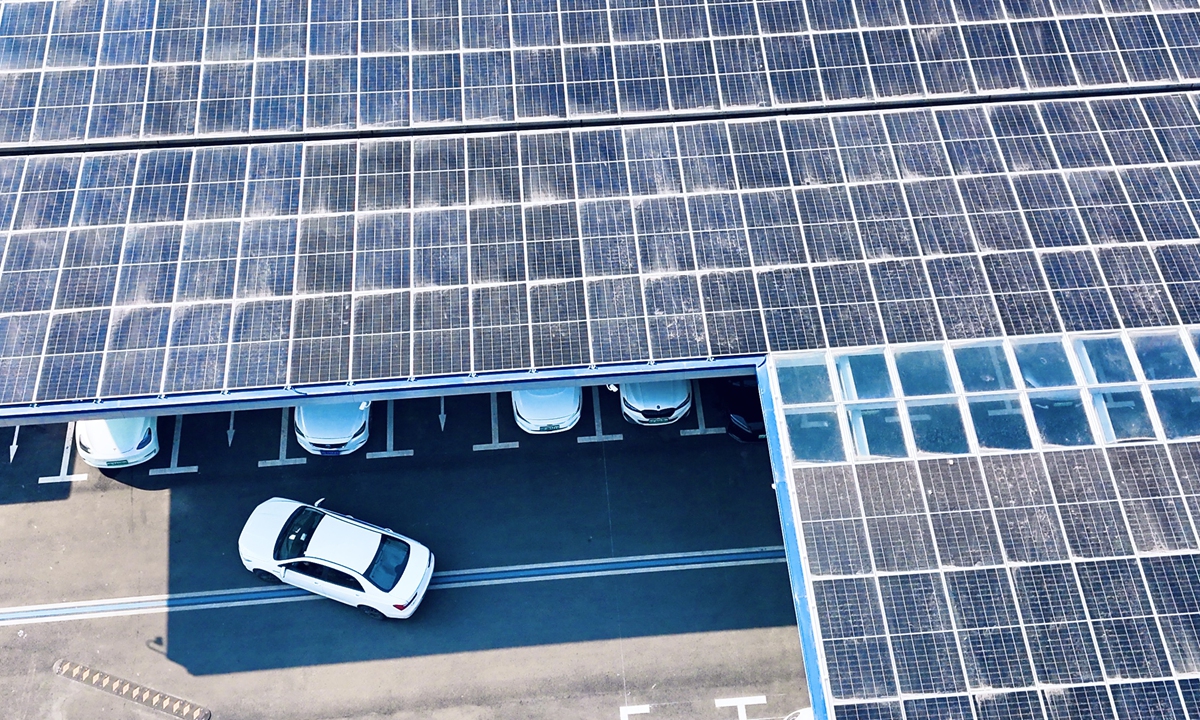
An integrated PV-storage-charging-inspection-battery swap project undergoes trial operations in a parking lot in Changzhou, East China's Jiangsu Province, on January 23, 2026. Photo: VCG
Major projects cover both 'hard investment' and 'soft infrastructure'
Major projects are the "centerpiece" of China's Five-Year Plan. During the 14th Five-Year Plan period, China planned and successfully completed 102 major projects.
At this new starting point, how will China reinforce the "backbone" of its economy? The 15th Five-Year Plan outline proposes 109 major projects over the next five years, spanning six key areas.
To steer the development of new quality productive forces, 28 projects are focused on enhancing China's foundational industrial capacity and industrial competitiveness, developing new industries and new arenas of growth.
To modernize the infrastructure system, 23 projects target the development of a national comprehensive and multidimensional transportation network, a new type of energy system, new types of infrastructure, and platforms for opening up.
To promote integrated urban-rural development, nine projects are focused on new urbanization and agricultural and rural modernization.
To ensure and improve public wellbeing, 25 projects are designed to upgrade elderly care, childcare, and social care services.
To promote the green and low-carbon transition, 18 projects are proposed with the aim of achieving peak carbon emissions and carbon neutrality, improving the environment, and promoting ecological conservation and restoration.
To ensure security in key areas, six projects are centered on food and energy security.
Looking at the project distribution, among the 109 major projects, the largest numbers are in the areas of leading the development of new quality productive forces and ensuring and improving people's well-being. Zeng Zheng, a research fellow at the market and price research institute of the National Development and Reform Commission, believes this fully reflects the orientation toward innovation-driven development and prioritizing people's well-being.
From the perspective of project types, these projects include both "hard investment" and "soft development."
"Hard investment" is oriented toward future development, advancing a series of leading projects in emerging industries. Zeng said that a range of major projects, such as ultra-large-scale AI computing clusters, satellite internet, and controlled nuclear fusion, will help comprehensively strengthen the support capacity of the modern industrial system and promote high-quality economic development.
"Soft infrastructure" focuses on households' real needs and involves a series of people-centered projects that bring tangible benefits. These projects will address urgent issues in education, healthcare, and elderly care, narrow the gap in public services between urban and rural areas and across regions, enhance the skills of the workforce, strengthen the country's cultural influence and national cohesion, and advance the modernization of governance systems and capabilities, Zeng said.
Major infrastructure projects are a key lever for implementing the five-year plan. With the steady progress of 109 major projects, China will achieve stronger overall national strength, better infrastructure, improved quality of life for its people, a greener foundation, and a more robust safety system, Zeng said.
Expanding self-initiated opening-up, sharing China's opportunities
China's total goods trade has ranked No. 1 in the world for several consecutive years, its actual use of foreign investment has exceeded 700 billion yuan for 16 straight years, and it has been the world's second-largest import market for 17 consecutive years… China's open development has made a truly impact on the global economy.
Several foreign media outlets have noticed that the outline of the 15th Five-Year Plan introduces a new phrase - "actively expand self-initiated opening-up." Compared with the 14th Five-Year Plan, what is the significance of the added word "self-initiated"?
Xu Yingming, director of the Institute of International Market Studies at the Ministry of Commerce's Research Institute, told reporters that "self-initiated opening-up" refers to a proactive, controllable and orderly high-level opening-up, mainly reflected in three aspects:
First, it is both internationally connected and independently driven. China aligns with high-standard trade and economic rules while taking into account its national conditions, promoting compatibility and coherence in institutional openness elements such as rules, regulations, governance and standards, while also emphasizing the autonomous development of regulatory systems that connect with international frameworks.
Second, the pace of opening-up is self-determined. Based on stress testing, China pursues orderly expansion, scientifically planning both the areas and regions of openness, optimizing the overall layout, and avoiding reckless moves.
Third, security risks are controllable. Risk prevention and control mechanisms are further improved to ensure that the outcomes of openness remain independently manageable and that risk thresholds are maintained.
According to Xu, expanding self-initiated opening-up not only helps attract high-quality global resources to overcome development bottlenecks, effectively hedge external risks, and strengthen the resilience of industrial and supply chains, but also further promotes domestic reforms, optimizes rules and regulations, and supports the cultivation of new quality productive forces.
In the future, China's opening-up dividends will become even more tangible and accessible. For example, the import of high-quality foreign goods will increase according to domestic consumer preferences.
With foreign investment restrictions in manufacturing fully lifted, limitations on foreign participation in China's service sector are also expected to ease, bringing more international elements into education, healthcare and cultural and entertainment industries, said Xu. Moreover, a growing number of multinational companies, projects, and exchanges will create more job opportunities. As both a global factory and a global market, China's opening-up opportunities over the next five years are highly promising, said Xu.
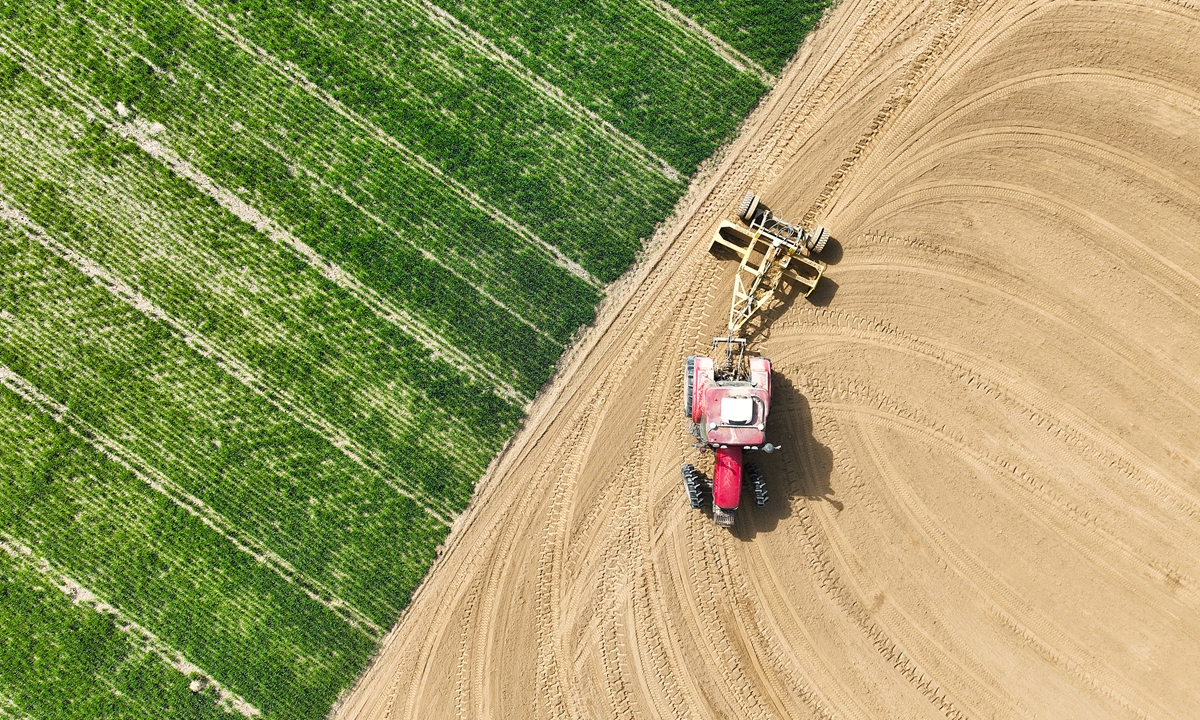
A laser land leveler equipped with the BeiDou Navigation Satellite System operates during spring plowing to prepare the fields for rice seedling cultivation in a farmland in Yancheng, East China's Jiangsu Province, on February 25, 2026.
Safeguarding food and energy supply security
Grain is the cornerstone of national security, and energy is the lifeblood of the national economy. Focusing on these two vital resources, the outline of the 15th Five-Year Plan has set two binding targets: During the 15th Five-Year Plan period, the comprehensive grain production capacity should reach 1.45 trillion jin (725 million tons), and the comprehensive energy production capacity should reach 5.8 billion tons of standard coal.
As the saying goes, food is the first necessity of the people. Last year, China's total grain output reached 1.4298 trillion jin, securing its position above the 1.4 trillion jin threshold for the second consecutive years.
Zhao Jing, an associate research fellow at the International Cooperation Center of the National Development and Reform Commission (NDRC), believes that the new target of 1.45 trillion jin represents both a strategic response to the evolving landscape of grain security and a calibrated assessment that balances demand growth, resource constraints and safety buffers.
Given China's large population, and the rising demand for feed and industrial grain driven by consumption upgrades, the grain supply-demand balance is expected to remain tight over the long term. Coupled with risks such as global market volatility and extreme weather, boosting production capacity is essential to build a stronger safety net.
How can this target be achieved? Minister of Agriculture and Rural Affairs Han Jun stated that efforts will continue to focus on "yield and capacity, production and ecology, and output and income," vigorously developing technology-driven agriculture, green agriculture, high-quality agriculture and brand agriculture, to ensuring quantity, quality and diversity.
Energy is often called the "grain" of industry. The concept of "comprehensive energy production capacity" was first introduced in the 14th Five-Year Plan. It refers to the comprehensive production capacity of domestic primary energy sources such as coal, oil, natural gas and non-fossil energy.
The target of 5.8 billion tons of standard coal equivalent during the 15th Five-Year Plan period calls for a dual approach: Fully leveraging the "cornerstone" role of traditional energy while simultaneously strengthening the supply security of non-fossil energy sources.
Ren Yuzhi, director of Development and Planning Department at the National Energy Administration, stated that during the 15th Five-Year Plan period, on the one hand, energy supply guarantees must be more robust, increasing comprehensive production capacity to effectively cope with normal supply-demand fluctuations and abnormal disruptive impacts; on the other hand, the energy structure must be further optimized, allowing new energy to become the mainstay of installed power capacity.
These two binding targets for grain and energy will serve as "hard constraints" to fortify the national security barrier, provide "solid support" to consolidate the foundation for high-quality development, and offer a solid support for the steady advancement of Chinese-style modernization.
Building a strong country: 5 new goals introduced
Building a strong country in aerospace, energy, finance, agriculture and tourism... On the basis of existing goals such as building a strong country in science and technology, manufacturing and culture, the Outline of the 15th Five-Year Plan has added these five new objectives for developing a "strong country." These new goals have drawn widespread attention.
With this expansion, the total number of China's "strong country" construction goals has reaches 16, outlining a new blueprint for building a great modern socialist country.
Looking back from the 13th, 14th, to the 15th Five-Year Plan periods, the scope of key tasks covered by the "strong country" construction goals has continuously expanded. "The 'four beams and eight pillars' - main supporting framework for building a great modern socialist country - has been further improved, clarifying the timetable, roadmap, and construction blueprint," said Li Zhi, an associate research fellow at the Academy of Macroeconomic Research under the National Development and Reform Commission (NDRC).
What does the expansion and addition of these objectives mean?
"The addition of the five new goals is designed to expand strengths, shore up weaknesses and prevent risks in key areas - addressing the problem of being 'big but not strong' in areas where we have advantages. This strategic move aims to secure a competitive edge in the global arena during this critical period of consolidating out foundation and making comprehensive strides toward basically achieving socialist modernization," Li explained.
For instance, building up China's strength in agriculture is the foundation of a great modern socialist country. Problems such as an unstable agricultural production base, being big but not strong, and having quantity but not quality remain prominent. The outline of the 15th Five-Year Plan aims to accelerate agricultural and rural modernization and prioritize the development of agriculture and rural areas.
"The 'strong country' goals represent not mere scale expansion, but a leap in quality, efficiency, and core competitiveness — a shift from 'whether there is enough' to 'whether it is good enough,' and from prioritizing speed to prioritizing strength. This embodies the higher requirements for transitioning from a 'large country' to a 'strong country'."
Li said that the newly added goals have far-reaching implications: Building a strong aerospace country will further drive the growth of emerging and future industries; Building a strong energy country will promote green and low-carbon transformation and development; Building a strong financial country will help enhance the global competitiveness and influence of China's financial industry; Building a strong tourism country will continuously enhance national soft power and help increase people's incomes.
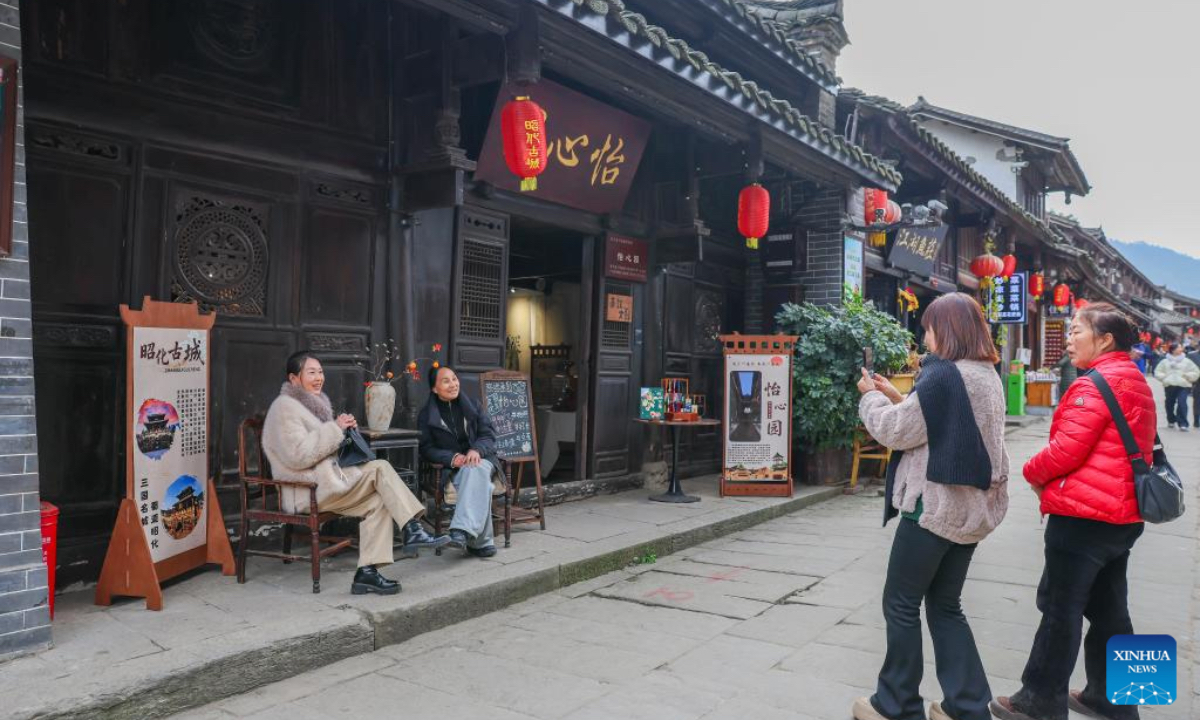
Tourists pose for photos in Zhaohua ancient town in Zhaohua District of Guangyuan City, southwest China's Sichuan Province, Dec. 13, 2025. (Xinhua/Wu Di)
Livelihood guarantee: Evolving from 'having' to 'excellence'
"As soon as a baby is born, they come with their own 'food allowance' and 'income support'." Over the past year, many new parents have shared screenshots of childcare subsidy credits on social media. This "red envelope" has already benefited over 33 million families. From childcare subsidies to elderly care meal assistance, and then to employment, healthcare, and education, the level of livelihood security in China has steadily improved over the past five years.
Focusing on the goal of achieving basic public services equalization by 2035, the focus on people's well-being in the outline of the 15th Five-Year Plan is even more pronounced: Expanding the coverage of social insurance, increasing the participation rate for flexible employees, migrant workers, and those in new forms of employment; raise the average years of education for the working-age population to 11.7 years; building over 1,000 high-quality regular high schools; increasing the average life expectancy to 80 years; supporting the construction of 1,000 close-knit county medical communities; support 60 provincial-level high-quality hospitals in improving their clinical diagnosis and treatment levels. These indicators reflect the transformation of China's livelihood security from merely "having" to achieving "excellence."
Wei Qijia, a researcher at the State Information Center, stated that the outline emphasizes safeguarding and improving people's livelihoods in the process of high-quality development, strengthening inclusive, basic and safety-net-oriented livelihood construction; improving the income distribution system; and strengthening the social security system. These measures will continuously enhance people's well-being in the process of promoting high-quality economic development.
Guaranteeing people's livelihoods inevitably depends on financial support. In 2025, fiscal expenditures in the four major livelihood sectors — education, social security and employment, health and housing security — exceeded 12.4 trillion yuan ($1.8 trillion), with a growth rate of about 5 percent, surpassing the average annual growth rate of these four expenditures since 2020. In the budget, these four livelihood expenditures account for over 41 percent of total expenditure, the highest proportion in recent years.
Many experts believe this represents a trend in optimizing the fiscal expenditure structure, reflecting the macro-policy orientation of "investing in people" during the 15th Five-Year Plan period.
Shoring up weaknesses to build beautiful and harmonious villages ideal for living and working
What does the Chinese countryside look like to you?
Recently, many foreign friends have offered their responses: Adam, a blogger from the UK, showcased how modern conveniences are integrated into rural China through on-site videos, and revisited a Chinese village he had visited many years ago.
Changes are truly remarkable. Villagers now live in clean, attractive apartment buildings, the road network is extensive, and digital services have become an integral part of daily life, said Vladimir Milton Pomar, an agricultural expert from Universidade Federal de Santa Catarina in Brazil.
Zhang Chengpeng, a research fellow at the Academy of Macroeconomic Research under the NDRC, introduced that in recent years, China has continuously improved the level of rural construction, with many villages improving both their appearance and living conditions. However, it must also be noted that China's rural areas are home to over 450 million permanent residents, with diverse types and significant differences. There are still varying degrees of shortcomings in modern living conditions in rural areas.
How to address these shortcomings? The key lies in building livable, business-friendly, and beautiful villages. The 15th Five-Year Plan outlines this approach, proposing to learn from and apply the experience of the "Thousand Villages Demonstration and Ten Thousand Villages Renovation" project to promote rural revitalization in a classified, orderly, and region-based manner, and to deeply implement rural construction initiatives.
From the perspective of implementation, China emphasizes the need to adhere to the principle of "adapting to local conditions." Officials from relevant departments stated that the migration of rural populations to urban areas will remain a major trend for the foreseeable future, and village development will continue to vary. It is necessary to adapt to population trends, optimize the overall layout of villages and towns, and rationally determine construction priorities; it is also crucial to improve the implementation mechanism for rural construction according to local conditions to avoid ineffective investment and waste.
What specifically needs improvement? Zhang believes that issues like rural toilet renovation and "garbage villages" need to be addressed with perseverance; infrastructure such as electric vehicle charging, network coverage in remote areas, and courier logistics need to be further expanded and improved; urgent problems for farmers like schooling, medical treatment, and elderly care need targeted solutions; rural industries must achieve better development to increase farmers' incomes, achieving both beautiful villages and rural prosperity.
"It can be seen that over the next five years, rural construction will shift toward placing greater emphasis on improving the quality of life, creating high-quality living spaces, gradually enhancing the completeness of rural infrastructure, the convenience of public services, and the comfort of the living environment, achieving comprehensive improvements in both form and substance," Zhang said.
This was compiled from articles originally published on the sixth page of the People's Daily Overseas Edition on March 18, 2026.