Iran revenges following killing of top security chief; domestic war skepticism, strained allied ties leaves US in impasse: Chinese expert
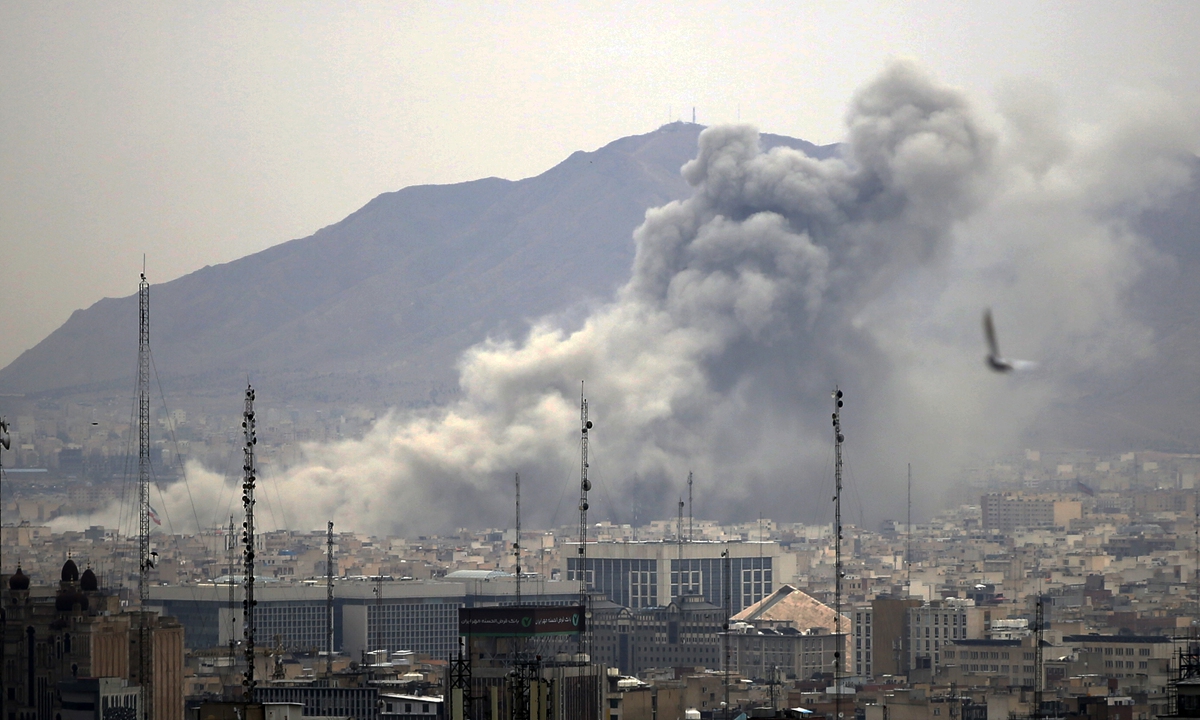
Smoke rises after airstrikes in Tehran, Iran on March 13, 2026. Photo: VCG
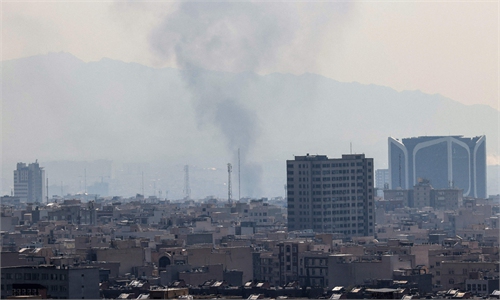
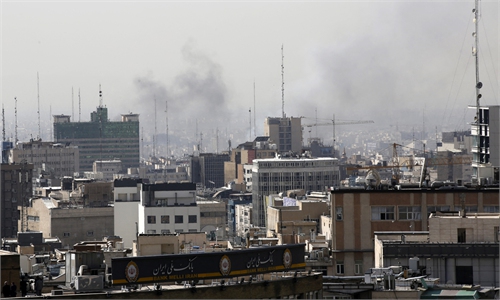
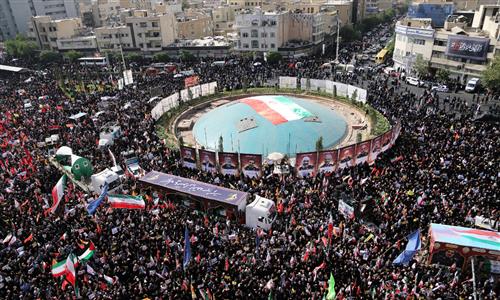
Iran lashed out following the killing of Ali Larijani, the country's top security chief, with attacks on Israel on Wednesday, using some of its latest missiles to evade air defenses and killing two near Tel Aviv as the war in the Middle East showed no signs of slowing, media reported on Wednesday.The Iranian government on Tuesday confirmed the killing of Larijani. Iran's Supreme National Security Council, which Larijani led as secretary, said Larijani's son and his deputy were also killed in the Israeli attack on Monday night, according to Reuters. On Wednesday, Iranian President Masoud Pezeshkian confirms Israeli killing of Intelligence Minister Esmaeil Khatib, Al Jazeera reported.
Following the death of Larijani, Pezeshkian issued a strongly worded message, vowing retaliation and describing the loss as deeply painful. He warned that those responsible would face severe consequences, stating, "Without a doubt, harsh revenge awaits the perpetrators," he said, according to media reports.
Pezeshkian, in his statement mourning Larijani, described him as a prominent and valuable figure who, throughout the lifetime of the Islamic Republic, served in various positions and was a source of major contributions and achievements.
Described by Reuters as "one of the most powerful figures in the Islamic Republic," Ali Larijani was a veteran Iranian politician who was also an architect of Iran's security policy and a close advisor to the late Iranian supreme leader Ayatollah Ali Khamenei.
Larijani's role as "the ultimate insider" in Ali Khamenei's Iran gave him responsibilities across a wide portfolio, including critical nuclear negotiations with the West.
Larijani was not a military commander, but he was a central figure in shaping Iran's strategic decisions. As secretary of the Supreme National Security Council, he sat at the heart of decision-making on war, diplomacy, and national security, with his voice carrying weight across Iran's system, particularly in managing Iran's confrontation with the US and Israel, per the BBC.
Zhu Yongbiao, director of the Center for Afghanistan Studies at Lanzhou University, told the Global Times that Israel's attacks have created a certain degree of psychological deterrence toward the Iranian top echelon. However, as similar operations have occurred multiple times already, the marginal deterrence effect has sharply diminished, and the actual deterrent power is quite limited.
Iranian Minister of Foreign Affairs Abbas Araghchi, speaking on Larijani's killing, said it will not deal a fatal blow to Iran's leadership, noting that "the United States and Israel had yet to realize that Iran's government does not rely on a single individual," and that "The Islamic Republic of Iran has a strong political structure with established political, economic, and social institutions," reported Al Jazeera on Wednesday.
Liu Zhongmin, a professor at the Middle East Studies Institute of Shanghai International Studies University, noted that a distinctive new feature of the US-Israeli war on Iran is the continuous strikes against Iran's military and political leaders. This approach will further inflame Iranians resistance, compressing the space for diplomatic negotiations even more, the expert told the Global Times.
Liu noted that more radical political forces may gain greater room to maneuver, even prompting Iran to intensify its counterattacks against the US and Israel, making a political resolution to the conflict increasingly difficult.
In a statement shared by Iran's Tasnim news agency on Wednesday, Iranian authorities said five facilities in Saudi Arabia, the United Arab Emirates and Qatar "will be targeted in the coming hours," per Al Jazeera.
Marking a collective effort to contain the fallout and chart a path toward de-escalation before the crisis deepens further, Saudi Arabia is hosting an emergency gathering of Arab and Islamic foreign ministers in Riyadh on Wednesday to discuss ways of bolstering regional security and stability, reported the Arab News, noting that the joint US-Israeli strike on Iran and Tehran's waves of missile and drone attacks targeting Gulf states have plunged the Middle East into its deepest security crisis in years.
The Associated Press reported on Wednesday that Joe Kent, who was director of the US National Counterterrorism Center, announced his resignation, saying he "cannot in good conscience" back the Trump administration's war in Iran.
Trump on Tuesday accused NATO members of making a "foolish mistake" by refusing to help the US secure the Strait of Hormuz. Speaking alongside Irish Prime Minister Micheál Martin at the White House, Trump said he has been informed by most NATO allies that they do not want to get involved in the war, a conflict many of them view as illegal, the BBC reported.
Washington also gravely underestimated the risks and lacked military contingencies, crisis plans, and allied coordination. Acting unilaterally early on, it later tried to shift risks onto allies, which triggered strong resistance, Zhu noted.
However, the deeper issue is misaligned US-Israel interests, the expert added, "Israel stands to gain far more strategically, creating a structural divergence in their objectives. Domestic war skepticism, rifts with Israel, and strained allied ties have together left the US in a strategic impasse," he said.
RELATED ARTICLES