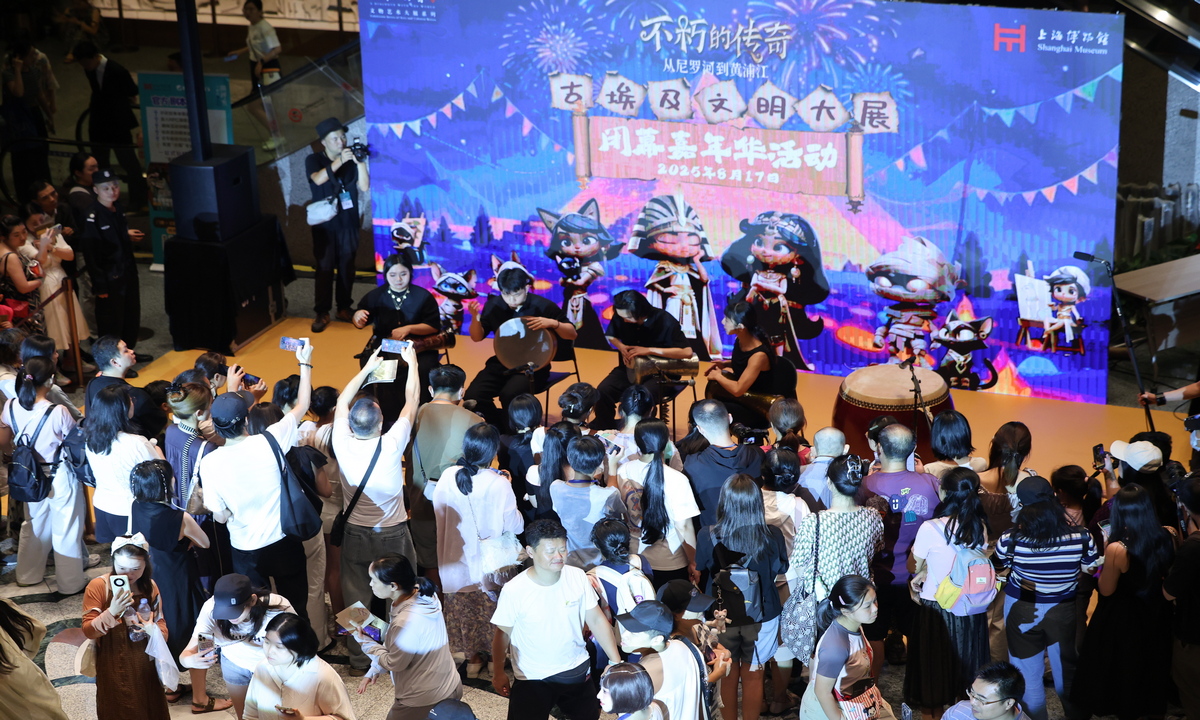
Visitors watch themed performances at the Shanghai Museum in Shanghai, on August 18, 2025. Photo: VCG
In an era shaped by digital technology and evolving consumer expectations, China is transforming how people connect, experience and spend. This shift, termed “new consumption scenarios,” moves beyond traditional retail to integrate digital innovation, emotional engagement, and thematic experiences into many immersive environments. These scenarios emphasize experiential value, shifting focus from goods transactions to selling experiences.
As China continues to advance through the 15th Five-Year Plan period (2026-30), the shift will enhance livelihood, promote social equity, and make a life of quality accessible to many people.
These new consumption scenarios are becoming increasingly evident across various domains. One noticeable example was the Shanghai Museum's evening exhibition On Top of the Pyramid: The Civilization of Ancient Egypt, which combined themed performances, immersive role-playing, and creative products. This event broke records for attendance and revenue, generating more than 35 billion yuan ($5 billion) in consumption, according to the Jiefang Daily.
Similarly, the Dongmao Street Teahouse in Changsha city, Central China’s Hunan Province, transformed elderly leisure into a vibrant cultural phenomenon by recreating an old-style teahouse atmosphere with local artist exhibitions and intangible cultural heritage performances. While primarily attracting seniors, the teahouse also drew young visitors seeking authentic cultural experiences, fostering a unique two-way flow between the so-called silver economy and Gen Z consumers.
The innovations extend far beyond entertainment value – they directly improve people's livelihoods through three interconnected pathways. First, new consumption scenarios act as incubators for employment and income growth. Emerging professions such as hanfu make-up artists, travel photographers, virtual reality engineers, community stewards, and climbing route setters closely align with younger generations' desire to turn personal interests into sustainable careers.
Second, these scenarios promote equitable access to public services by extending quality consumption resources to under-served areas. Theme parks, immersive cultural tourism projects, and smart retail stores are increasingly reaching county-level and rural markets, while "15-minute community life circles" integrate fresh food delivery, childcare, eldercare, and healthcare services within walking distance – particularly benefiting vulnerable groups such as the elderly and children.
Third, these scenarios elevate the quality of life by satisfying demands for personalization, cultural enrichment, and emotional connection. Virtual reality technologies allow people to explore museums and participate in cultural activities without leaving home, while community cultural squares and themed bookstores have evolved into "third spaces" for social interaction and spiritual renewal.
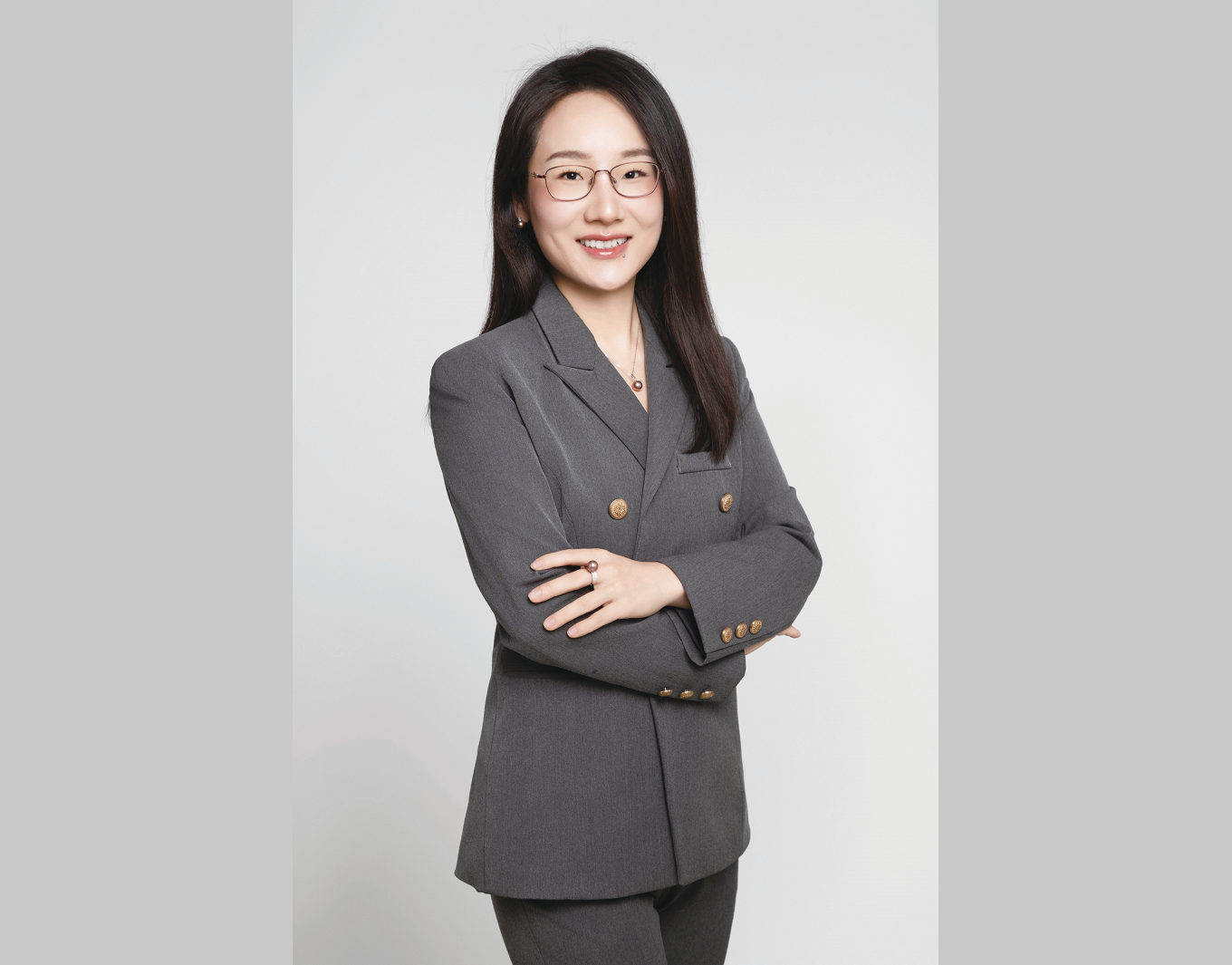
Zhang Nan Photo: Courtesy of Zhang Nan
The fundamental value of the new consumption scenarios lies in their capacity to broaden access to a high-quality life. By breaking down geographical, economic, and generational barriers, the innovations ensure that premium experiences are shared resources accessible to the many.
In rural areas, integrated transport-logistics-commercial hubs combine express delivery, cold storage, electric vehicle charging, energy-efficient appliance displays, and trade-in programs, addressing long-standing difficulties in purchasing high-quality goods, selling local specialties, and processing returns. Such inclusive infrastructure unlocks consumption potential while narrowing the urban-rural divide.
The 15th Five-Year Plan (2026–30) serves as the strategic compass guiding this important transformation. China explicitly prioritizes the expansion of services consumption and improvements in quality of life. During this period, the country emphasizes both economic vitality and social welfare.
Getting people to spend more has emerged as a major economic task for China in 2026 and beyond, aligning with the country's broader shift toward a consumption-driven growth model.
Ultimately, new consumption scenarios represent more than commercial innovation – they are tangible expressions of a people-centered development vision. By linking consumption stimulation with livelihood improvement and social fairness, China demonstrates that economic upgrading and inclusive growth can advance hand-in-hand.
As these scenarios continue to evolve, they illuminate a path on which every citizen, regardless of age, location, or background, can participate in and benefit from the nation's journey toward achieving a modernized, high-quality living. In this sense, the rise of new consumption scenarios offers a compelling answer to how economic development can truly serve the people: by making a life of quality a reality for all.
The author is a faculty member at the School of Applied Economics, Renmin University of China. bizopinion@globaltimes.com.cn
RELATED ARTICLES