ARTS / CULTURE & LEISURE
New discoveries in Xi’an reveal urban life in Sui, Tang dynasties
By Published: Mar 23, 2026 12:00 AM

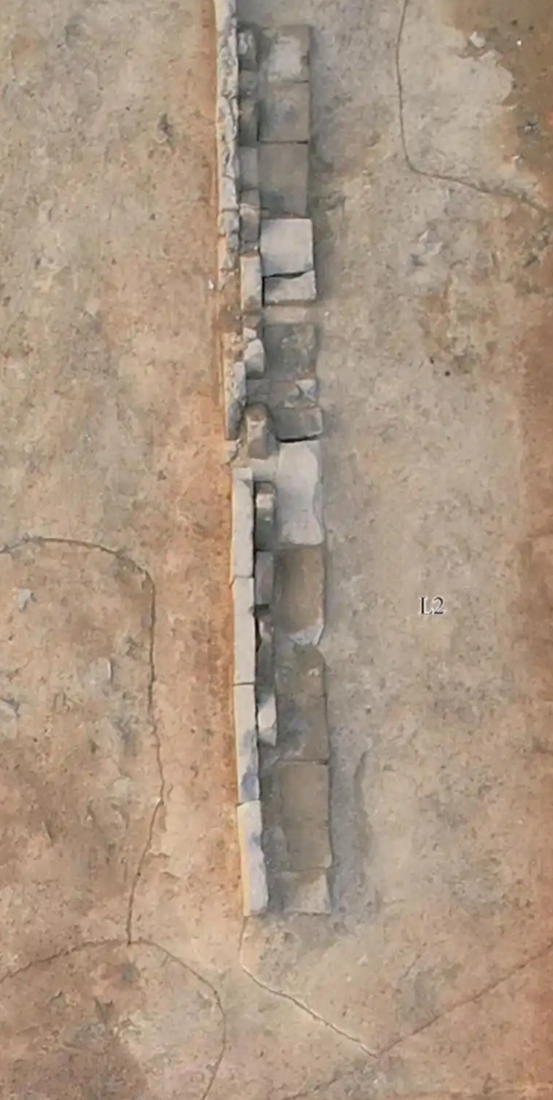
Photo: Screenshot
The latest archaeological findings from an ancient residential area in Chang'an, the ancient capital of the Sui (581-618) and Tang (618-907) dynasties, were recently unveiled. Chinese archaeologists carried out surveys and excavations in the Lianhu district, Xi'an (named Chang'an in ancient times) in Northwest China's Shaanxi Province, unearthing a large number of relics, including roads, courtyards, and brick storage pits. These discoveries provide valuable new materials for further understanding the structure and layout of Chang'an during the Sui and Tang periods, as well as details of the residents' lives at that time.Combining modern digital measurements and historical reconstructions of ancient Chang'an, archaeologists have identified this area as Buzhengfang, according to CCTV News.
In historical terms, a "fang" was a residential block, somewhat similar to today's neighborhoods. During the Tang Dynasty, there were 108 such neighborhood blocks across Chang'an, with residents ranging from government officials to ordinary people. Buddhist temples, Taoist monasteries, and other institutions were also found within these blocks.
In the eastern part of the excavation area, archaeologists discovered a north-south street. This roadway can be divided into two phases: early and later periods. The early street was 10.8 meters at its broadest, while the later phase reached up to 11.1 meters, as detailed in the excavation briefing by the Institute of Archaeology under the Chinese Academy of Social Sciences.
The main streets of Sui and Tang Chang'an commonly featured roadside drainage ditches on both sides - a hallmark of urban planning during that era. Evidence from the newly discovered street shows that there were established drainage ditches on both its east and west sides during its early use, and these ditches were cleared multiple times during their operation.
The briefing noted that two groups of courtyards enclosed by rammed earth walls were also unearthed. These courtyards were connected east to west, with the second courtyard being relatively well preserved.
"These newly found courtyard walls, streets, and the spatial design between wells have significant meaning for understanding the layout of Chang'an in those times. Coupled with future discoveries of building remains, these findings can provide credible evidence for restoring the appearance and structure of residential areas in ancient Chang'an," Zhou Xueying, a professor at the School of History at Nanjing University, told the Global Times on Sunday.
A rich variety of relics from the Sui and Tang dynasties were unearthed in this excavation, including architectural materials, household items, and objects related to religious activities. Of particular note are carved stone statues of Buddhas, ceramic pagodas, and stone pedestals, which offer important insights into the daily lives of Buzhengfang residents.
One highlight among the artifacts is a delicately crafted incense holder in the shape of an argali, a mountain sheep. As argali are not native to the region where the ancient capital was located, this artifact is a vivid example of the cultural exchange and integration that occurred between the eastern and western regions.
Zhou noted that the abundance and diversity of the site's features and artifacts discovered during the excavations provide crucial evidence for studying urban transformation and the changing functions of neighborhoods throughout Xi'an's history.
Besides relics from the Sui and Tang dynasties, this excavation revealed a wide range of site types spanning many historical periods. According to the briefing, the excavated area underwent repeated transformations: from a Han Dynasty (206BC-AD220) suburban capital zone to a major residential "fang" during the Sui and Tang, then to a suburb of Chang'an county in the Song Dynasty (960-1279), and later becoming the outskirts of Xi'an Prefecture during the Ming and Qing dynasties (1368-1911).
RELATED ARTICLES