Illustration: Liu Xiangya/GT
Once self-proclaimed leaders in the green transition, many Western countries are now evidently backtracking on their earlier ambitious policy goals. The latest example? At least 12 global carmakers, including Mercedes-Benz, Ford, Stellantis and Volvo Cars, are scaling back their electric vehicle (EV) plans amid stubborn demand for internal combustion engines and a rollback of supportive policies in both the US and Europe, the Financial Times (FT) reported.Rolls-Royce was the latest to change course, announcing last week that it would continue making conventional fuel engine vehicles beyond 2030, according to the FT report, which described the carmakers' move as "retreat en masse."
For the global push for a green transition to tackle climate change, this represented an alarming sign. On a deeper level, this reveals the constraints of industrial and green policies in some Western countries, which have not only undercut global green development, but also hindered global cooperation in industrial and supply chains.
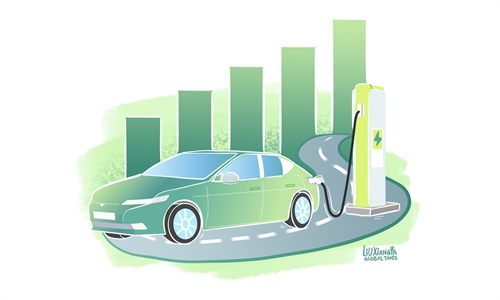
To be sure, the automakers' decisions may have something to do with inherent challenges in EV development. In many countries, consumers continue to favor fuel-powered vehicles, driven by persistent concerns over EV driving range and charging infrastructure availability. However, as the rapid surge of China's EV industry and market has shown, these challenges can be overcome through robust, persistent investments.
What then is behind many Western automakers' struggle to develop EVs? The answer may have something to do with the lack of coherent policies in some of these countries. The FT report noted that the US administration has ended federal tax credits for people buying EVs, cut spending on charging infrastructure and watered down vehicle emission targets, while the EU has also weakened its emission targets.
For example, the European Commission in December unveiled a plan to drop the EU's effective ban on new combustion-engine cars from 2035 after pressure from the region's auto sector, according to Reuters. When policy signals are no longer firm, businesses naturally choose to wait and see, or even abandon their existing plans.
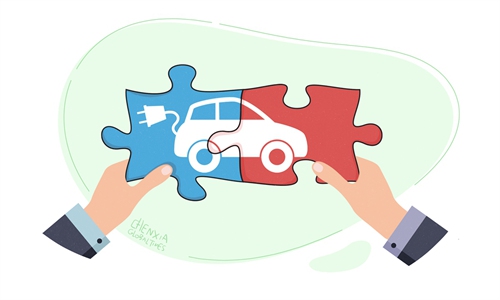
Caught in policy flip-flops, automakers may find themselves trying to sustain their traditional fuel-powered vehicle markets while investing in electrification - a balancing act that often leads to fragmented resources. More critically, when policymakers in certain Western economies focus on allowing their domestic companies to stay in their comfort zones by restricting market access to companies from other countries, they may have in fact undercut their businesses' incentive to bolster competitiveness and hindered market expansion by limiting options for consumers to try and eventually accept EVs. In short, the global EV push requires cooperation rather than protectionism.
Let's examine the development of the global EV industry. Companies and regions that have risen rapidly have all gone through rounds of fierce competition, making continuous breakthroughs in research and development (R&D), product iteration and supply chain integration. Engaging in open competition is precisely the key driver of high-quality growth in the EV industry.
For instance, the development of China's EV industry has long proved that only by adhering to long-termism, with stable policy guidance, fair market competition, and continuous investment in innovation, can an industry navigate the pain of transition and achieve high-quality development. In contrast, the US and the EU had previously introduced protectionist policies against Chinese EVs, in a bid to protect their own industries. As the FT report shows, those protection clearly did not help those firms in pursuit of their earlier ambitious goals.
The acceptance of EVs among consumers, the improvement of infrastructure, and the maturity of technical routes will indeed take time. But this requires stable, forward-looking policies, rather than those that sway with short-term market sentiment and those that undermine fair, healthy competition. A clear, firm, predictable and open policy framework provides an anchor of confidence for businesses' long-term investment and points the way for coordinated industrial chain development.
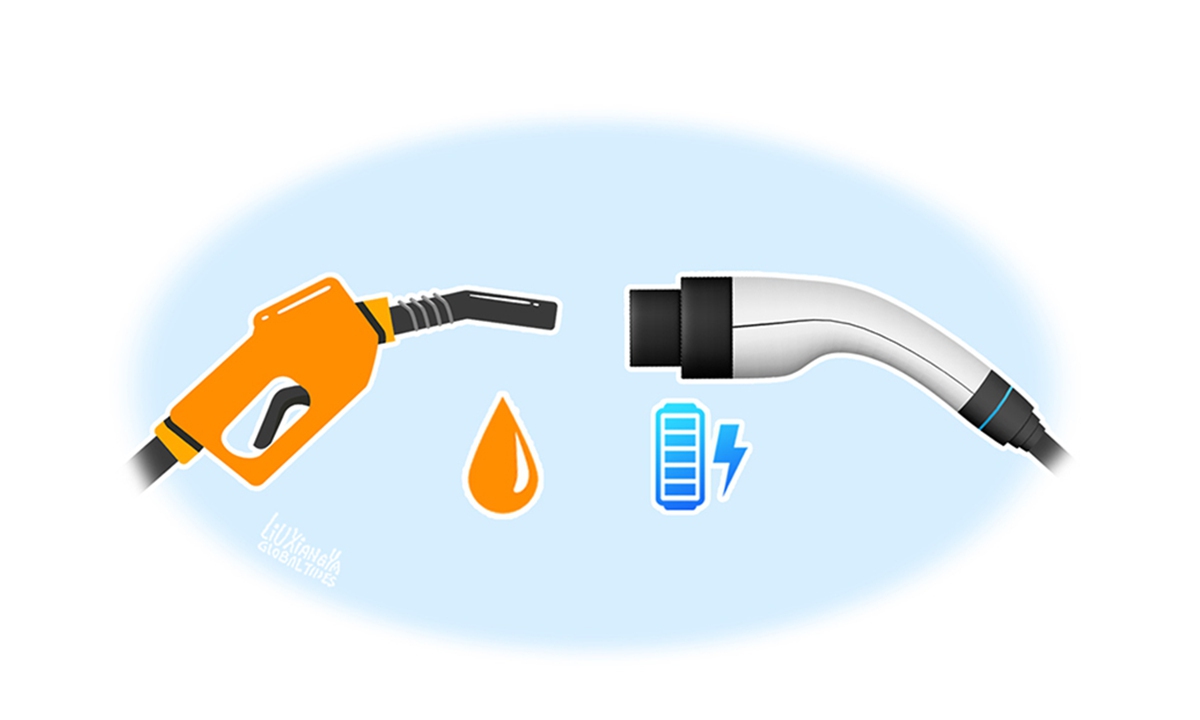
Recently, skyrocketing oil prices following the US-Israeli strikes against Iran further highlighted the need for faster EV development. Various countries and regions should abandon protectionist thinking, strengthen policy intensity, stimulate innovation through fair competition, and lay a solid development foundation with stable policies. Only in this way can we form a virtuous cycle of industrial chain development. Continued "vacillation" and "protectionism" will only make the transition path even bumpier.
RELATED ARTICLES