ARTS / CULTURE & LEISURE
Renowned Ming Dynasty scroll painting displayed at Suzhou Museum
By Published: Mar 24, 2026 11:33 PM

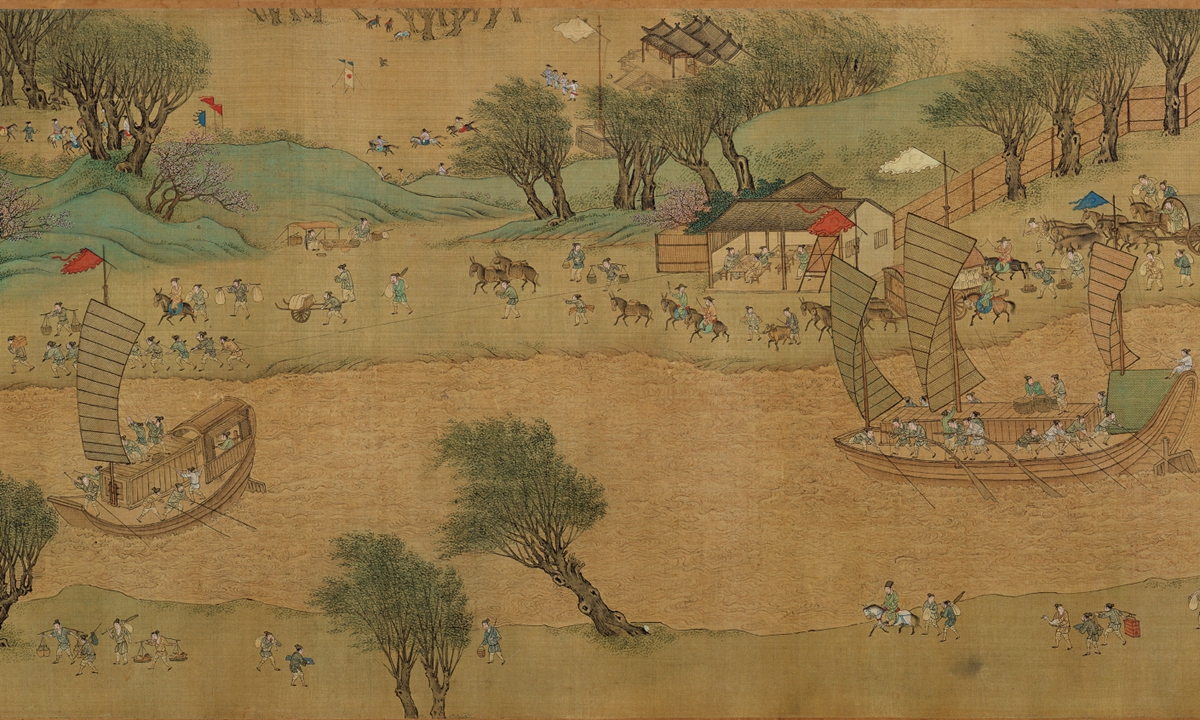
Part of the Riverside Scene at Qingming Festival by painter Qiu Ying Photo: Courtesy of the Suzhou Museum
A renowned scroll painting, the Ming Dynasty (1368-1644) version of Riverside Scene at Qingming Festival by painter Qiu Ying, made its long-awaited return to Suzhou, East China's Jiangsu Province, on Tuesday, a decade after it was last displayed in the city.
This display is the centerpiece of a major exhibition titled Suzhou Textile Commissioner, showcasing the ancient city's glorious textile history during the Ming and Qing (1644-1911) dynasties, according to a press release issued by Suzhou Museum on Tuesday. Co-organized by 10 cultural institutions, including the Palace Museum and the National Museum of China, the exhibition features over 90 precious relics, with Qiu's masterpiece taking pride of place.
Painted by Qiu Ying, a native Suzhou painter and one of the "Four Great Painting Masters of the Ming Dynasty," the scroll depicts the prosperity of Suzhou more than 400 years ago.
Song Dynasty (960-1279) painter Zhang Zeduan's work of the same name reveals the lifestyles of people from of all walks of life in the then prosperous capital Bianjing, today's Kaifeng in Central China's Henan Province, during the Qingming Festival. Qiu's work focuses on his hometown of Suzhou, capturing over 2,200 figures engaged in daily activities, from farmers tilling fields on the outskirts of town to vendors hawking goods in bustling markets, and even scenes of weddings and traditional operas.
"This scroll is a living record of Suzhou's commercial and handicraft prosperity during the Ming Dynasty," Yang Yumeng, a curator in the museum's Collections Preservation Department, told the Global Times. "Its return is a homecoming for a cultural treasure closely tied to the city's identity."
For some visitors who missed the display of Zhang's scroll at the Palace Museum in 2025, seeing Qiu Ying's version at the Suzhou Museum has fulfilled their long-cherished wish. "The last time that this scroll was shown in Suzhou, we displayed only sections of it. But this time, visitors can see it fully unfurled," Yang said, adding that the scroll, housed in the Liaoning Provincial Museum, will only be on display until April 26.
The exhibition, marking the 20th anniversary of the Suzhou Museum's main venue, aims to reinterpret the role of "Suzhou Weaving," a historical institution long simplified as a silk supplier to the imperial court. Going for a deeper dive, the exhibition reveals the institution's multifaceted role as a hub connecting the imperial palace with Jiangnan's handicraft networks and local society, according to the press release.
Following Qiu's scroll, Qing Dynasty painter Xu Yang's Emperor Qianlong's Southern Inspection Tour from the National Museum of China will take over to showcase Suzhou's prosperity during the Qing Dynasty.
The exhibition, running until June 21, also includes three sections introducing the history, functions and craftsmanship of Suzhou weaving, along with special lectures and study activities.
To facilitate visits, the museum will launch free shuttle services between its main and west venues starting on Saturday for ticket holders, to allow more visitors to appreciate the city's profound cultural heritage through the centuries-old relics.
RELATED ARTICLES