Japan reportedly plans to downgrade description of China ties; move shows right-wing shift, risks eroding dialogue-based order in Asia: Chinese expert
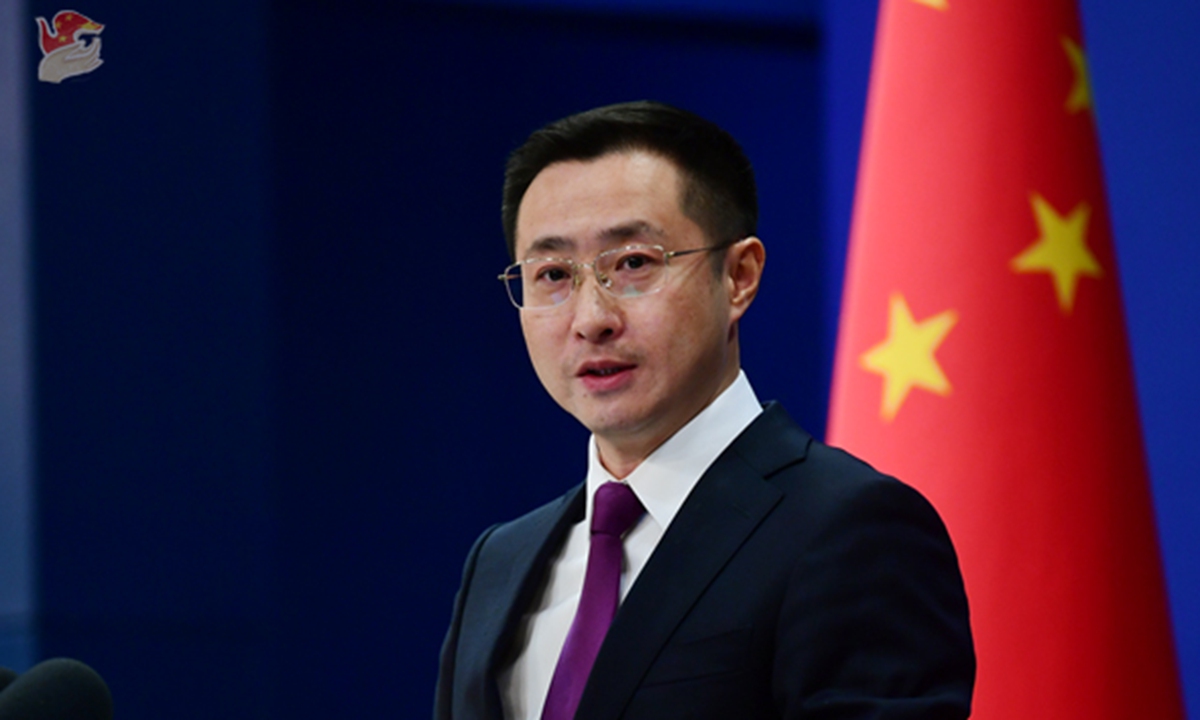
Photo: Chinese Foreign Ministry spokesperson Lin Jian
The root cause of the current situation facing China-Japan relations is Japanese Prime Minister Sanae Takaichi's erroneous remarks on Taiwan, which have sparked outrage from the Chinese people and tested the red line of the post-war international order, Chinese Foreign Ministry spokesperson Lin Jian said on Tuesday when asked for comment that, Japan will downgrade its description of ties with China from "one of the most important" to instead describing China as an important neighbor and the relationship as "strategic and mutually beneficial."Observers pointed to the overall right-wing shift of Japan in political ecosystem and its internal contradiction when dealing with China. Japan's clear strategic alignment toward the US amid major-power competition risks eroding the dialogue and cooperation-based regional order, they said.
According to a Reuters report, the 2026 Diplomatic Bluebook, which Takaichi's government is expected to approve next month, will instead describe China as an important neighbor and the relationship as "strategic" and "mutually beneficial."
Xiang Haoyu, a distinguished research fellow at the China Institute of International Studies, told the Global Times that even though there might be a final adjustment to the expression, the change in the draft has indicated a clear further downward spiral of Japan's strategic positioning of China and its policy tendency. What lies behind this is the right-wing shift of the country's political ecosystem and Japanese society.
Xiang said such a change can court right-wing conservatives and shore up Takaichi's support base domestically, deflecting pressure from domestic economic and social problems.
Internationally, the move acts as a pledge of allegiance to the US, signaling a tilt away from China, showing Japan's determination to take sides in major-power competition, and tightening its alliance with Washington, according to Xiang.
Lü Chao, a professor at the Liaoning Academy of Social Sciences, told the Global Times that "important neighbor" would be just lip service while Japan's actual policies are shifting away from China.
He added the action by Japanese government is essentially an attempt to shift blame.
After worsening China-Japan relations through its own mistakes and triggering public dissatisfaction at home, Takaichi administration is keeping the rhetorical phrase "important neighbor" while mentioning at length China's countermeasures to the Japanese mistake, only to pin the blame for the deterioration in ties on China in an effort to ease domestic discontent, Lü said.
Some Japanese news outlets also reported the change of description of Japan-China relations, with Mainichi using the word "downgrade," and mentioning the backdrop of the remarks by Takaichi concerning Taiwan island and China's countermeasures.
Kyodo News, without using the word "downgrade" directly, compared the difference of the two editions in 2025 and 2026, saying the change was likely impacted by worsening Japan-China relations after Takaichi's remarks.
Kyodo News also noticed the 2026 edition referred to the Taiwan question as "the peace and stability of Taiwan Straits are important for stability of international community. While the 2025 edition claimed "it also concerns Japan's security," the 2026 edition deleted such expressions.
Internal contradictions are nothing new in Japan's diplomatic bluebooks - the 2025 edition said that ties with China are one of Japan's most important bilateral relationships while also designating China as an unprecedented and greatest strategic challenge.
Lü said Japan's current China policy is marked by obvious contradiction between its economic interests and its political need to align with the US.
China is a vital market for Japan, and bilateral trade is crucial to the Japanese economy. Japan's business community is deeply anxious about the current state of bilateral relations and has repeatedly called for enhanced communication with China, but the Takaichi administration has persisted in its wrong course, Lü added.
Analysts also noted that against the backdrop of rising major-power competition and geopolitical tensions, Japan's tilt toward the US and forging small regional blocs against China is hampering regional integration.
The region now faces a more fragile strategic balance, and Japan's move is further eroding the previous dialogue‑based regional order, Lü noted.
Spokesperson Lin made clear on Tuesday that if the Japanese side truly wants to improve and develop relations with China, it needs to abide by the four political documents between China and Japan and its own commitments, retract the erroneous remarks on Taiwan as soon as possible, do soul-searching and correct its wrongdoings, and take concrete actions to uphold the political foundation of China-Japan relations.
Spokesperson Lin made clear on Tuesday that if the Japanese side truly wants to improve and develop relations with China, it needs to abide by the four political documents between China and Japan and its own commitments, retract the erroneous remarks on Taiwan as soon as possible, do soul-searching and correct its wrongdoings, and take concrete actions to uphold the political foundation of China-Japan relations.
RELATED ARTICLES