Chinese firm achieves major breakthrough in commercial aerospace in-orbit servicing technology
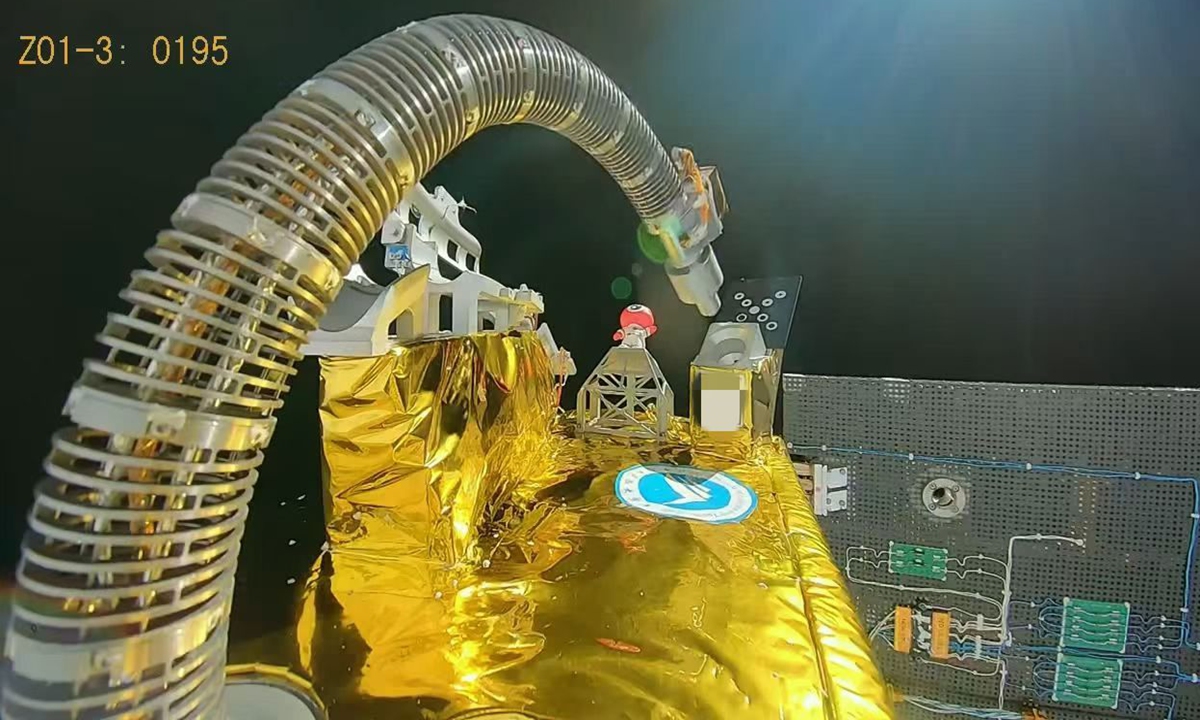
Yuxing-3 06 satellite Photo: Courtesy of Emposat Co
China has made a major breakthrough in commercial aerospace in-orbit servicing technology. Beijing-based commercial satellite company Emposat Co announced on Thursday that it has completed a refueling test in low-Earth orbit using a flexible robotic arm and key technology verification, marking the country's first commercial experimental satellite equipped with a flexible robotic arm.
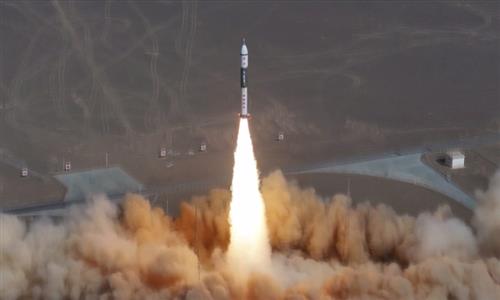
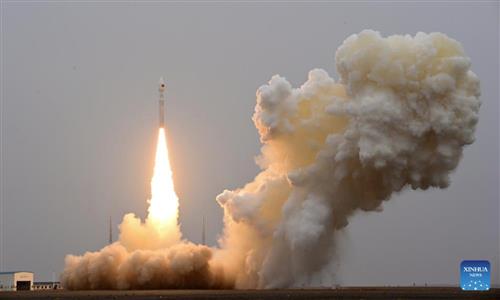
The Yuxing-3 06 satellite, dubbed a "space refueling station," was launched into orbit on March 16 from the Jiuquan Satellite Launch Center in Northwest China's Gansu Province aboard a Kuaizhou-11 Yao-7 rocket, the Global Times learned from the company.
During its time on orbit, the spacecraft carried out a series of technically demanding tasks, validating key technologies for space-based refueling with a flexible robotic arm.
The satellite used its flexible robotic-arm payload to carry out technical validations such as simulated fuel transfer and compliant control operations, providing technological support for future in-orbit servicing, fuel resupply, and space debris mitigation applications.
According to the company, the mission demonstrated several key technological breakthroughs. Innovations in flexible-arm design and compatibility with flexible fuel delivery lines improve refueling safety; a simplified rope-and-cable drive reduces development costs; and a modular, integrated architecture adapts to small-payload satellites.
The satellite also tested three complementary control modes to cover different application scenarios, as well as force-compliant control based on end-effector force feedback to support fine manipulation. Space-ground coordinated tracking and control, enabled by a global ground station network, provided long-duration, continuous links and low latency to ensure smooth on-orbit operations.
The test represents an important exploration and practical step by China's commercial space sector toward supporting the sustainable development of future space through on-orbit operations and services, said Emposat Co.
"We will continue to advance the construction of integrated space-and-ground aerospace industrial infrastructure, achieve fully independent and controllable capabilities for on-orbit repair, maintenance, and operations of China's space assets, and further explore closed-loop commercial operation models to open up new, large-scale application scenarios for China's commercial space industry," the company said.
The Yuxing-3 06 is the first mission in a series of in-orbit operation tests led by Emposat subsidiary Sustain Space. The satellite's flexible robotic arm payload was jointly developed by Sustain Space and the Tsinghua Shenzhen International Graduate School. The satellite platform was developed by Shenzhen MagicCubeSat Technology Co, and an optical camera payload was co-developed with Hunan University of Science and Technology.
China has previously conducted similar experiments. In January 2025, the country launched a test satellite, Shijian-25, primarily for verifying satellite fuel replenishment and life extension service technologies, according to the Xinhua News Agency.
Global Times
RELATED ARTICLES