ARTS / CULTURE & LEISURE
From emotional value to spiritual journey: ‘Ritual Economy’ reshapes cultural tourism
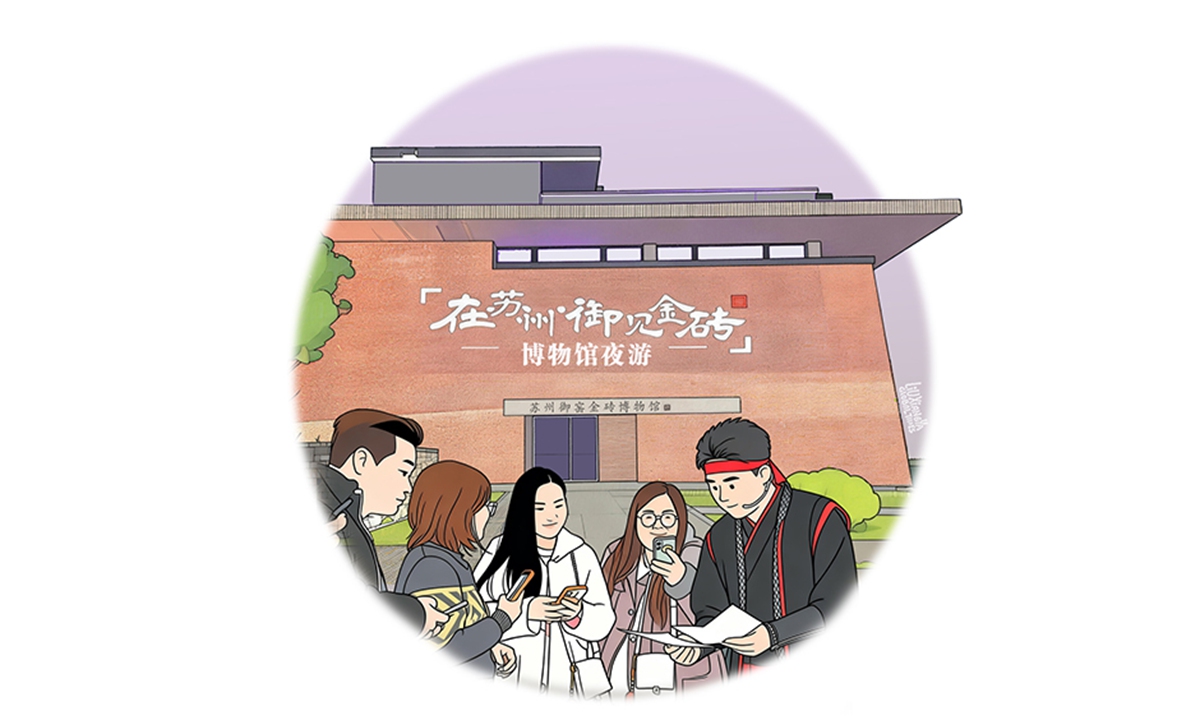
Illustration: Liu Xiangya/GT
As twilight falls on the Suzhou Museum of Imperial Kiln Brick, a journey across six centuries begins. Visitors become Ming (1368-1644) and Qing (1644-1911) dynasty "brick-seekers." Guided by staff in costume, they drift through halls bathed in light and shadow, learning how humble clay was transformed into imperial gold bricks - the foundations of the Forbidden City.This experience is not a seasonal festival, but a permanent, year-round "Night at the Museum," redefining heritage as more than passive viewing. It is a carefully orchestrated ritual inviting visitors to actively engage with China's cultural memory. This marks the rise of China's "ritual economy," a trend transforming cultural heritage from static displays into immersive journeys - and fundamentally reshaping the tourism business model.
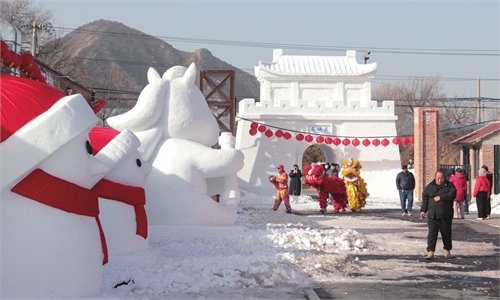
Across China, traditional rituals are being resurrected as "living models" of cultural identity rather than mere folk performances. A "Longtaitou," or "Dragon Raises Head," event was held on March 20 at the Laolongtou scenic spot in Shanhaiguan Pass, Qinhuangdao, North China's Hebei Province, featuring 26 dragon dance troupes from 11 provinces performing across four themed zones. From the "Jiuqu Yellow River Lantern Array" prevalent in provinces such as Gansu, Hebei, Shanxi, and Shaanxi, to the deity processions of Guangdong's "Ying Laoye" tradition and Fujian's "You Shen" festivals, these practices have evolved beyond heritage preservation into vehicles for emotional connection and spiritual belonging.
What distinguishes this new wave of cultural tourism is its deliberately designed experiences. These are not random activities but carefully programmed rituals built on three core elements: temporal rhythm, such as the structured pacing of ceremonies and festivals; embodied participation, like role-playing, crafting, and hands-on engagement; and collective memory activation, in which someone can connect personal experience to shared cultural narratives.
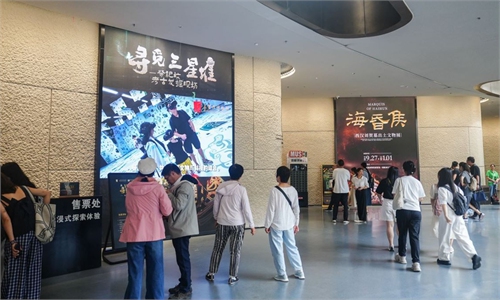
Technology does not replace ritual. It amplifies it. At the Suzhou museum cutting-edge technologies such as projection mapping, AR and AI-generated content-driven narration create immersive experiences. Offerings like "Light and Shadow Golden Brick Narratives" and "AR Digital Sky Lanterns" use digital tools in performances, markets, and dining. This forms a nighttime tourism scene that feels "accessible, interactive, and emotionally resonant."
The museum calls this "the first immersive night tour in Jiangsu Province to deeply integrate story with technology." Visitors do not just observe history. They inhabit it. This marks a shift from "spatial consumption" - what to see - to "temporal and spiritual consumption" - what to experience, resonate with, and inherit.
Per-tourist spending during the 2026 Spring Festival averaged 1,348 yuan ($195), on par with previous years, yet the composition of this spending has fundamentally changed, with experiential and emotional spending capturing larger shares. The challenge for China's cultural tourism sector is sustainability. These rituals must remain living practices, not fossilized performances.
The Suzhou museum stays open all year. This breaks the link between cultural depth and calendar dates, turning seasonal curiosity into steady engagement. As China starts its 15th Five-Year Plan (2026-2030), culture and tourism are entering a new development stage. It features modern narratives, closer ties between public services and industry, and deeper digital business models, according to the Annual Research Report on China's Cultural Industry and Tourism Industry (2025).
To realize this potential, destinations must shift their strategies by adopting four key recommendations:
First, switch from spatial to temporal consumption. Travelers now buy rights to specific moments, not just facility access. This allows full-time operations and goes beyond the "eight-hour economy."
Second, trade passive sightseeing for embodied participation. Visitors walk, sing, dance, and touch, forming deeper memories.
Third, create experience ecosystems. One ritual can link to dining, lodging, and photography, serving as an "emotional value-added agent." This boosts price tolerance throughout the entire journey.
Fourth, build strong cultural ties by linking rituals to key historical memories and values. This turns one-time visitors into lifelong supporters.
As destinations increasingly compete on creating meaning, success will go to those that authentically transform their cultural DNA into participatory ritual experiences, embodying the principles of the ritual economy and setting the direction for Chinese cultural tourism's future.
International visitors are now accessing China's intangible heritage. For domestic travelers, the ritual economy responds to a deeper need: finding meaning in a fast-moving world. This new model delivers more than tickets - it offers lasting transformation through curated ritual experience.
As modern "brick-seekers" complete their six-century journey, the future of Chinese cultural tourism becomes defined by the ritual economy. The critical question is no longer what heritage sites have, but what immersive experiences and significance they can now generate for visitors to carry home.
The author is a faculty member with the School of Applied Economics, Renmin University of China. life@globaltimes.com.cn
RELATED ARTICLES